

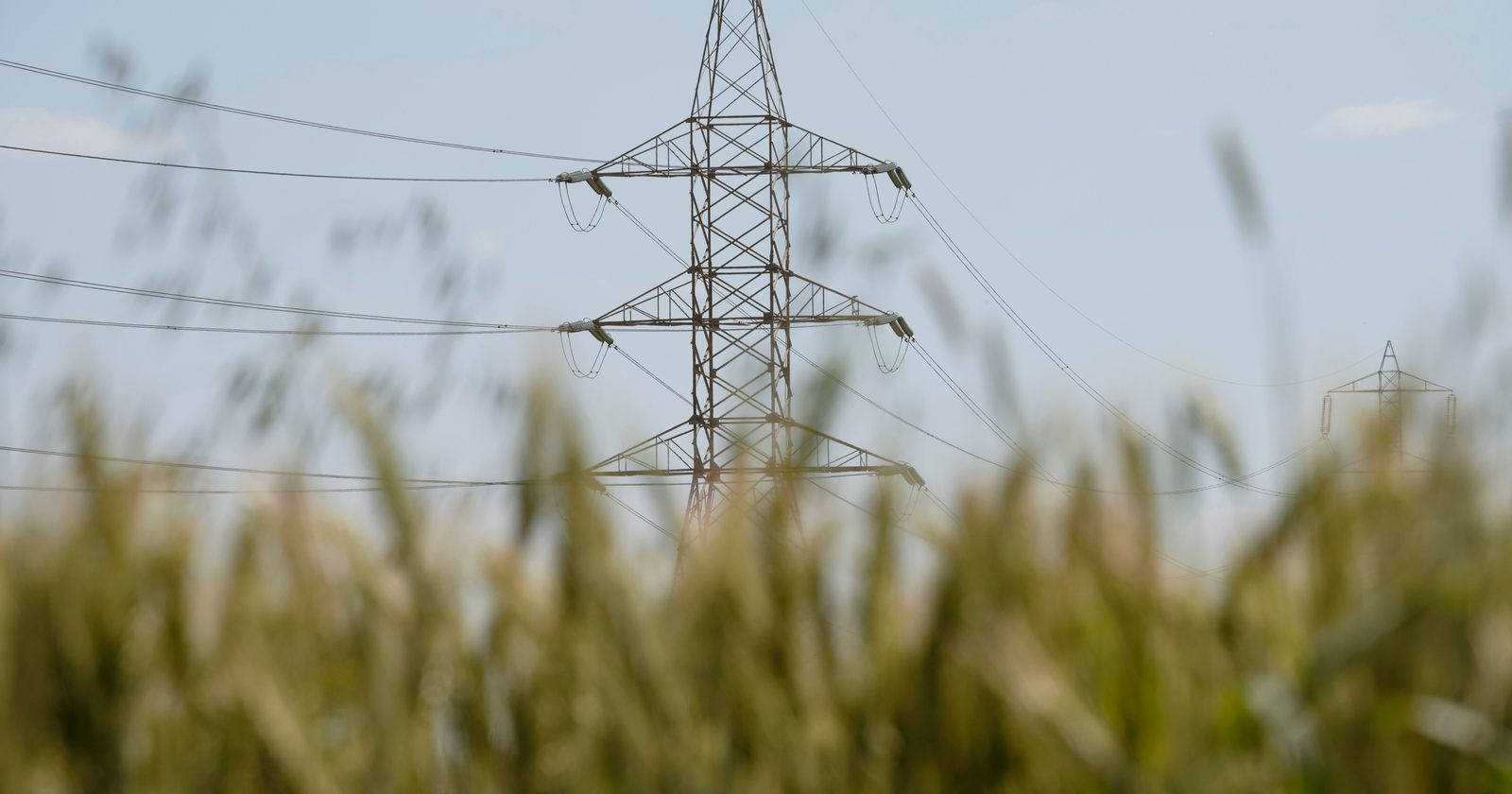
A dairy barn and a data center do not look like rivals. But they pull power from the same wires, and one of them is growing fast enough to push the price up for everyone.
According to the American Farm Bureau Federation, “Electricity expenditures on U.S. farms have risen sharply in recent years and are forecast to increase by 48%, or $2.8 billion, from $5.75 billion in 2019 to $8.5 billion in 2026, according to USDA’s Economic Research Service.”
We’re not economists or energy engineers, and this is a piece of reading and reflection rather than advice about anyone’s farm or power bill. The figures here come from USDA forecasts and industry filings. They describe patterns across a whole sector and region, not a prediction for any single farm.
The farm electricity bill, then and now
The headline farm number is a forecast, so it’s best read as what USDA expects, not what farms have already paid.
Electricity is one line in a much bigger cost picture. In September 2026, the Farm Bureau reported that USDA raised its 2026 farm production-expense forecast to $492.8 billion, up $15.1 billion since February, with electricity among the costs expected to climb.
Electricity is a small slice of what a farm spends. But it’s a slice moving in one direction, pushed by forces a farmer has no say over. Which brings in the other tenant.
The other tenant on the grid
Data centers, the warehouse-sized buildings that run AI, cloud services and heavy computing, are going up faster than the grid was built to handle.
The AFBF points to a Department of Energy estimate that data centers used about 4.4% of U.S. electricity in 2023, a share expected to reach somewhere between 6.7% and 12% by 2028. Many of these buildings need hundreds of megawatts each, and they’re increasingly landing in rural areas near cheap land, water and power lines, the same three things farms rely on.
The strain shows up most clearly in the PJM region, the market that covers 13 states plus D.C. and more than 65 million people. PJM’s independent market monitor estimates that data-center growth added more than $23 billion to PJM capacity market costs since 2025. The monitor calls it “the primary reason for recent and expected capacity market conditions, including total forecast load growth, the tight supply and demand balance, and high prices.”
That’s the monitor’s position, and it’s contested. Others warn against blaming the whole crunch on data centers, pointing instead to pricing rules, uncertainty in how new demand is counted, and a long line of projects waiting to connect that predates the AI boom. Data-center demand may have exposed weak spots in the market as much as created them. Either way, the pressure is real: the same report notes that more than 3,300 projects were awaiting interconnection approval, the largest backlog of any regional grid operator.
The price signal is hard to miss. PJM capacity prices for 2026/27 came in at $329.17 per megawatt-day, up from $28.92 two years earlier. At PJM’s most recent auction, President and CEO David Mills said the results “show that demand for electricity continues to grow faster than electricity supply.”
Who pays to build it out
When demand outruns supply, someone has to build more, and the cost of building has to land somewhere. The how matters more than any single number. As CSIS’s Cy McGeady writes, “The cost of building and maintaining the electrical grid is always ultimately paid by the end consumer.”
The path that cost takes runs through the regulators. McGeady describes how the local utility “assesses the requirement for repairs, maintenance, and new power lines, and submits these proposed investments to the state public utilities commission, which then reviews and approves these costs as part of the rate paid by electricity consumers.” Long-distance power lines are mostly the federal government’s job, but local wires and new power plants flow through those state commissions. The people who approve the spending, and decide who gets billed for it, are state regulators.
Two ratepayers, one wire
A farm and a data center can draw from the same substation, but they are very different customers. One draws a modest, seasonal load and has done so for generations. The other shows up asking for hundreds of megawatts, and by doing so becomes a reason the local grid needs new lines, new substations and new power plants. If the cost of that build-out gets spread across every customer, the farm helps pay for infrastructure the data center’s demand called into being.
That’s the concern the Farm Bureau is raising. The AFBF argues that “Ensuring grid investments expand capacity without shifting disproportionate costs onto farm operations will be important for maintaining the competitiveness of U.S. agriculture.” It’s an advocacy position, not a neutral finding, and it names the specific fear: that farms end up subsidizing the wires a very different kind of customer needs. With an estimated 4,925 data centers active or under construction across the country, the question is no longer hypothetical in the places where they cluster.
Whether farms actually take on more than their share comes down to a decision most people never watch: how each state commission divides up the build-out costs. A commission can try to assign new infrastructure to the customer that triggered it, or it can spread the cost across everyone on the system. Those choices, made case by case in rate filings, will likely do more to set a farm’s future electricity bill than the raw growth in data-center demand ever will.