

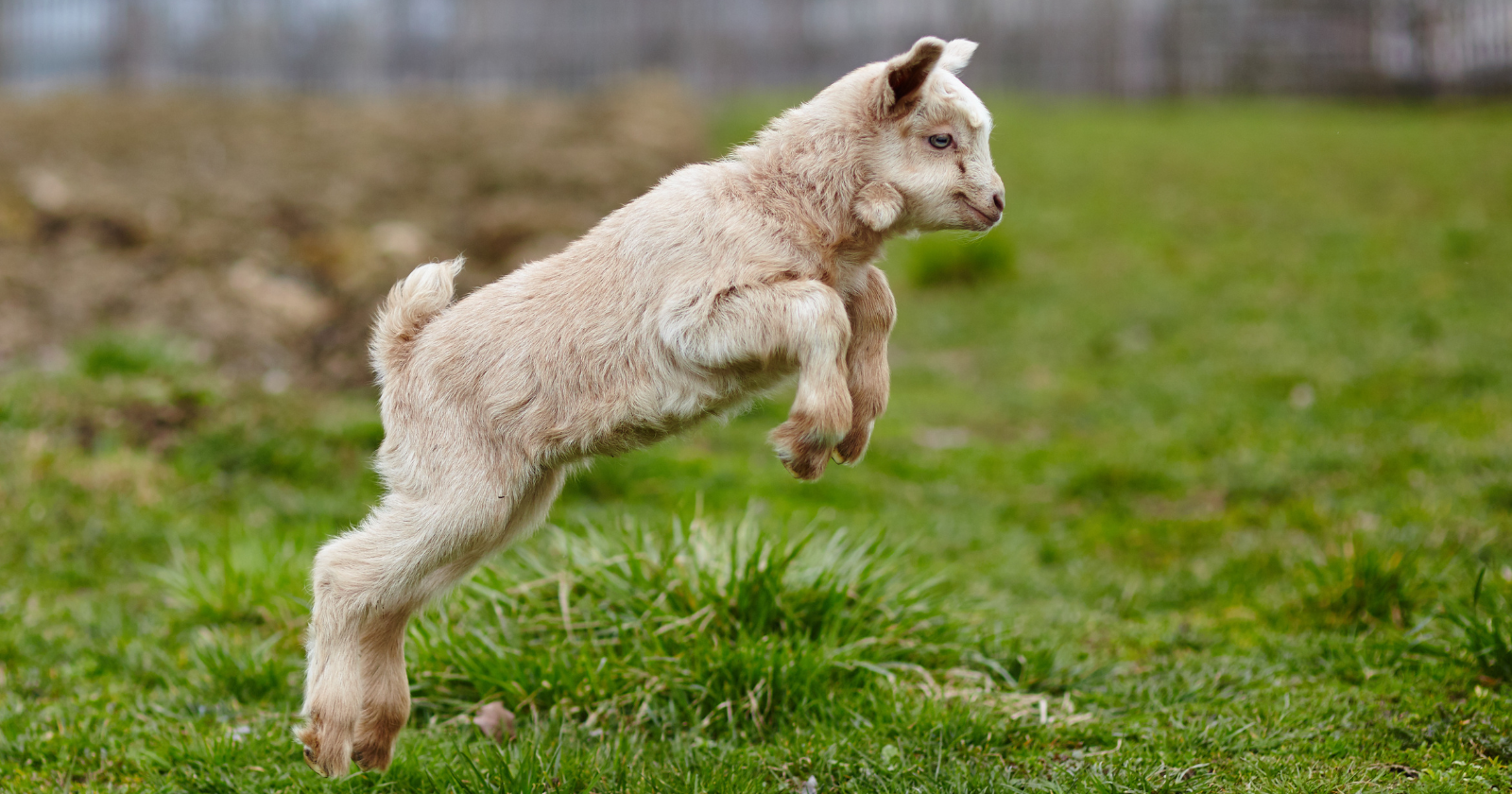
Can an animal pick up an accent from the crowd it grows up in? We tend to think that trick belongs to people and a few famous mimics like parrots, songbirds and dolphins. But a study of pygmy goat kids in England found something close to it. Researchers recorded the same babies at one week old and again at five weeks. Kids growing up together had started to sound alike.
Early on, a kid’s bleat is mostly its own. By five weeks, kids sharing a social group had drifted toward one another, their calls more alike than at the start. One of the researchers, Dr. Briefer put it this way: “the calls of kids raised in the same social groups were also similar to each other, and became more similar as the kids grew older.”
The similarity wasn’t there from birth. It grew with time spent together, and that’s what makes it interesting.
How the study was set up
The work was done by Dr Elodie Briefer and Dr Alan McElligott, then at Queen Mary, University of London, and published in 2012 in the journal Animal Behaviour.
The setup was built to separate two things: what a kid inherits, and what it picks up from its company. All the kids shared one father but had several different mothers, so the groups mixed full siblings with half siblings. That let the team compare kids with the same genes but different upbringing, and kids with different genes but the same daily surroundings.
The numbers were small, as they often are in this kind of animal fieldwork. The team recorded 23 pygmy goat kids at one week and again at five weeks. In between, the newborns were split at random into four groups of five to seven animals each. For each kid they analyzed 10 to 15 calls, measured across 23 features of the sound to catch tiny differences a human ear would miss.
Note that one study on one small group of goats is best read as a clue worth chasing, not the last word.
What “accent” actually means here
The claim is not that the kids consciously copy each other, or that a goat could distinguish a Nottinghamshire bleat from a Yorkshire one. It’s narrower: kids kept in the same group tuned their calls toward a shared sound over a few weeks.
Briefer described the pattern as goat kids modifying “their calls according their social surroundings, developing similar ‘accents’.” Her own word there is “suggests,” and that’s the right level of confidence for it.
Genes didn’t drop out of the picture. Kinship still shaped how kids sounded. As Briefer noted, “We found that genetically related kids produced similar calls, which is not that surprising.” Full siblings sounded more alike than half siblings by five weeks, and each kid kept its own signature.
So two forces run at once: a kid inherits part of its voice, then layers a group flavor on top.
Why this got attention
Adjusting your sounds to match the group you live in was long thought to be a rare trick among mammals. The short list of animals known to do it ran to humans, bats and whales. Hoofed animals weren’t on it.
That’s why McElligott framed the goat result as a first for that group: “It’s the first ungulate to show evidence of this,” he said around the time of publication.
How much to make of it depends on where you set the bar. Not everyone would call this full vocal learning of the songbird-and-parrot kind. The neuroscientist Erich Jarvis offered a measured reading: “I would call this an example of limited vocal learning.” The kids aren’t inventing new calls from scratch; they’re nudging existing ones toward the local norm. Limited, but real, and in an animal nobody was watching for it.
Perhaps the more interesting implication is about what else might be hiding in plain sight. If a farmyard goat can do a modest version of this, the trait may be more common across mammals than the old assumption allowed, just under-looked-for. McElligott made that point about the animals we think we already know well, arguing the research “highlights the important cognitive abilities that some of our domestic animals possess,” abilities that had gone largely unnoticed. He was also frank that the study opens a to-do list more than it closes a case: “People presumed this didn’t exist in most mammals, but hopefully now, they’ll check it out in others,” he said.
That’s the part we keep coming back to. The goats didn’t do anything a person would notice standing at the fence. It took two recording sessions and a spreadsheet of sound measurements to see the drift at all, which raises the obvious question about all the ordinary animals around us that no one has thought to record twice.