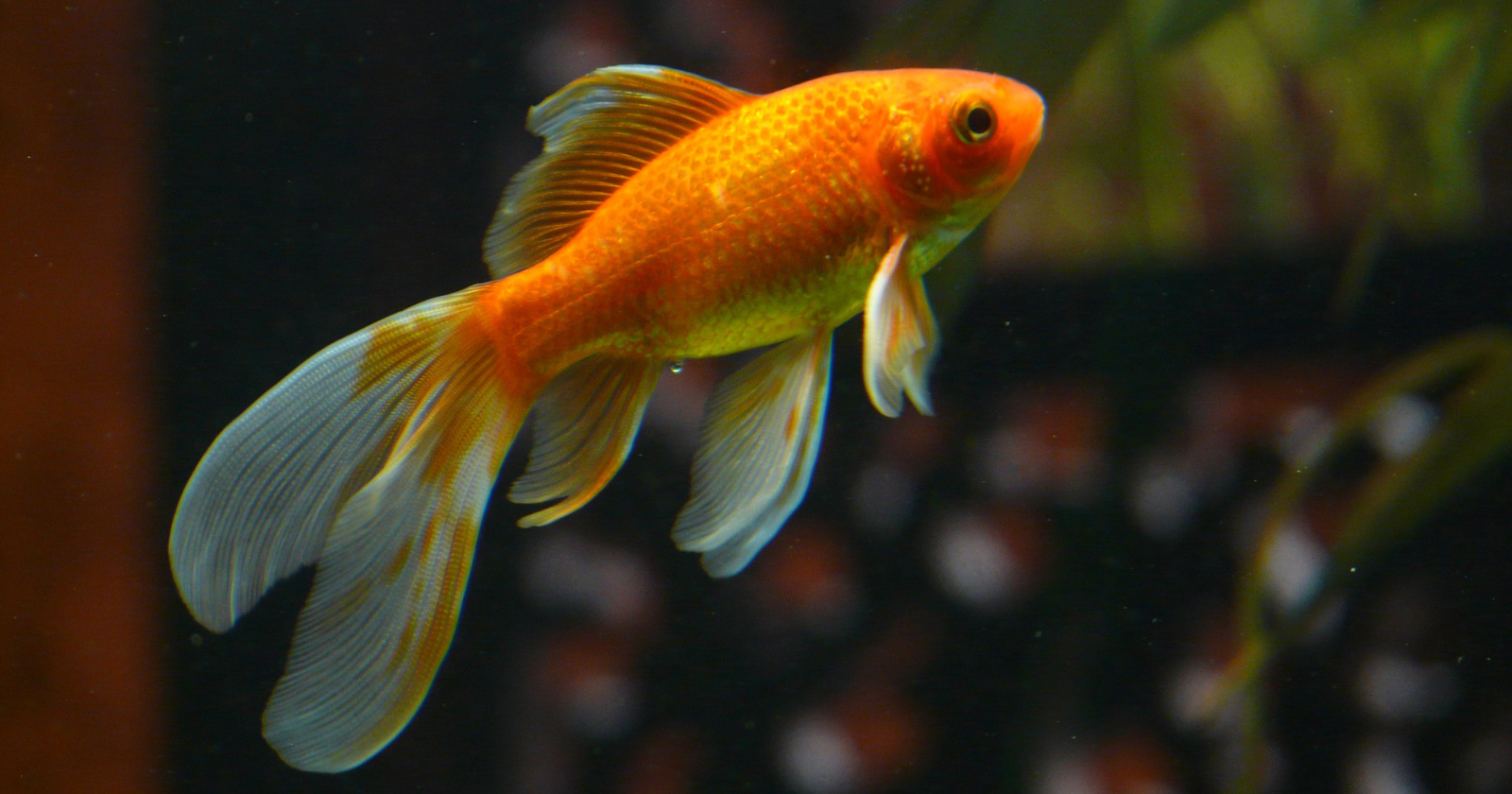
Nothing to remember, nothing to miss, no boredom piling up. One possible reason the belief has lasted so long is that it makes keeping a fish in a tiny container easier to rationalise, although that explanation remains a suspicion rather than something researchers have proved.
The exact number in the myth changes depending on where you hear it. Culum Brown, a professor at Macquarie University who has studied fish intelligence for more than 25 years, puts it plainly: “In some places, it’s 2 seconds, and in others, it’s 10 — but it’s always short.” Two seconds, three, ten.
The figure moves; the story doesn’t.
I’m not a vet or an animal behaviourist, so read the following as an interpretation of the research rather than specific care instructions.
What the science actually shows
The evidence against the few-seconds claim is neither new nor thin. “We’ve known about the reasonably good memories of goldfish since the ’50s and ’60s,” Brown says. Goldfish became a common laboratory animal for studying how fish learn and remember, and that research describes an animal capable of retaining information for far longer than a few seconds.
Take the lever experiments. In a 1994 University of Plymouth study, eight goldfish were trained to press a lever to receive food. The researchers gradually restricted the reward until the lever produced food during only one hour of each day. The fish concentrated more of their lever pressing around the period when food was available, showing that they could learn and anticipate a regular daily feeding schedule.
The study was not itself a three-month memory test, but other work has found retention over that kind of period. In one experiment, goldfish were trained to distinguish between amino-acid odours associated with different outcomes. When they were tested again later, the fish retained the learned discrimination for at least three months.
Then there’s colour. In 1959, McCleary and Bernstein trained goldfish and found that they could distinguish coloured panels regardless of how bright each one was. That last part matters: controlling brightness helps separate genuine colour discrimination from simply responding to lighter and darker surfaces.
Later work supported the finding. Muntz and Cronly-Dillon trained goldfish to distinguish blue, green and red panels that varied considerably in brightness. The experiment was arranged so that brightness alone could not reliably solve the task, and the fish successfully learned the colour discriminations.
Brown’s own summary of the field is blunter than I’d put it: he says “there are thousands of studies [on goldfish] that show fish have excellent memories.” Take that number as his characterisation of the literature rather than a tally independently checked, but the broader conclusion is well supported. Goldfish can retain at least some learned behaviours for weeks or months.
Why the myth won’t die
So why does a belief with decades of evidence against it keep getting repeated as fact? Part of it may be that it is simply a good line. “Three-second memory” is easy to remember, faintly funny and easy to pass along. But Brown suspects something less flattering. “I suspect it’s got more to do with making us feel good about putting them in a tiny little bowl,” he says. As he puts it, “It probably says more about us than it does about the goldfish.”
That is a hypothesis about why the myth persists, not a demonstrated historical explanation, and Brown frames it that way. But it is easy to see why the idea might be comforting. The bowl is a cultural object as much as a container: the round glass, the single orange fish, the fairground prize. A story that says the fish cannot remember its surroundings makes the arrangement easier not to question.
What the research shows instead is a small animal with meaningful learning abilities. It appears a goldfish can learn a task, remember some associations for months, distinguish colours and anticipate the time of day when food becomes available. “Despite what everybody thinks, they’re actually really intelligent,” Brown says. A more cautious way to put it is that goldfish are considerably more capable than the three-second myth gives them credit for.
What that means for the fish
Memory alone does not prove exactly how a goldfish experiences boredom or confinement. But it does remove one of the most common excuses for ignoring its surroundings.
Brown points out that a properly cared-for goldfish can live for around 20 years. Its welfare should therefore be judged by considerations such as water quality, oxygenation, filtration, space and environmental complexity, not by the claim that it forgets everything every few seconds.
Appropriate housing depends on the number, variety and size of the fish, so a knowledgeable aquarium specialist or an exotics vet can advise on a particular setup. What is clear is that the traditional memory myth is not a sound basis for keeping a goldfish in a bare bowl.
The animal in the bowl is not a forgetting machine stuck on a loop. It may remembers a task, a colour and the hour when food arrives.