

A spacecraft more than 11 billion miles away, still working, still sending data home, and no one on the planet able to say a word to it. Not because the mission had failed. Because the single dish that could reach it had been switched off, and there was no backup anywhere on Earth. For most of 2020, that was the real situation for Voyager 2. Ground controllers could listen. They just couldn’t talk.
What strikes us is how ordinary the cause was. Not a disaster, not a cosmic accident. Concrete, steel, and a radio transmitter that had been running for nearly half a century and needed replacing before it broke.
Why one dish outside Canberra, and only that one
The reason comes down to where Voyager 2 went in 1989. To get a close look at Neptune’s moon Triton, the probe flew over Neptune’s north pole. That move bent its path steeply downward, away from the flat plane where the planets sit. It is now leaving the solar system at about 48 degrees below the ecliptic, so far south in Earth’s sky that NASA’s northern stations, in California and Spain, simply can’t see it.
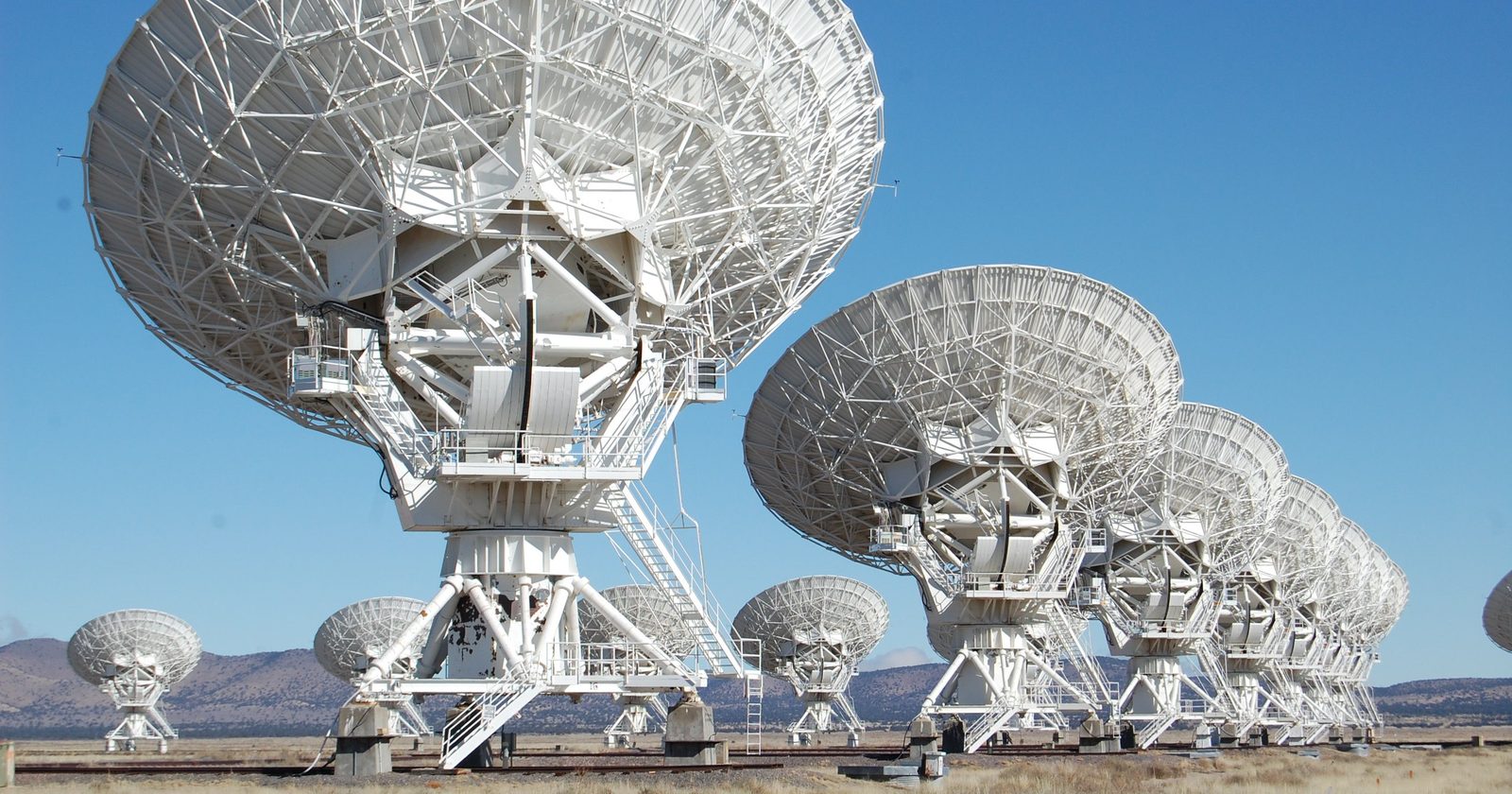
That leaves Deep Space Station 43, a 70-metre dish at the Canberra Deep Space Communication Complex in Australia. It is the only antenna in the southern hemisphere with a transmitter strong enough, and on the right frequency, to reach Voyager 2’s dated receiving gear. The dish is older than the mission. DSS-43 began operating in 1972 at 64 metres wide, five years before Voyager launched, and was expanded to 70 metres in 1987.
This isn’t just a Voyager problem. As Philip Baldwin, an operations manager for NASA’s space communications program, put it, “The DSS43 antenna is a highly specialized system; there are only two other similar antennas in the world, so having the antenna down for one year is not an ideal situation for Voyager or for many other NASA missions.”
What the silence actually looked like
NASA took DSS-43 offline in March 2020 for major upgrades, the antenna’s longest offline stretch in over 30 years. The plan called for roughly eleven months of work.
The silence went only one way. During the outage, operators could still receive Voyager 2’s health and science data, because the Canberra site’s three smaller 34-metre antennas could be combined to pull in the signal coming down. What they lost was the ability to send anything up. The probe kept running on the last instructions it had been given, flying solo, out of contact in the one direction that mattered for control.
The maintenance couldn’t reasonably wait. “For an antenna that is almost 50 years old, it’s better to be proactive than reactive with critical maintenance,” Baldwin said. That’s his call, and it’s hard to argue with when the transmitter being swapped out had been in service for over 47 years.
The one command that broke the silence
The first test of the new hardware came on Oct. 29, 2020, the first commands sent to Voyager 2 since mid-March. Operators sent a set of instructions through the newly installed equipment, and the spacecraft, then more than 11.6 billion miles away, confirmed it had received the call and carried out the command with no problems.
Brad Arnold, the network’s project manager at NASA’s Jet Propulsion Laboratory, described just how much work was involved. “What makes this task unique is that we’re doing work at all levels of the antenna, from the pedestal at ground level all the way up to the feedcones at the center of the dish that extend above the rim,” he said. The test itself, in his words, “definitely tells us” things were on track. The dish returned to full service in February 2021.
What one dish tells us about the whole network
The upgrade came at a real cost while it lasted. As Jeff Berner, the Deep Space Network’s chief engineer, framed it: “Obviously, the 11 months of repairs puts more constraints on the other DSN sites. But the advantage is that when we come back, the Canberra antenna will be much more reliable.” One dish going dark for eleven months, with the whole rest of the network feeling the pinch, is a fair measure of how little spare capacity the system has.
That capacity is thinning. NASA’s own Office of Inspector General has warned that the Deep Space Network is stretched beyond what it can handle, with demand exceeding supply by 40 percent at times. The auditors expect that strain to grow as more deep-space missions launch. Voyager 2, sent up in 1977 and kept in contact through equipment that has been running for decades, sits at the far end of that pressure. The gear keeping it in touch is nearly as old as the probe itself.
What we keep coming back to is the lopsidedness the 2020 outage exposed. Even with DSS-43 dark, the ground could still hear Voyager 2, faintly, across more than 11 billion miles. What it lost, for the better part of a year, was the ability to answer back. Hearing a spacecraft turns out to be the easier half of the job. Speaking to one, on the right frequency, with enough power, from the one spot on Earth that still has a clear line of sight, depends on a single aging dish outside Canberra and the crews who keep it standing.