

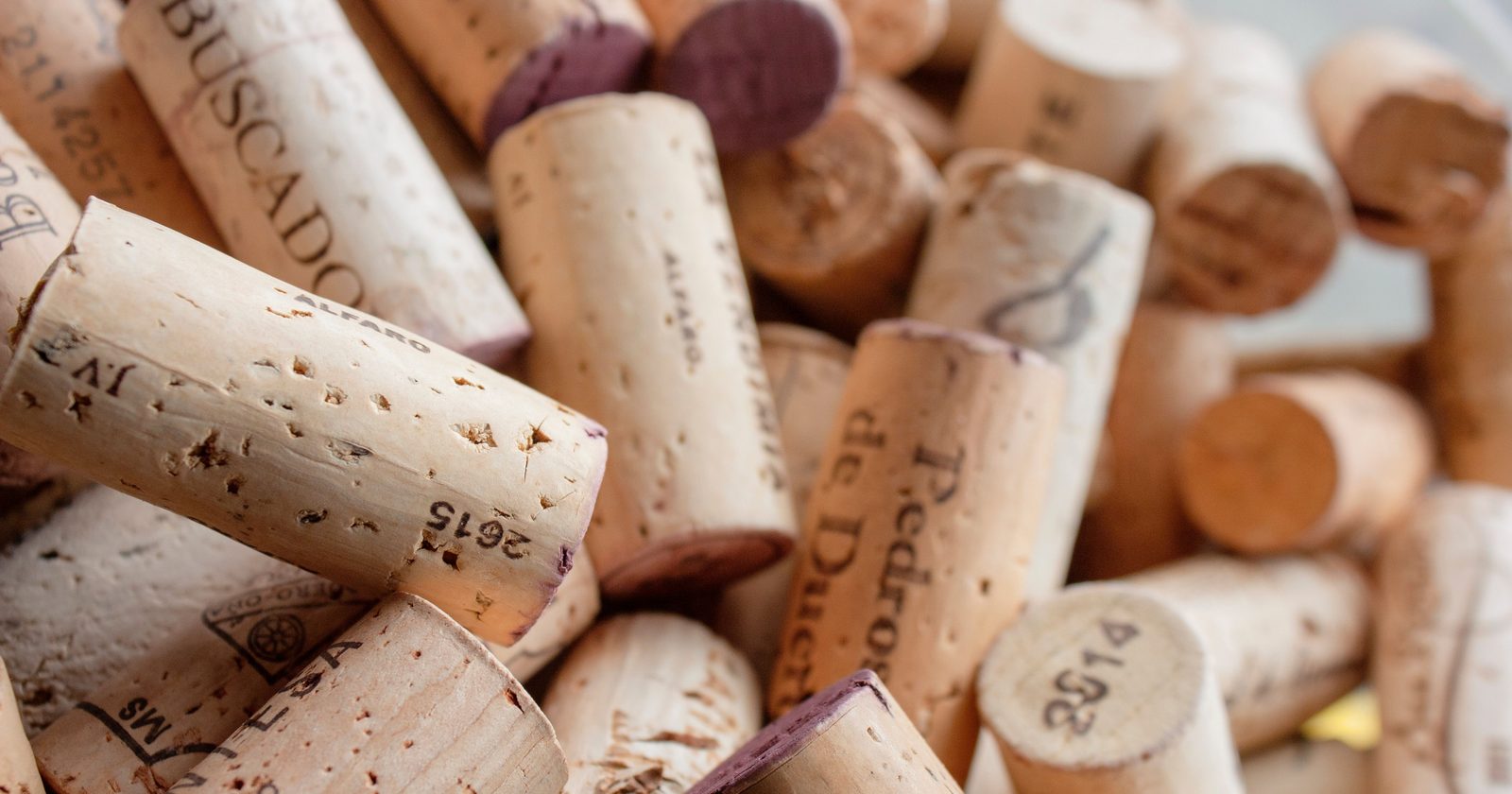
A used wine cork is a natural material, it looks recyclable, and yet dropping it in your household recycling bin is almost certainly the wrong move. Most kerbside systems aren’t set up to catch something that small and light, made of a material they don’t process. So the cork gets sorted out and sent to landfill or incineration anyway.
Portugal, which supplies a large share of the world’s cork, has built a separate route to catch those stoppers before they’re thrown away.
If you’d like your own corks to get a second life, the way it works is worth knowing.
Why used corks don’t just go in the recycling bin
Cork is usually made from bark. It’s stripped from the cork oak, it’s renewable, and it doesn’t need the tree to be cut down. All of which makes it feel like an obvious candidate for the recycling bin.
The catch is on the collection side, not the material side. Ordinary recycling bins are built around glass, paper, metal and common plastics, and a loose cork stopper falls outside what that machinery is set up to catch. As one recycling guide notes, it is hard to find a city recycling program that takes wine corks. That’s why a dedicated collection scheme exists at all.
Cork isn’t hard to recycle. The ordinary bin just isn’t the channel for it.
How Portugal actually collects them
The backbone of the effort is Green Cork, a national collection program.
Green Cork was created in 2008 by the environmental NGO Quercus with the cork group Corticeira Amorim. Rather than asking households to find a specialist facility, it puts collection points where people already handle corks: wine shops, restaurants, wine bars, supermarkets and wine-tourism sites. A bottle opened in a restaurant, or bought from a wine merchant, can hand its stopper back at roughly the same spot.
Supermarkets have leaned in to make this a home habit. A joint campaign with the Continente chain distributed 500,000 household cork boxes, small tins meant to sit on a kitchen counter so families can save corks between shopping trips.
Once corks pile up at a drop point, they’re gathered and taken to Amorim’s recycling facilities. Amorim’s own timeline records the first cork stopper recycling facility at Amorim Cork Composites in Mozelos, in the north of the country. This is no longer a niche effort. As of 2019, Green Cork had recycled around 84 million stoppers since 2008.
What happens at the plant
The first job is separating cork from everything that isn’t cork. Stoppers are sorted manually to check quality and pull out the plastic stoppers and metal bottle caps that inevitably slip into collection bins. Where cork ends up heavily stained, it’s washed and disinfected before going further. An unglamorous step, but it’s what turns a bin of mixed rubbish into a usable raw material.
After sorting, the cork is ground down into small granules. The European Circular Economy Stakeholder Platform, a joint initiative of the European Commission and the European Economic and Social Committee, describes it this way in its profile of Amorim: “At Amorim’s cork recycling unit, used cork stoppers are treated and ground into granules, beginning a new cycle as a raw material.” From here, the cork stops being stoppers and becomes an ingredient.
According to the ECESP profile, “Only 30% of cork meets the quality standards to manufacture natural cork stoppers, but the remaining part is not wasted.”
That doesn’t mean the material loses its value. Amorim puts it plainly: “Although recycled cork is not used in the production of new cork stoppers, it continues to create value across multiple industries and applications.” The granules go into flooring and wall coverings, thermal and sound insulation, sports surfaces, footwear and various cork composites. The ECESP lists a wider range still, describing uses “from coverings to insulation, from sport surfaces to tennis balls, and from shoes to aircraft components.”
There’s a second payoff. Money from cork recycling in Portugal helps fund tree planting, and the Continente campaign report counts more than 828,000 native trees planted through the linked reforestation effort. We’d read these figures with some caution, since they’re reported by the companies running the program rather than independently audited, but the direction of the model is clear enough.
How to hand your own corks over the right way
Only natural cork stoppers belong in the collection stream. Plastic stoppers and metal screwcaps get sorted out at the plant, so keeping them out at your end saves a step. Synthetic corks are smooth like plastic and often coloured, while natural cork is brown and woody like tree bark.
If it’s genuine cork, it goes in the jar. If it’s a synthetic plug that just looks like cork, it doesn’t.
The first move is checking whether a local retailer or a national scheme takes corks before you start hoarding. But the core action is small and concrete. A jar on the counter, a stack of corks that would otherwise have gone in the bin, and one trip to a collection point can turn them into insulation, flooring or something underfoot on a sports pitch rather than into landfill.