
Water shows up in one of the driest places on Earth, and the story writes itself. Cracked ground drinks it in, dormant seeds swell, something long asleep stirs back to life. We have all seen the time-lapse videos of a desert going green after a freak storm.
The intuition feels safe: rain in a place starved of it must be a gift.
In the driest core of the Atacama, that intuition was almost exactly backward. The rain was not a rescue. The researchers concluded that it killed most of the tiny life forms living in the flooded surface soils.
A quick note on what this is. We are not microbiologists or astrobiologists, and this is one field study of a rare event, not settled science about how life behaves everywhere. Read it as a striking finding worth thinking about, not a rule about your local ecosystem.
The rain nobody had seen in five centuries
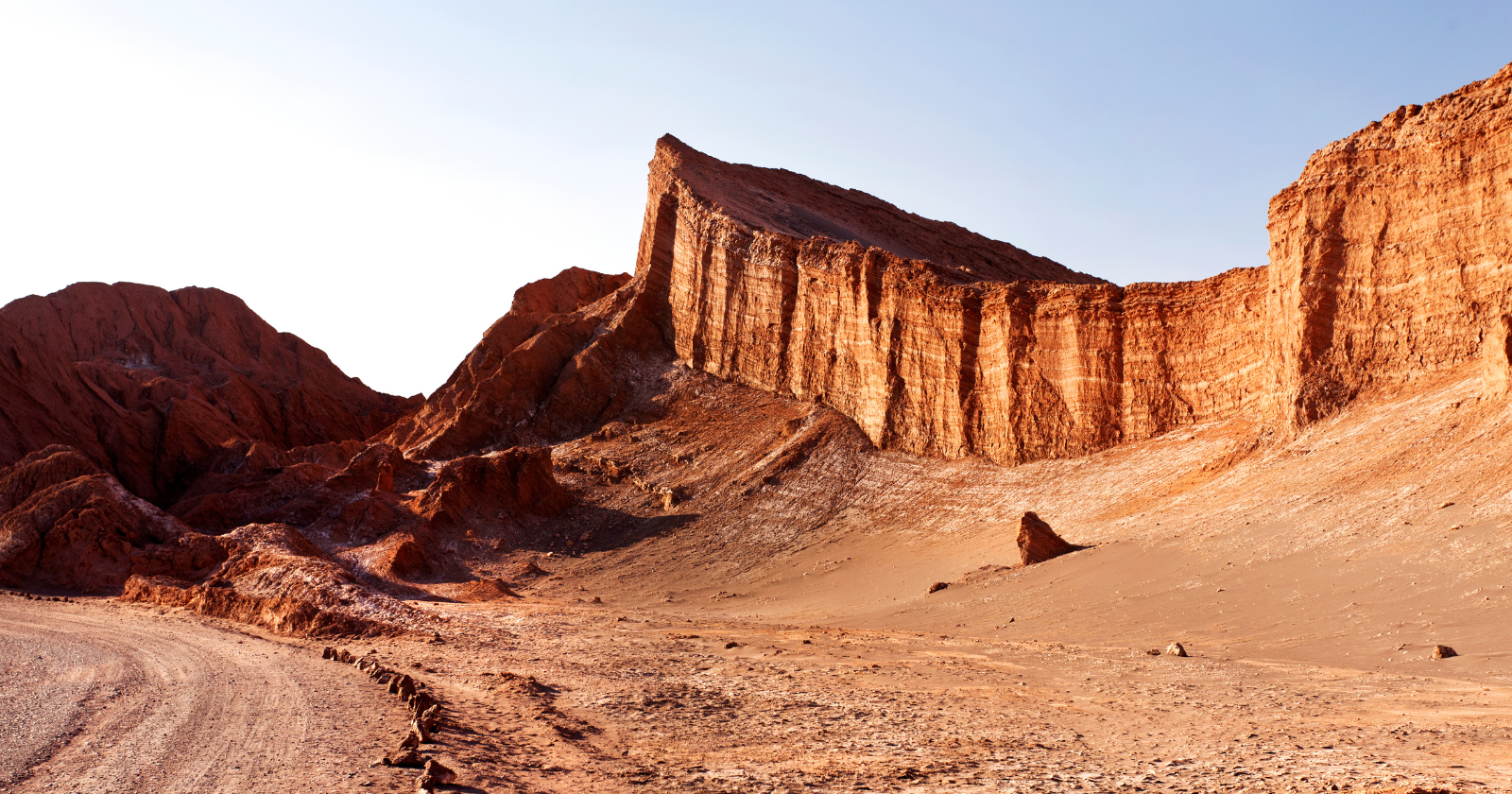
The Atacama in northern Chile is one of the driest and oldest deserts on the planet. That is exactly why researchers use it as an analogue for Mars.
Then the sky did something unusual. Rain reached the desert’s driest heart on March 25 and Aug. 9, 2015, and again on June 7, 2017. Researchers said there were no records of similar rain events there for at least 500 years. The water pooled into temporary salty lagoons that stuck around for months. A natural experiment, and the team went in expecting the desert to wake up.
It did not go the way they pictured. Alberto Fairén, a co-author of a study investigating this, put the expectation plainly: “When the rains came to the Atacama, we were hoping for majestic blooms and deserts springing to life.” What they found instead was the opposite.
Why the water killed instead of saved
The microbes in those soils were adapted to survive with only meager amounts of liquid water. Lots of water was not their element. The researchers proposed that the sudden flooding caused osmotic shock severe enough to kill many of them.
Lead author Armando Azua-Bustos described the likely result in about as vivid a phrase as you will find in a research write-up: the microbes, he said, “burst like balloons.” The paper presents osmotic shock as the proposed explanation rather than a directly observed mechanism, but the image sticks. His blunter summary of the whole community: it “doesn’t know how to deal with water.”
What strikes us is how neatly this inverts the usual survival logic. These organisms were highly specialized for one of the driest environments on Earth, and that specialization came with a vulnerability: a sudden flood of water could be lethal.
The die-off number
How much life actually vanished? The study gives a range. Depending on the lagoon area examined, between 75 and 87 percent of the previously reported species vanished, leaving only two to four bacterial species detectable in the lagoons.
That fits the before-and-after comparison Fairén gave in interviews: the hyperdry soils before the rains had supported up to 16 different microbial species, while only two to four were found in the lagoons afterward.
The researchers concluded that the sudden input of water had severely disrupted the surface microbial communities. They also stressed that deeper communities below roughly 15 to 20 centimetres were likely unaffected, and that ecological recovery after the lagoons dried was possible. So this was a severe local surface die-off, not evidence that microbial life across the Atacama disappeared.
What to take from it
The lesson we keep coming back to is about the cost of specialization. Being exquisitely adapted to an environment is an advantage while conditions stay within the range you can tolerate. When conditions swing hard in an unfamiliar direction, that specialization can become a weakness.
There is a Mars angle here, and the researchers are careful with it. If Mars once had microbial life during ancient wet spells, the Atacama offers a possible model for how organisms adapted to extreme dryness might react to sudden flooding.
The team also raises a practical caution: adding water to test soil for life, the way the 1970s Viking landers did, might be exactly the wrong move if the life you are hunting for is adapted to almost none of it. You could kill the thing you came to find in the act of looking.