
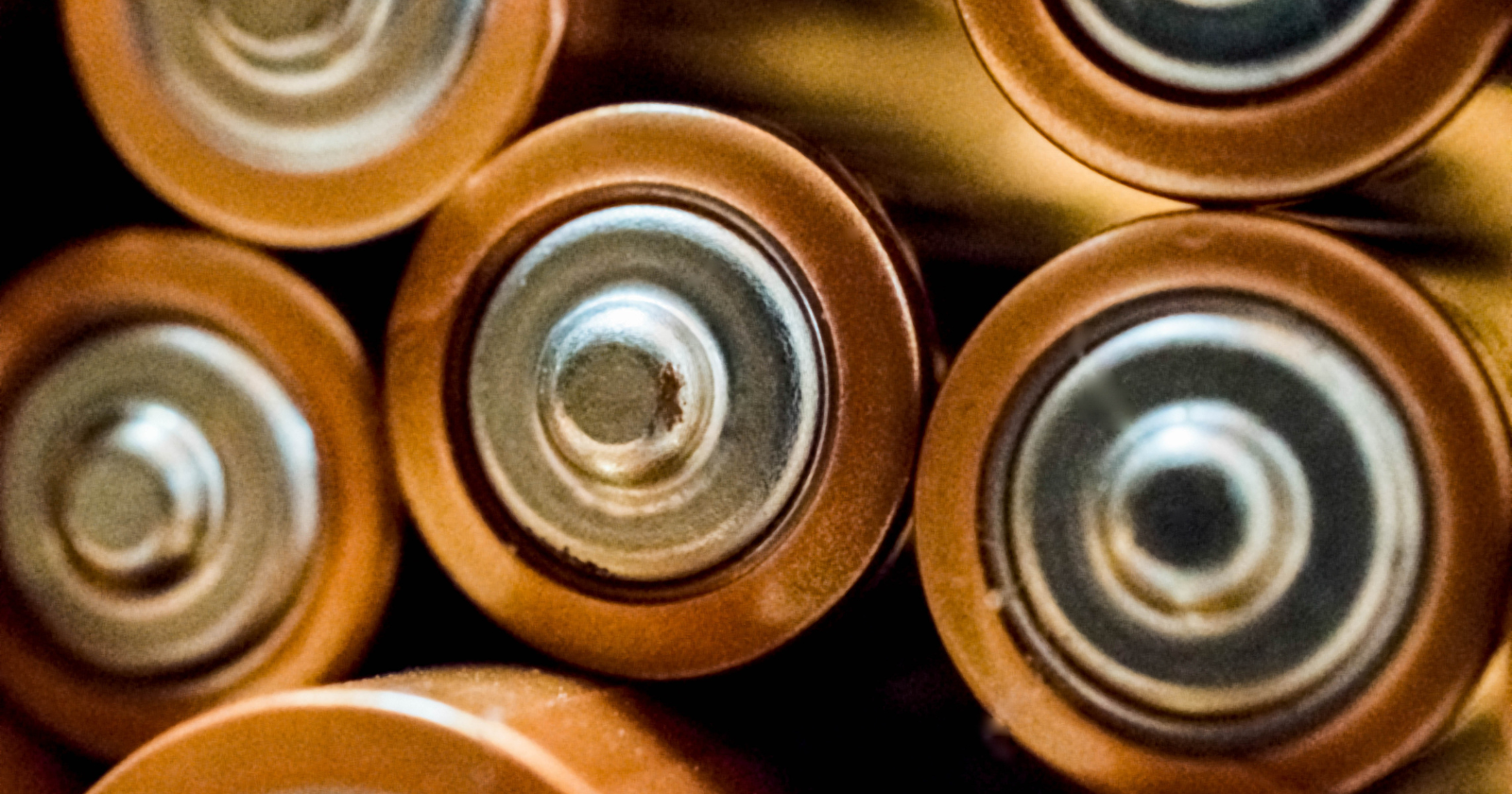
Inside a conventional lithium-ion battery is a thin plastic sheet called a separator. It sits between the two electrodes and keeps them from touching while allowing lithium ions to move through. It does its job silently for years, and when the battery dies, it often gets discarded.
A team at Yonsei University in Seoul decided to do something else with it. Instead of tossing the separator, they reworked it into a filter that pulls salt out of seawater. In a paper published in Materials Horizons, they report the reworked separators achieved 99.6 percent salt rejection through two-stage seawater filtration.
We’re not chemists or water engineers, and this is our reading of one study, not a verdict on it. The figures below are lab results from a single group, not evidence of independently reproduced performance. Treat this as a promising early result, not a technology you’ll find at a treatment plant next year.
What a battery separator actually is
When a lithium-ion battery reaches the end of its life, recyclers go after the valuable metals: nickel, cobalt, lithium, copper. The plastic separator has little recovery value, so it mostly gets left behind. As the study authors put it, “conventional recycling primarily targets metal recovery, leaving polymeric separators largely discarded.”
What makes the separator worth a second look is that it’s already a porous membrane. It’s a thin plastic film full of tiny channels. What it lacks is the exact pore structure and surface chemistry needed to pull dissolved salt out of water. Closing that gap is what the team set out to do.
How the team turned it into a filter
The step that matters most is getting the pores and their surface properties right. Using computer modelling as a guide, the group engineered the used polyethylene separators to achieve pore dimensions of 1.5–3 nanometres and strongly charged surfaces.
Once the membranes were made, the group ran water through them and measured how much salt made it out the other side. They tested lower-salinity water and a two-stage run on seawater.
Reading the 99.6 percent number
The 99.6 percent figure is real, but it comes from two-stage filtration. The authors report 93.2 percent salt rejection and water permeability of 1.7 litres per square metre per hour per bar under low-salinity conditions. So the near-total figure is a two-stage result, not a single pass. That’s not a knock against it. It’s just the honest way to read the headline.
Some context helps. Seawater carries roughly 35,000 mg/L of dissolved solids. A World Health Organization background document describes water with 300 to 600 mg/L as having good palatability, based on taste-panel ratings. That is a judgement about taste, not confirmation that water is safe to drink.
You have to remove almost all the salt to reach that range, which is why a second pass can matter.
Where this could fit, and where it can’t yet
The team didn’t stop at filtering water. They ran the filtered seawater through a process that splits water to make hydrogen, and removing the salt first helped there too. It raised hydrogen output compared with splitting raw seawater and suppressed electrode scaling and corrosion. That’s a potentially useful pairing: the same membrane that removes salt could also make seawater-fed hydrogen production easier on the hardware.
None of this adds up to a working desalination plant yet. Reverse osmosis already handles most of the world’s desalination, accounting for roughly 70 percent of global capacity, with decades of engineering behind it. A membrane that performs well in a lab still needs evidence of durable, economical operation at scale before anyone builds a facility around it. This paper is a proof of concept, not a product.
Still, the material story is worth weighing on its own. Battery waste is heading toward an estimated 1.6 million tons by 2030, and separators are among the components conventional recycling largely discards. Even if the salt-filtering never beats existing technology, finding an economical use for discarded plastic could change the disposal math for a waste stream we already have to deal with.
If you’re following this for the water-scarcity stakes rather than the chemistry, remember that lab salt-removal rates and real drinking-water supply are separated by a long stretch of engineering, and the people best placed to judge that distance are the desalination researchers who do this for a living.