

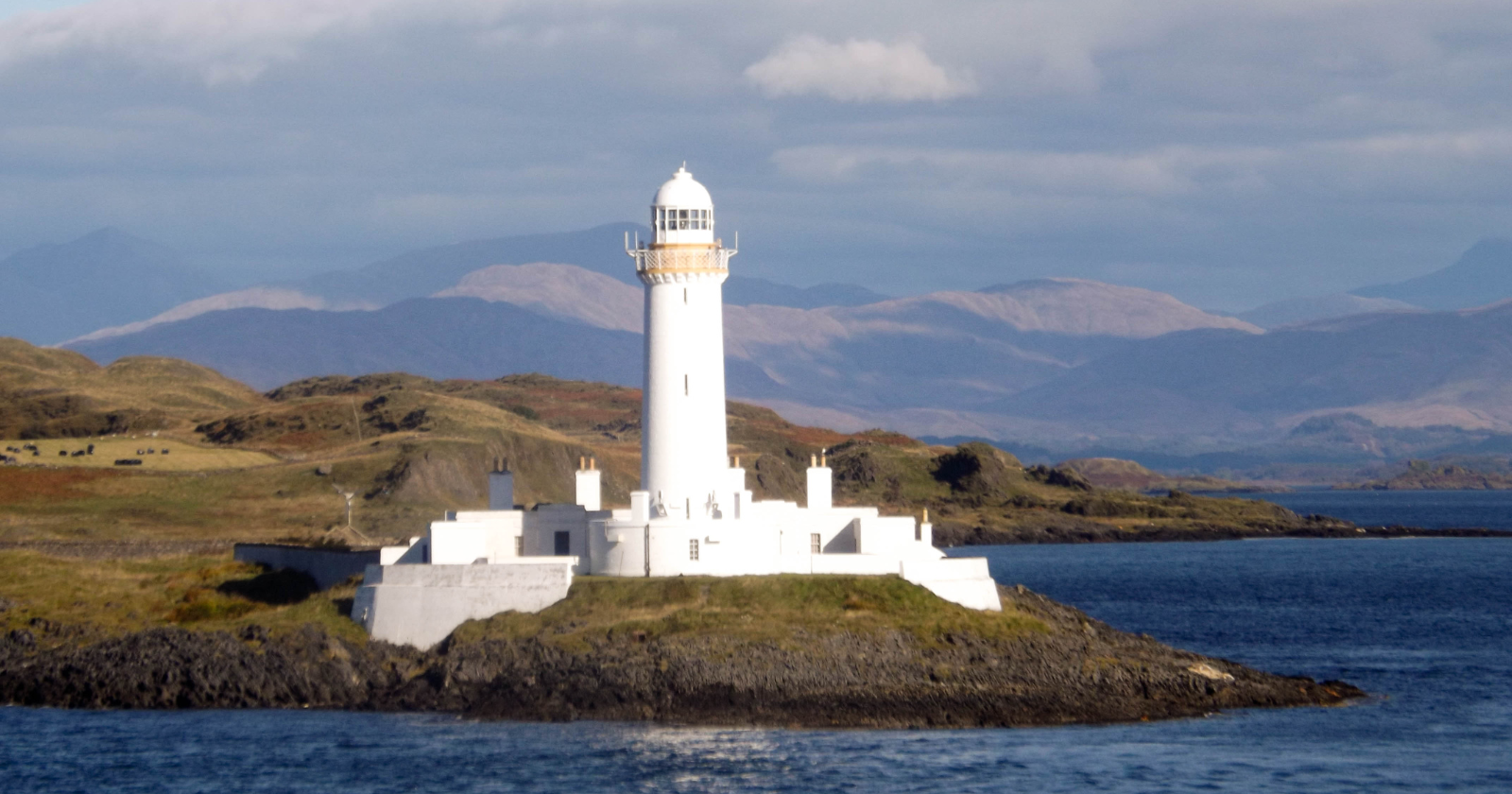
Somewhere in a wooden box in Scotland sits a printed form from 1911. A lighthouse keeper filled it in by hand, noting the birds passing his lonely rock in the Pentland Firth. He was not a scientist. He almost certainly never saw a laboratory. Yet his careful notes are still being kept, more than a century later, by a national bird body. Why?
The short version: for decades, those who kept Scotland’s lighthouses were among the country’s best bird recorders. They were asked to be, on official forms, by a scientific committee that had spotted something clever about where they stood.
The scheme goes back further than the surviving Scottish forms. In 1880, on the recommendation of Alfred Newton, the British Association for the Advancement of Science set up a committee to study bird migration. It turned to the keepers of lighthouses and lightships around the coast, asking them to fill in printed forms recording what flew past. That account comes from professor Robert Montgomerie in a British Ornithologists’ Union post called “Blinded by the Light“, which traces how the committee got keepers to log the birds they saw on watch.
Pulling all this together was the Scottish ornithologist William Eagle Clarke, who joined the committee in 1883 and later ran the natural history department of the Royal Scottish Museum, now the National Museum of Scotland. He went further than the paperwork, spending months living at lighthouses to watch the birds himself. That work became his two-volume Studies in Bird Migration, first published in 1912.
Why lighthouses, of all places? The answer is about timing and location, and it’s neat once you see it.
Migrating birds often travel at night, following the coast. A lighthouse sits right where sea meets land, and a keeper on the night watch is one of the very few people awake and outside at the hours when that movement happens. The light itself pulls birds in, sometimes fatally.
Eagle Clarke made the point directly. Writing in 1903, he described night migration as happening “so that it escapes the notice of all save those few peculiarly placed observers, the light-keepers”. Keepers were almost the only people positioned to see something that most of us, asleep and inland, never saw at all.
And they took to it. One of the committee’s annual reports, the report on migration for 1887, names the Pentland Skerries keepers among those helping with the work during their watches, and reproduces notes from other northern stations like Dunnet Head and Noss Head. These were not reluctant participants. They were logging birds in the small hours, in bad weather, on rocks.
This is where the Pentland Skerries form comes in. One documented survivor is the “Schedule for Observations on Birds Completed at Pentland Skerries Lighthouse 1911”, filled in by keeper John Bain. The lighthouse stands on Muckle Skerry, a low island in the Pentland Firth, the fierce stretch of water between the Scottish mainland and Orkney. It is about as exposed a posting as Scotland offers.
It’s a printed grid, not a diary. The keeper enters the species, the numbers, the dates, the wind direction, the state of the weather. Data collection in the plainest sense: a person recording what was in front of him in a standard format, so it could be compared with returns from every other station on the coast. Multiply Bain’s single form across dozens of lighthouses and many years, and you start to see what the committee was building.
Eagle Clarke gathered the forms through the museum. Many of the Scottish ones later fed into The Birds of Scotland by two ornithologists, Leonora Rintoul and Evelyn Baxter, the first full survey of Scottish birds. The pair were tied to the lighthouse network in more ways than one.
According to National Museums Scotland, “Many birds were salvaged by lighthouse keepers from Scottish lighthouses who sent them to the ‘good ladies’ for their collection.” That collection eventually reached around 1,200 bird skins, donated to the museum.
From Rintoul and Baxter, the forms passed to the Scottish Ornithologists’ Club, the national body founded in 1936. The Scottish Council on Archives records that the club “holds several hundred of these Schedules stored in one wooden box (pictured below) and one cardboard box.” Two boxes. That’s what a national scheme of coastal watchers, filtered through a century, comes down to physically.
What are several hundred old forms worth now? More than they might look. Each form is a dated, located snapshot of which birds were on the move at a stretch of coast at a given time. Gather enough of them and you have something no single lifetime of watching could ever produce: a long record of coastal migration, spread across the map, compiled before radar, before large bird-ringing programs, before the field looked anything like it does now. Eagle Clarke’s own results hint at how rich the material was. At Fair Isle alone, he recorded 207 species, then half of all the birds on the British list.
What strikes us about the forms is who made them. The keepers weren’t ornithologists. They had no training in the field they were feeding, no stake in the books Rintoul and Baxter would later write, no way of knowing their forms would sit in a wooden box a hundred years on. They simply did the watching well, night after night, because they’d been asked and were in the right place to do it. The science was assembled by named experts. The raw observation, the part without which none of it exists, came from people history mostly forgot to name.
Careful record-keeping tends to outlast the person and the era that made it, and often outlasts the reason it was collected in the first place. A keeper noting a wind direction on Muckle Skerry in 1911 was doing a small, ordinary job. The instruments changed, the museum changed its name, the club that holds the box didn’t yet exist when John Bain sat down with his form. His numbers are still here.