

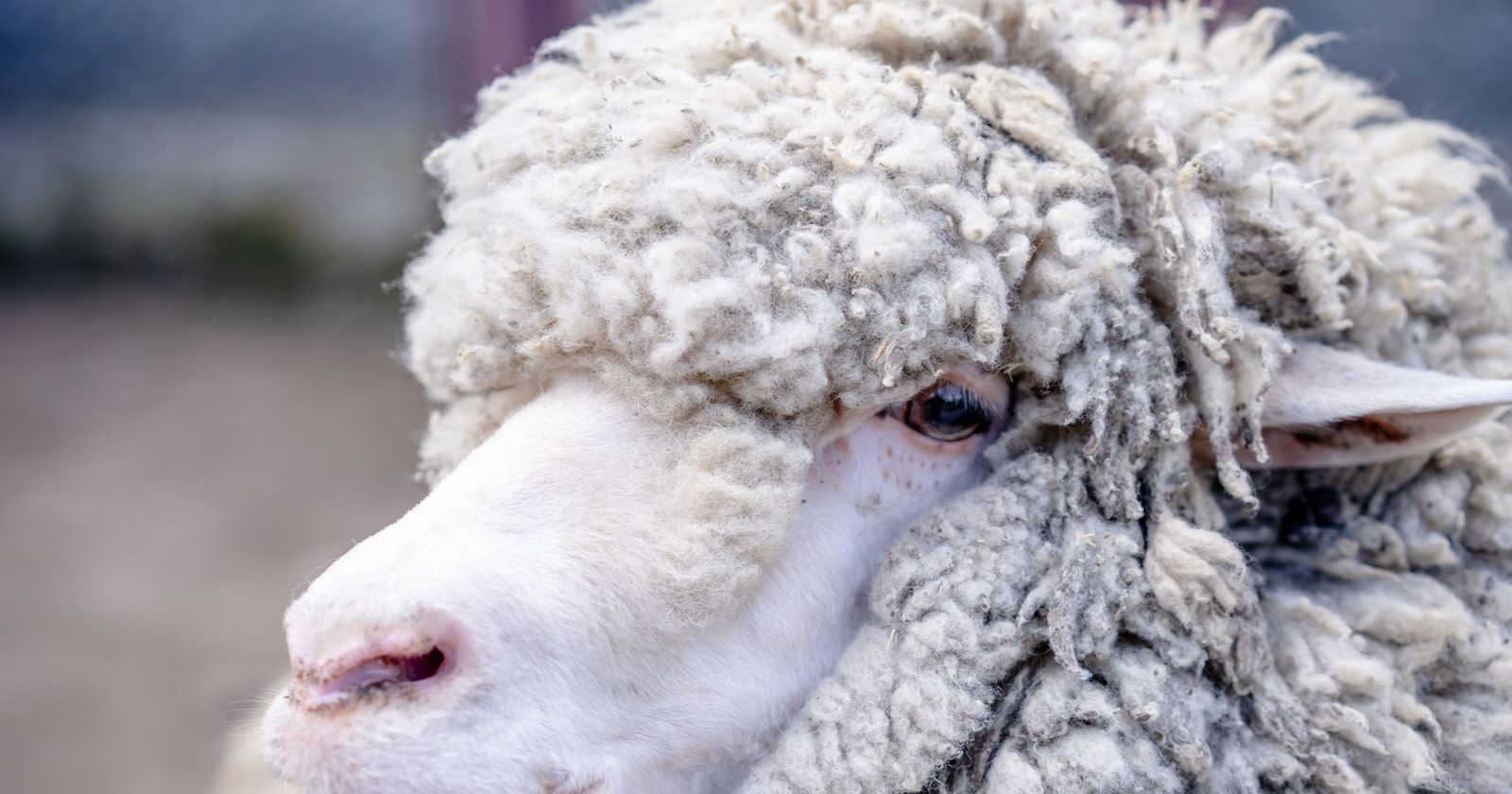
Eight sheep, four famous faces, and a hit rate of roughly eight times out of ten. That is the headline figure from a 2017 experiment at the University of Cambridge, and it is stranger than it sounds. The sheep were not reacting to a smell, a voice, or a familiar coat. They were looking at flat photographs of people they had never met, and picking the right one.
A note before we go further: we are not neurologists, geneticists, or clinicians. What follows is our reading of one study and the research around it, not medical guidance. The face-recognition finding rests on a single small experiment, and the patterns seen in Huntington’s disease research are group-level observations, not statements about any one person or family.
The Cambridge experiment: eight sheep, four celebrity faces
The study appeared in Royal Society Open Science and was led by Professor Jenny Morton. In it, eight sheep were trained to recognise human faces from photographs. The four faces belonged to Fiona Bruce, Jake Gyllenhaal, Barack Obama and Emma Watson. Shown a learned face next to an unfamiliar one, the sheep chose the celebrity they knew far more often than chance would explain.
What makes the result harder to dismiss is what happened when the researchers tilted the images. Recognising a face from an odd angle is a real test of face processing, not simple pattern-matching, and people get worse at it when a face is turned. The sheep got worse too, by a similar amount, dropping from around 79 percent to about 66 percent when faces were tilted.
Then there was the moment that reads almost like a party trick. When a celebrity photo was swapped for a picture of the sheep’s own handler, someone the animals knew in person but had never been trained to spot in a photo, they still picked the handler seven times out of ten, after what the team described as a double take. As Morton put it, “We’ve shown with our study that sheep have advanced face-recognition abilities, comparable with those of humans and monkeys.” That comparison rests on one experiment, so we’d hold it as a striking finding rather than a closed case.
Why sheep, and not the usual lab animals
Sheep are not the animal most people would reach for to study the human brain. The choice is deliberate. In Morton’s words, “Sheep are long-lived and have brains that are similar in size and complexity to those of some monkeys.” A big, structured brain and a long life are exactly what you want when the disease you care about unfolds slowly, over years.
There is also the matter of temperament. “Anyone who has spent time working with sheep will know that they are intelligent, individual animals who are able to recognise their handlers,” she said. The 2017 experiment took that everyday impression and put a number on it.
What we take from the design is that the researchers were not really testing whether sheep are clever for a farm animal. They were testing whether a sheep’s brain runs the same kind of specialised face-reading machinery that ours does, and whether it can be measured cleanly enough to watch it change over time. If it can, you have a way to track a very human problem in an animal you can study across its whole life.
The Huntington’s connection
Morton’s group studies sheep that carry the genetic fault behind Huntington’s disease, an inherited, incurable disorder that steadily damages the brain. One of its effects is specific and cruel: it erodes the ability to read faces. People with the condition often lose the knack of recognising what an expression means.
That is where a reliable face-recognition test in a large, long-lived animal becomes useful.
The pattern in people is well documented. A review pulling together decades of studies reported that in Huntington’s, recognition of negative emotions such as anger, fear, disgust and sadness was consistently impaired, while happy and neutral faces were generally spared.
The numbers are small on paper and heavy for those they touch. The World Health Organization estimates that in Western countries the disease affects five to seven per 100,000 people. In the UK, that comes to more than 6,700 people living with it.
What we make of an unglamorous research partner
It is tempting to file this under animal-intelligence curiosities, the kind of thing that makes a good headline and little else. We think that misses the point. The value here is not that sheep are secretly brilliant. It is that a sheep and a person appear to share enough face-processing wiring.
If a sheep carrying the Huntington’s fault loses the ability to tell one face from another in the same way people do, researchers get to watch the process slowly, in a brain large enough to study properly, over a lifespan long enough to matter.
If Huntington’s disease touches your family and any of this sits close to home, a genetic counsellor or a specialist neurology team is the right place to turn for support and information.