

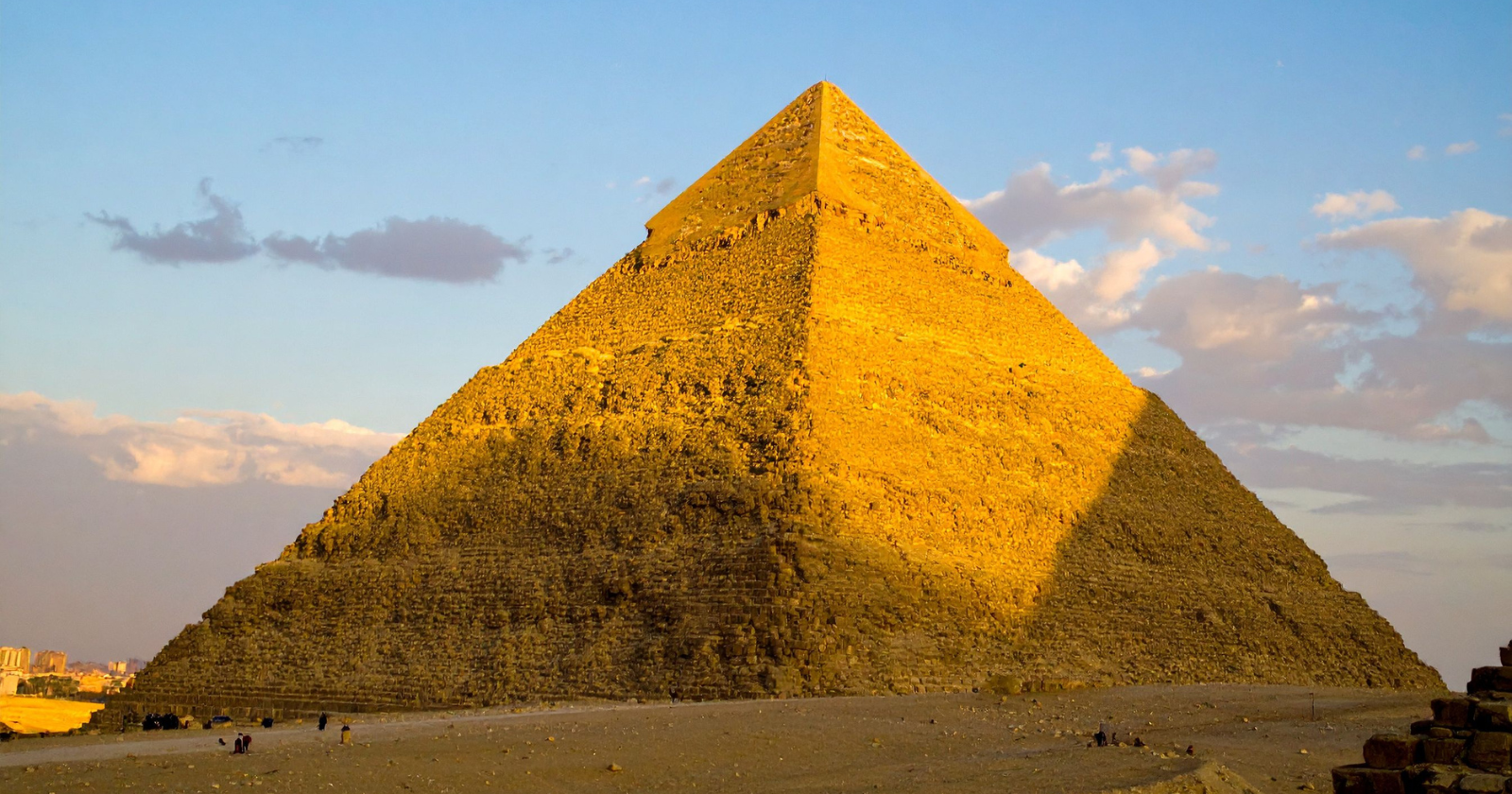
Set the two buildings next to each other and the mismatch is almost comic. The Empire State Building is far taller, a slim steel spire that went up in just over a year. The Great Pyramid is shorter, squatter, and older by more than four thousand years.
Yet the pyramid weighs roughly eighteen times what the skyscraper does. One is a hollow frame reaching for the sky. The other is a near-solid mountain of cut stone with barely a gap inside.
That ratio is the interesting part, and it points at something less obvious than which building is bigger. The gap in weight is really a gap in method. We want to walk through where the numbers come from, and what they suggest about two very different ways of putting a large thing on the ground.
The pyramid, block by block
Start with the figures most people have heard. The Great Pyramid is usually described as made from about 2.3 million blocks of stone, with the average block commonly put at around two and a half tonnes. Estimates of the pyramid’s total mass vary, but a widely cited breakdown puts it at roughly 5.5 million tonnes of limestone, 500,000 tonnes of mortar and 8,000 tonnes of granite — about 6 million metric tonnes altogether.
That number is necessarily approximate. Nobody has weighed the pyramid. The figures come from estimating its volume, the amount and density of the materials used, and the size and number of its blocks, so small changes in the assumptions can move the total by hundreds of thousands of tonnes.
What the estimates agree on is the character of the thing. This is quarried limestone stacked into a solid mass, with granite hauled from Aswan and fine casing stone from Tura. There is very little empty space inside. Apart from a few narrow passages and chambers, it is stone almost all the way through. It was built for the pharaoh Khufu, and construction is usually put at around 20 years, a figure that traces back to the ancient Greek historian Herodotus.
Run those numbers against the calendar and the pace becomes hard to picture. A 2025 paper in npj Heritage Science lays out the standard math: 2.3 million blocks across roughly 20 years of long working days means setting a block, some weighing several tonnes, every one to three minutes under the assumptions used in the calculation. That figure stays with us more than the total mass. The total is abstract. A block every couple of minutes, year after year, is an incredible workflow.
The skyscraper as the modern yardstick
The Empire State Building makes the comparison easy to grasp because it does the opposite of what the pyramid does. Its official weight is 365,000 tons. Because that is an American figure, the units need to be matched before making the comparison. Roughly 6 million metric tonnes for the pyramid converts to about 6.6 million U.S. short tons. Divide that by 365,000 and the pyramid comes out at a little over eighteen times the weight of the Empire State Building.
Where the weight goes tells the real story. The building’s load rides on a steel skeleton of around 60,000 tons of steel, wrapped in brick and a comparatively thin skin of stone and aluminum. The 200,000 cubic feet of Indiana limestone and granite is part of the exterior rather than the building’s primary structural frame. In the pyramid, by contrast, stone makes up almost the entire mass.
The two also went up on very different clocks. The Empire State Building’s construction began in 1930 and was completed in 1931, in just 410 days. The pyramid is commonly estimated to have taken roughly twenty years. A steel frame lets you enclose a huge volume with comparatively little material, and you can do it fast. Solid stone gives you mass and permanence, and it costs you time.
Why the comparison is really about method
Perhaps the cleanest way to read the weight gap is as two philosophies of building rather than a size contest. One approach encloses space while minimizing the amount of structural material required. The other creates an enormous mass of masonry.
The skyscraper is an argument for structural efficiency. The pyramid is an argument for durability, and it has outlasted every other wonder of the ancient world.
The sheer weight of quarried stone is exactly what makes the pyramid endure and exactly what made it so hard to build. Every one of those estimated 2.3 million blocks had to be quarried, transported and positioned without modern lifting machinery. That is where much of the modern interest in the pyramid has drifted; away from the total tonnage and toward the problem of moving it.