

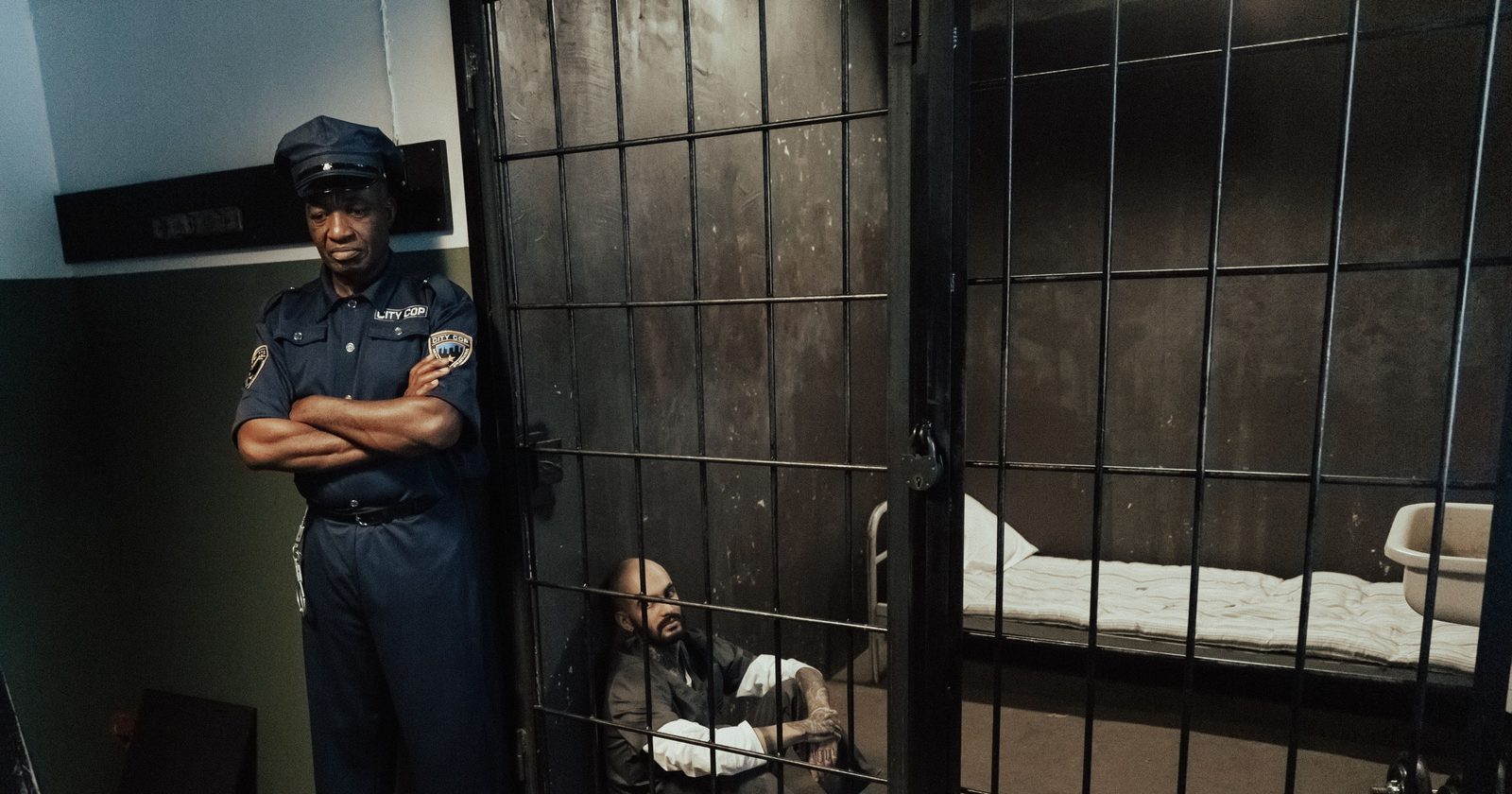
“We really want to get you active and involved because the guards have to know that every guard is going to be what we call a ‘tough guard,'” a voice says on an archived recording.
The voice belongs to David Jaffe, one of Philip Zimbardo’s research assistants, who ran the mock prison as its warden. He was pressing a reluctant guard to toughen up. This was before the experiment most people think they know had really gotten going.
Here is the gap that recording opens up. The story almost everyone has absorbed is that if you put ordinary, decent people in a role and a system, they turn cruel on their own. But when a researcher went back into the study’s own files, that is not quite what he found. The guards did not simply snap. They were told how to behave.
We are not psychologists, and what follows is our reading of a long-running dispute in social psychology, not a verdict on it. The evidence here comes from old files and involves interpretation, and specialists still disagree about what it means.
The story almost everyone knows
The experiment ran in August 1971. Zimbardo, a Stanford psychologist, took 24 screened college-age men and randomly assigned them to be guards or prisoners in a mock prison built in the basement of the psychology building. It was planned for two weeks and halted after six days as the guards’ treatment of the prisoners got worse and worse.
For decades the takeaway was tidy and dramatic. Zimbardo said the study showed the power of the situation. Years later, he described it to Stanford Magazine as “really meant to be a single, dramatic demonstration of the power of the situation on human behavior.” The idea traveled far beyond the basement, into textbooks, a feature film, and Zimbardo’s 2007 book and later TED talk, where he linked it to the abuses at Abu Ghraib.
It is a compelling story partly because it is frightening. It tells you the line between a normal person and a cruel one is thinner than you would like, and that circumstance does most of the pushing. Zimbardo has long said the guards behaved in a way that “neither they nor we could have imagined.” That last claim is where the archive starts to complicate things.
What turned up in the files
In the mid-2010s, French researcher Thibault Le Texier planned to make a documentary about the experiment. Digging into the study’s records at Stanford pulled him somewhere else. His 2019 article in American Psychologist, “Debunking the Stanford Prison Experiment,” drew on documents, unreleased recordings, and interviews with 15 of the original participants.
His argument was blunt: the guards did not change on their own. They were coached.
The most-cited piece of that coaching is the Jaffe recording. In it, the warden tells guard John Mark, in plain words, that “the guards have to know that every guard is going to be what we call a ‘tough guard.'” That is not a role emerging on its own. That is an instruction, given before the situation had done anything.
A team of social psychologists led by S. Alexander Haslam later studied the same recording and put it this way: “We can no longer airbrush out the role of the experimenters in producing brutality.” Their analysis was a proposed reinterpretation, shared before peer review, and the authors themselves concede that saying this coaching alone caused the cruelty would go too far. It is strong evidence that the experimenters shaped the behavior. It is not proof the whole study was staged theater.
The guards who refused, and the one who admitted he was acting
If cruelty were the automatic product of the role, you would expect all the guards to behave the same way. They did not.
John Mark, the guard Jaffe was leaning on, never bought the framing. Decades later he told Stanford Magazine, “I don’t think the actual events match up with the bold headline. I never did, and I haven’t changed my opinion.”
Then there is the guard who did lean in. Dave Eshelman, known during the study as “John Wayne,” was its most abusive figure. He was a drama student at the time, and he described his conduct not as a personality overtaken by circumstance but as a performance. “I set out with a definite plan in mind, to try to force the action, force something to happen, so that the researchers would have something to work with,” he told the same magazine. “So I consciously created this persona.”
These are self-reports, given long after the fact, and memory bends over forty years. But they point the same way. One guard resisted the coaching and stayed skeptical. The most notorious one says he was playing a part he thought the researchers wanted. Neither reads like a mind slowly captured by a role.
How we’ve come to read it
None of this means situations don’t shape behavior.
But a partial replication run for the BBC in 2002 is telling here: without encouragement from the top to be harsh, the guards did not all turn cruel. That is arguably the more interesting finding, because it points to a specific source of pressure rather than treating cruelty as a switch that flips on its own.
To be fair, Zimbardo pushed back hard against Le Texier and the other critics, defending the study’s core lesson and arguing that coaching does not invalidate it. The disagreement is real, and we are not in a position to settle it.
What stays with us is smaller and more practical. A vivid story, told well by a confident narrator, can go all the way into lecture halls and TED stages, before anyone opens the boxes it came from.
The archive was there the whole time. It took someone planning a documentary to actually look inside.