

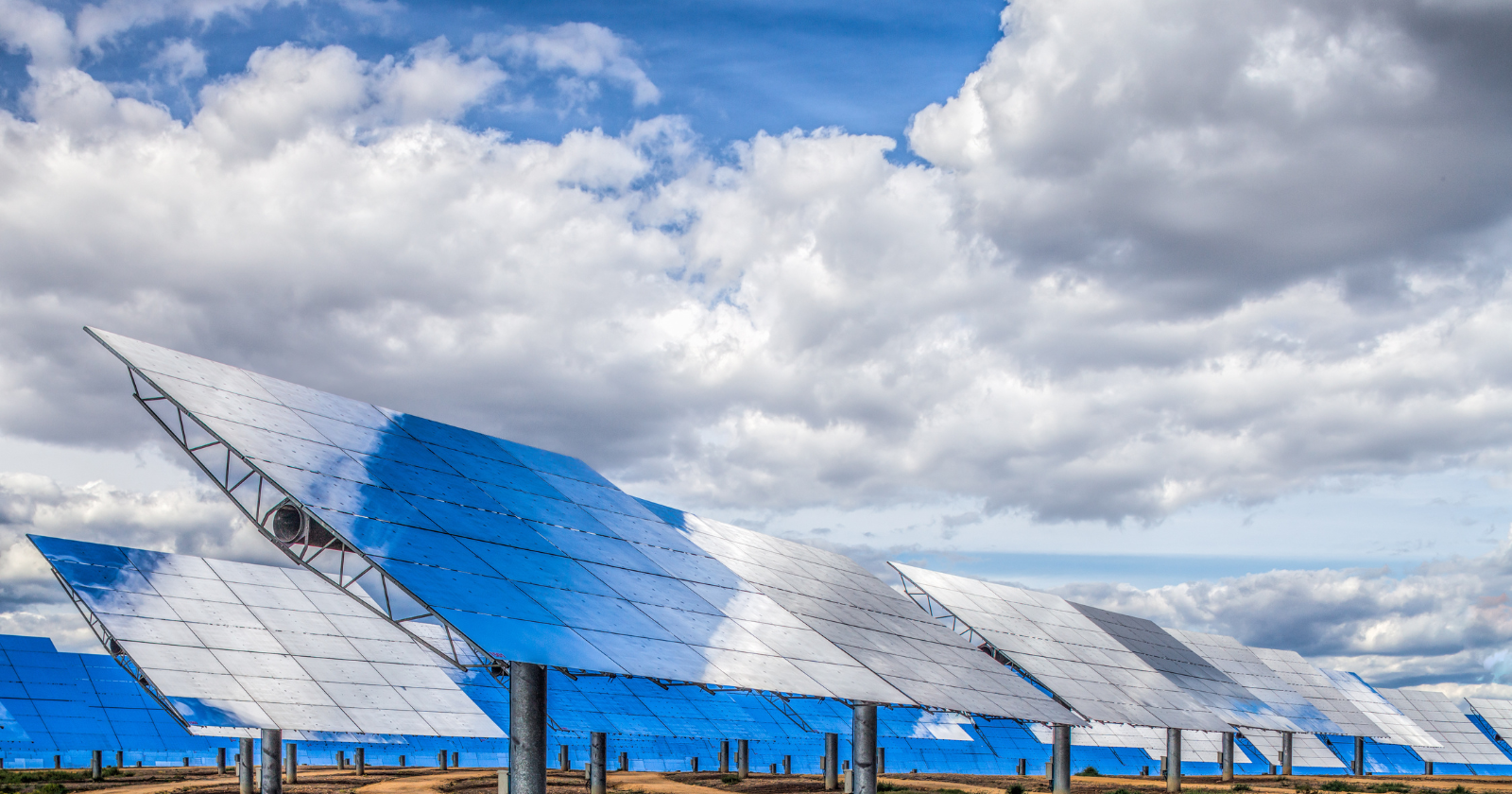
On a stretch of flat desert floor outside Lancaster, California, rows of white steel cabinets sit beside a solar array. Inside those cabinets are more than 1,300 lithium-ion battery packs, each one retired from a car whose battery had simply fallen below the range or performance its original owner needed. Together they store 32 megawatt-hours of electricity — enough to power thousands of homes for several hours — and they do it using hardware that Nissan and Honda originally built to move people down a highway, not to sit in a substation.
The facility, known as SEPV Sierra, is operated by B2U Storage Solutions, a company founded in 2019 by Freeman Hall and Mike Stern after spinning out of an existing solar developer. It has been selling power and grid services into the California Independent System Operator’s wholesale market as what the industry calls a merchant storage asset, competing directly in the broader market.
The same pack, no disassembly
What sets B2U’s approach apart from other second-life storage efforts is that it skips a step entirely: taking the battery pack apart. Most attempts to reuse retired EV batteries have historically involved cracking open the pack, testing individual modules, sorting them by remaining capacity, and rebuilding a new enclosure around the surviving cells — a process expensive enough that it has kept many “second-life” projects from scaling. B2U’s patented system, called EPS (EV Pack Storage), instead keeps the factory pack intact, including its original battery management system, road-rated enclosure, and internal wiring, and simply plugs it into a cabinet designed to accept packs from multiple manufacturers.
Disassembling and rebuilding a pack instead can cost a substantial amount once labor, testing, new battery-management hardware, and reassembly are added up, which is a large part of why “second-life” projects using that approach have struggled to scale. Skipping that step lets B2U bring packs online faster and cheaper, even though it means the system has to manage packs with different chemistries, voltages, and states of health side by side instead of optimizing around a single uniform cell type, which somewhat lowers the peak output each battery could deliver on its own.
A mixed fleet of retired batteries
B2U’s Lancaster facility draws primarily on Honda and Nissan packs, according to Utility Dive reporting, with Honda Clarity plug-in hybrid packs and early Nissan Leaf batteries forming a substantial share of the installed base. By 2025, reporting from the Texas Tribune found B2U’s three California facilities collectively also drawing on retired Tesla packs. B2U has separately said it tested Chevrolet Bolt packs successfully within the same cabinet architecture, though GM packs don’t appear to have moved past that testing stage. A company case study published by California Curated notes the EPS system more broadly is compatible with packs from Honda, Nissan, Tesla, GM, and Ford, although the available sources do not confirm that Ford packs are deployed anywhere in B2U’s fleet.
That flexibility matters because the supply of retired EV batteries is itself uneven and unpredictable, arriving from whichever models happen to reach end-of-life in a given year, sold on to store solar power for release after sunset.
Part of a larger, seven-site portfolio
Lancaster is the largest of B2U’s projects but not the only one. The company has placed a second California facility, SEPV Cuyama in Santa Barbara County, into service with roughly 12 megawatt-hours of capacity drawn from hundreds of additional Honda-sourced packs, and has a third California conversion project underway near Palmdale. B2U has folded these projects, plus additional sites in Texas selling into the ERCOT market, into a $45 million investment vehicle called Fund I. As of the fund’s December 2025 launch, four of its planned seven projects were operational — three in California and one in Texas — with three more Texas sites expected online in 2026.
The Texas build-out has moved quickly. Reporting from Canary Media and the Texas Tribune has tracked the company’s continued financing and project milestones as it scales the model regionally.
Why reuse before recycling
The economic case for this approach rests on a simple sequencing argument that B2U has made in its own materials: extracting value from a battery’s remaining energy capacity before sending it to a recycler generates substantially more return than recycling alone, particularly for lithium iron phosphate and lithium manganese oxide chemistries, where the recoverable material value is often a net cost rather than a net gain. Running a pack through several more years of grid service before it is finally recycled defers that cost while still allowing eventual material recovery once the cells are truly exhausted.
That logic is increasingly attracting outside capital. Axios reported that B2U’s earlier phases at Lancaster were already generating roughly $1 million in annual revenue, a modest but real proof point. The bigger question hanging over projects like Lancaster is whether the approach scales as EV volumes grow far beyond what today’s early adopters produced. Millions of EV batteries are expected to retire from vehicles over the next decade, and grid operators in California, Texas, and elsewhere are under pressure to add storage capacity quickly to firm up variable solar and wind generation. B2U’s bet is that keeping battery packs whole, instead of disassembling them, is the cheaper and faster path to putting that retiring capacity to work — an approach now being tested at seven sites and counting.