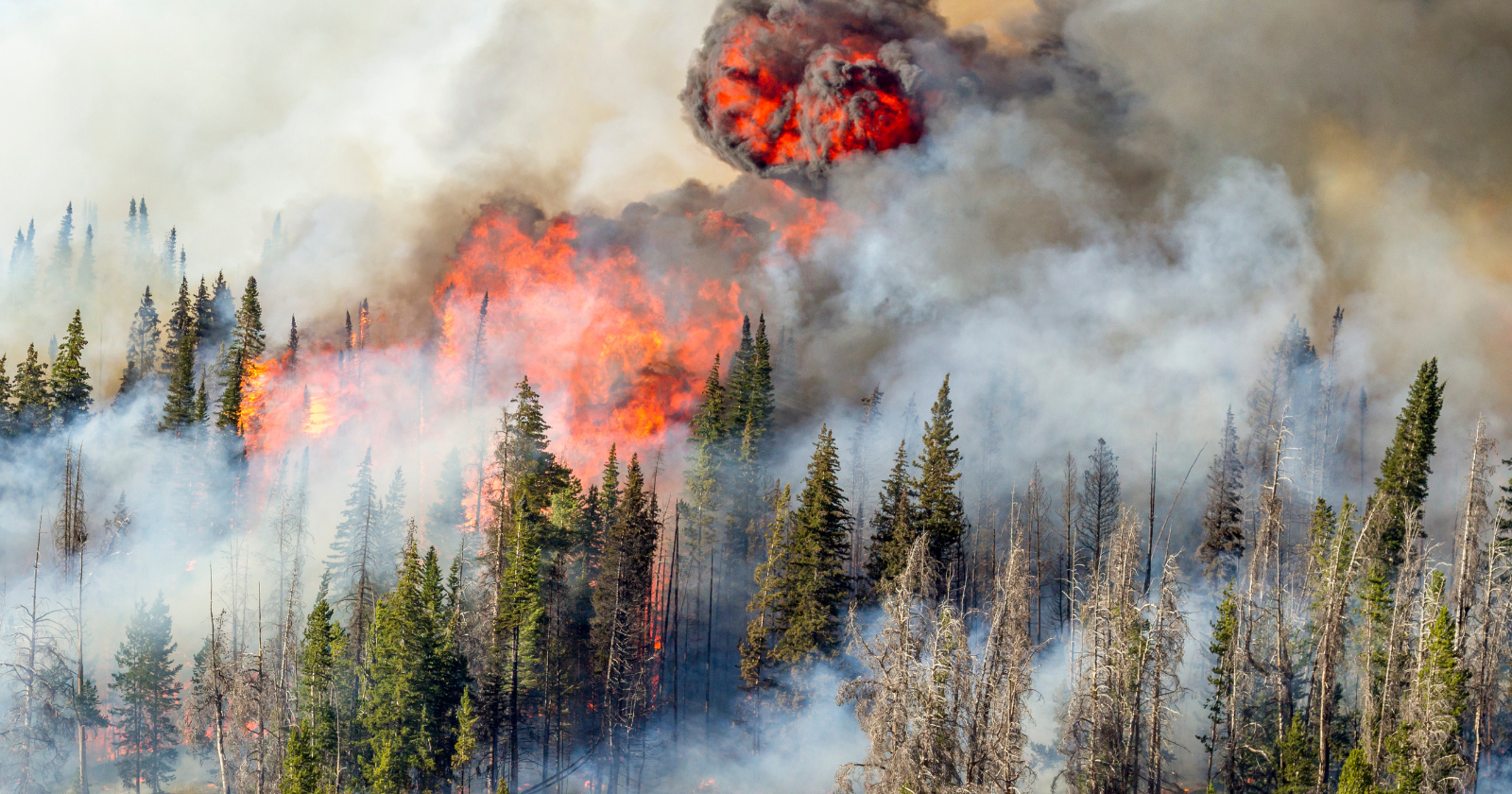
By the time anyone outside Spain was paying close attention, the number had already stopped sounding like a wildfire and started sounding like a geography lesson. Data from the EU’s Copernicus Earth observation program put Spain’s burned area for 2026 at over 200,000 hectares — roughly 0.4 percent of the entire country, the largest proportional toll of any EU member state this year. The fires included the largest single blaze ever recorded in Spain, which ignited near Burgohondo in Ávila province and scorched more than 50,000 hectares within five days.
I was one of the people that number eventually included, at a project camp in the province of Toledo. Not as a statistic exactly — more as a person standing in a line, waiting to be told where to go next, alongside people whose relationship to that land was nothing like mine.
A summer that broke the record before August arrived
Spain wasn’t fighting this alone, and it wasn’t the only country losing ground. Portugal recorded the EU’s second-largest burned share, at roughly 0.3 percent of its territory, with every district in the north and center placed under the highest fire alert by the end of July. France’s Gironde fire, near Bordeaux, burned close to 42,000 hectares and is widely considered the largest wildfire the country has seen since the Second World War — and the largest evacuation since it, too. Algeria’s emissions from wildfire that same month were the highest on record in the dataset tracking them back to 2003.
Across the EU as a whole, more than 1,200 fires had been logged by late July — over twice the historical yearly average — with over 250,000 hectares burned bloc-wide, an area close to the size of Luxembourg, and the season still short of its peak. Copernicus’s own reporting put the number of people needing shelter from the flames across France and Spain at close to 400,000. Spain, along with France, activated the EU civil protection mechanism; Spain also declared a national emergency.
Spain’s prime minister, Pedro Sánchez, warned that tough times were still ahead after more than 90,000 people had already left their homes near Madrid and Ávila alone. By the time the numbers were tallied for Spain as a whole, at least fourteen deaths had been recorded on Spanish soil, and the EU’s total emissions from the season had already crossed eight million tonnes of CO2 — roughly the annual carbon footprint of a million and a half Europeans, released into the atmosphere in a matter of weeks.
The order to leave doesn’t ask where you’re from
None of that context was available to me in any organized way while it was happening. What I had was an instruction: pack now, we’re leaving. Nobody asked to see identification before handing it to me. Nobody separated the group by nationality before deciding who got on which bus, who got a cot in the shelter, who stood in which queue for food or water or a phone charger.
I’m a Georgian citizen. I had no home, no land, no history in that particular part of Toledo. The evacuation order didn’t care. It was built to move bodies out of danger, not to sort them by passport first, and for a few hours, that made an entire category of my own identity foreign, temporary, and functionally irrelevant. The same emergency systems that were coordinating resources across an entire continent were, at ground level, indifferent to where any single person in that line was actually from.
That’s not a small thing, and I don’t think it’s an accident either. Emergency response, almost by design, has to be one of the few systems that treats “person in danger” as a complete category on its own. The moment it starts asking follow-up questions about status before offering shelter, it stops functioning as an emergency response.
In almost every other context I can think of, being a foreigner changes how a system treats you, which forms you need, which queue you’re in, which questions get asked before which answers get given. The only question anyone asked me that day was whether I was hurt. Nobody asked what I was doing in Spain, how long I was staying, or what my passport said. For a few hours, that particular piece of bureaucracy simply didn’t exist.
What one country’s fire season borrows from its neighbors
The indifference to borders didn’t stop at the evacuation line. It was built into how the fires were fought in the first place. The EU’s civil protection mechanism — the same one Spain activated — exists specifically to move firefighting aircraft, vehicles, and personnel across national lines when one country’s fire season outpaces its own capacity. In practice, that has meant crews and equipment from other member states operating on Spanish and French soil this summer, treating “the EU’s fire” as a shared problem rather than each country’s private emergency.
It’s a strange thing to sit inside as an individual: the machinery managing the crisis is explicitly designed around solidarity across nationality, at the exact same moment you’re experiencing, up close, how little your own nationality mattered to the people evacuating you. The systems agree with each other. It’s just unusual to feel both of them at once.
The air doesn’t stop at a border either
The Copernicus Atmosphere Monitoring Service tracked what all of this was doing to the air itself, and the numbers there are just as border-blind as the evacuation lines were. Fine particulate matter, PM2.5, spiked in Bordeaux to just over 300 micrograms per cubic metre — more than ten times the EU’s daily exposure threshold — and Madrid saw sustained readings between 80 and 100 micrograms per cubic metre, compounded by traffic pollution and Saharan dust arriving on top of the smoke. France’s 2026 fire emissions, measured for the year to date, were already comparable to the extreme years of 2022 and 2023, putting the country on course for one of its worst fire years in over two decades.
None of that pollution checked anyone’s residency status either. The smoke that reached Madrid didn’t distinguish between people who’d lived there for generations and people, like me, who happened to be passing through a province two hours away when the wind shifted.
The paperwork that never showed up
Every other system I’ve dealt with in Spain, as a foreigner, has had a document for it. A visa stamp for arriving. A registration form for the project. A receipt, a signature, a category I fit into before anyone would help me with anything. I’d assumed, without ever testing it, that a national emergency would come with its own version of that paperwork — some point in the process where someone would need to confirm who I was before deciding what I was owed.
That point never came. Copernicus had counted the hectares, the plumes, the PM2.5, down to fractions of a percent of national territory. Spain’s government had activated a continent-wide mechanism built entirely around cross-border cooperation. And at the exact bottom of that stack of precision and diplomacy, the actual instruction I received had no fields to fill in. It was just: come this way, you’re safe now. Two hundred thousand hectares is a number precise enough to rank countries against each other. The instruction that got me out of the way of it wasn’t precise about anything at all — it just worked, for everyone in that line, regardless of what had brought any of us there in the first place.