

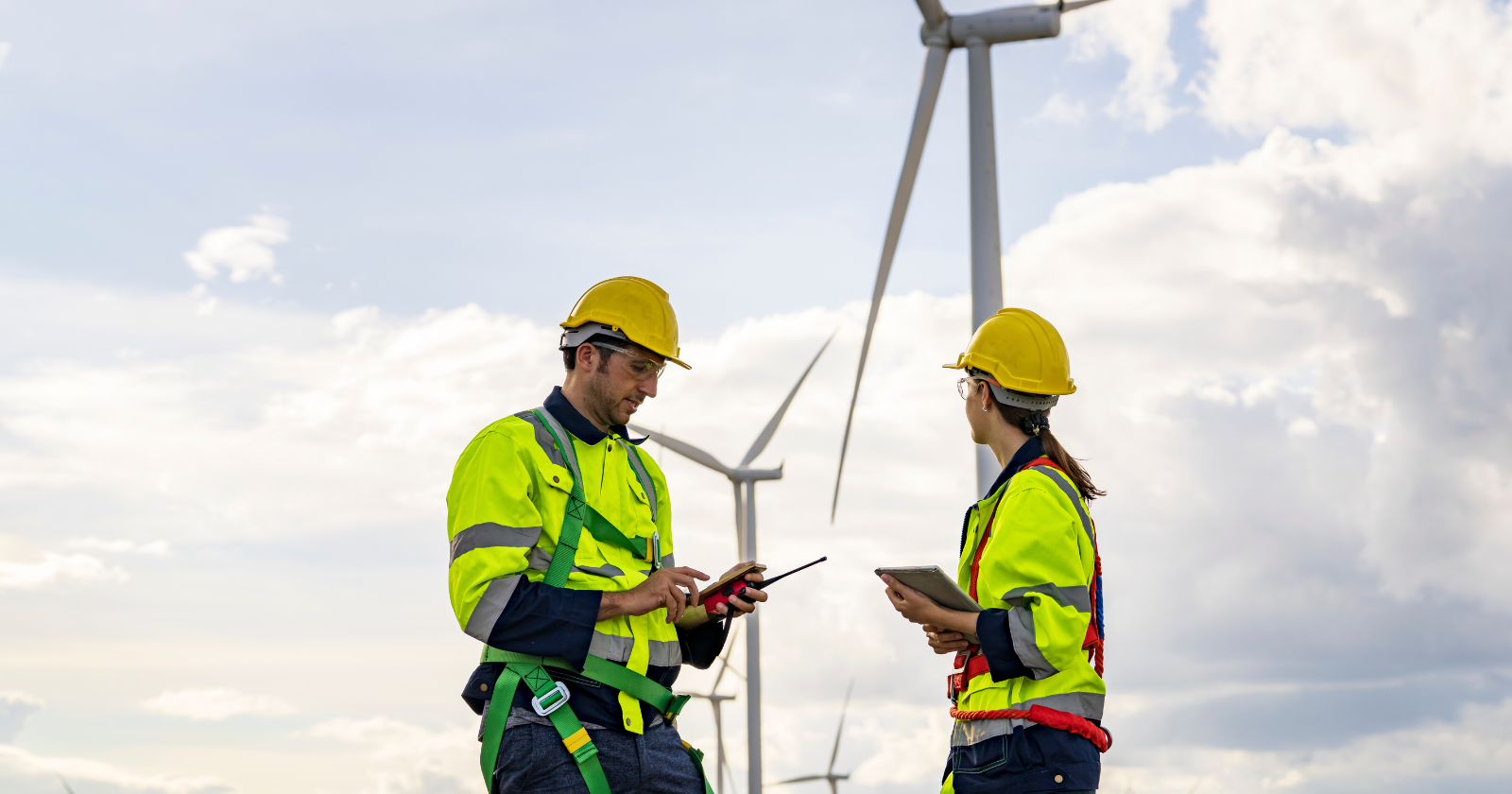
Each blade on Vestas’s V236-15.0 MW offshore turbine measures 115.5 metres, longer than a standard football pitch — the 105-metre length used for most professional matches. Three of them, turning together, sweep a rotor 236 metres across, an area of 43,742 square metres, according to Vestas’s own published specifications. A single machine is rated to produce up to 80 gigawatt-hours a year, depending on the site, with a capacity factor Vestas puts above 60 percent, notably higher than what smaller, older offshore designs have typically achieved.
How offshore wind got this big, this fast
The V236 isn’t Vestas’s first offshore flagship, and comparing it with its predecessor shows how quickly the engineering has moved. The company’s previous large offshore design, the V164, was unveiled in 2011 and first tested at Østerild, Denmark, in 2014. Its rotor measured 164 metres across, an 80-metre blade, sweeping 21,124 square metres, and it was originally rated at 7.0 megawatts before later versions were upgraded as high as 10.0 megawatts, according to documented specifications of the V164. In roughly a decade, Vestas’s flagship blade grew from 80 metres to 115.5 metres, about 44 percent longer, while the swept area it turns through roughly doubled, from 21,124 to 43,742 square metres, and the rated power more than doubled again, from 7.0 to 15.0 megawatts. That disproportionate jump isn’t a coincidence of engineering ambition; it follows directly from geometry.
A 44 percent longer blade sweeps roughly twice the area, because swept area scales with the square of the radius. Doubling swept area for a given wind speed is, roughly, doubling the energy available to be captured, which is why offshore wind design has kept pushing single-turbine size upward rather than simply building more of a smaller, already-proven turbine.
Swept area is only half the physics, though, and it’s the less dramatic half. The power available in wind doesn’t just scale with the area a turbine sweeps, it scales with the cube of the wind speed. A site with winds twice as strong as another doesn’t offer twice the power, it offers roughly eight times as much. That’s the underlying reason offshore sites are so much more valuable than most onshore ones in the first place: the open sea has fewer obstructions and generally stronger, steadier winds than land, so the same blade sweeping the same area can pull out considerably more energy. A bigger rotor and a better wind resource compound rather than simply add together, which is part of why offshore capacity factors, the actual output achieved against theoretical maximum output, have been climbing well past what onshore wind farms typically manage.
What 80 gigawatt-hours actually means
Numbers at utility scale are easy to state and hard to picture, so it helps to convert one down to something ordinary. Ofgem, the UK energy regulator, puts a medium-use British household’s annual electricity consumption at around 2,500 kilowatt-hours, according to figures reported by OVO Energy. At Vestas’s upper output estimate of 80 gigawatt-hours a year, that works out to roughly 32,000 average homes powered by a single turbine, for as long as the wind at that particular site behaves the way the estimate assumes. That last qualifier matters more than it sounds. Eighty gigawatt-hours is a site-dependent ceiling, not a guaranteed output, and Vestas’s own capacity factor claim, above 60 percent, describes what the turbine achieves relative to running flat out every hour of the year; real output at any given site depends on wind conditions that vary considerably around Europe’s coastlines.
The manufacturing problem hiding inside a bigger number
Building a 115.5-metre blade is a different engineering and logistics problem than building an 80-metre one, not just a bigger version of the same problem. A structure that size cannot be manufactured in a facility built for a smaller turbine and simply be trucked or shipped in from an existing plant. Vestas announced in October 2022 that it would build a dedicated blade factory in Taranto, in southern Italy, specifically to produce V236 blades, and the production line was formally inaugurated roughly two years later, in November 2024, creating around 1,300 manufacturing jobs, according to reporting on the opening. That two-year gap between the investment decision and blades actually rolling off the line is itself a useful data point: it is roughly how long it takes to stand up manufacturing at this scale, even for a company that had already built and tested a working prototype.
The blades also have to survive being transported, typically by specialised vessel, to ports and offshore sites without the kind of flex or stress that would develop hairline damage invisible until the turbine is already spinning under load. This part of the story doesn’t show up in a spec sheet listing blade length and swept area, but it is a meaningful part of why turbines this size took roughly a decade to go from Vestas’s previous flagship to this one, rather than arriving all at once.
What the order book doesn’t guarantee
Vestas unveiled the V236 in February 2021, and the first prototype produced electricity in 2022, according to the company’s own announcement of that milestone. Since the design went to market, Vestas says it has taken more than 12 gigawatts of order intake for the model, equivalent to roughly 800 individual turbines at 15 megawatts each, though the real mix across projects will vary. Twelve gigawatts of order intake is a measure of contracts signed, not turbines already spinning, and offshore wind has a well-documented history of projects slipping years behind their original timelines for permitting, grid connection or financing reasons that have nothing to do with the hardware itself.
The V236’s engineering has cleared the demonstration stage and moved into volume manufacturing; whether the wider offshore project pipeline it depends on gets built on the schedule its order book implies is a separate question, decided by governments, grid operators and financing markets rather than by the blade factory in Taranto.