

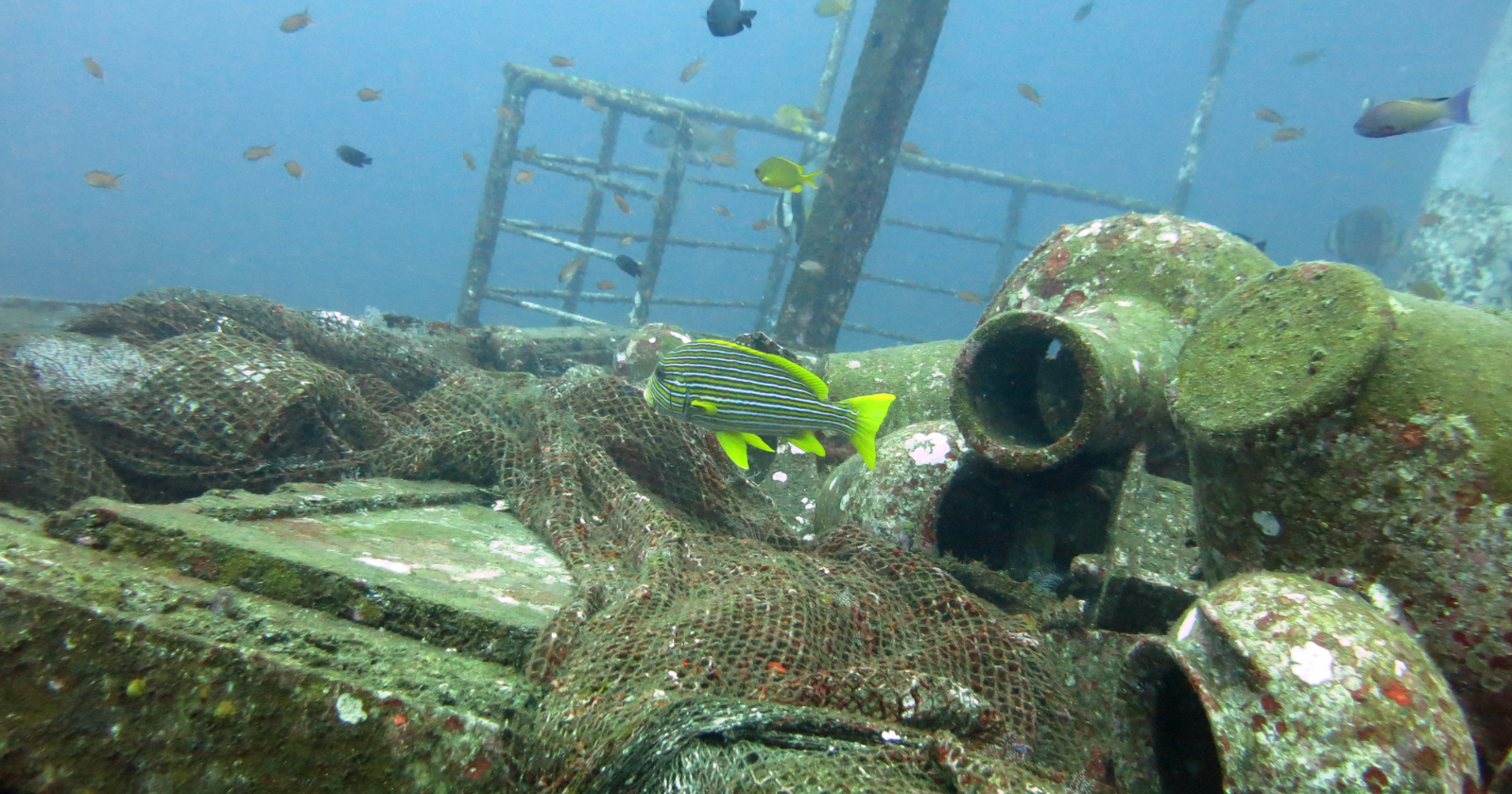
Giacomo De Mola was checking his boat’s sonar off the coast of Mazara del Vallo, on Sicily’s southwestern coast, when an unfamiliar shape showed up where he expected rock. He dove down about 46 metres to have a look. What he found, according to Italian authorities, was a Roman merchant ship that had gone undisturbed on the seafloor for roughly two thousand years.
De Mola, an underwater fisherman and free-diver, was accompanied by Igor Bisulli, who is also credited in some reporting with the discovery. The pair reported the find to Sicily’s Soprintendenza del Mare, the regional authority responsible for underwater cultural heritage, which brought in the Carabinieri’s Cultural Heritage Protection Unit in Palermo and its Underwater Unit in Messina to document the site.
What is actually down there
The wreck lies roughly 5 kilometres offshore, at a depth of about 46 metres. Archaeologists have measured the amphora field on the seabed at approximately 21 metres long, 6 metres wide and 2 metres high, the footprint of the cargo rather than a confirmed hull length, since the wooden hull itself has not yet been fully surveyed. The cargo is what makes the find unusually complete: hundreds of well-preserved Dressel 1A amphorae, a distinctive ceramic vessel type used primarily to transport wine, along with two lead anchor stocks and a separate lead structure whose function has not yet been fully identified.
Dressel 1A amphorae are a recognisable marker for archaeologists working on this period. They were produced in large numbers in central Italy, typically in coastal kilns near the vineyards that supplied them, and are strongly associated with the wine trade that moved goods from the Italian peninsula out across the wider Mediterranean during the last two centuries of the Roman Republic. Similar amphorae have turned up in wrecks off southern France, North Africa and the Aegean, which is part of how archaeologists date and place cargoes like this one even before any written record survives. A cargo of this size and consistency points to routine, large-scale commercial shipping rather than an isolated voyage.
When, more precisely
The Soprintendenza del Mare dates the wreck to the 2nd or 1st century BCE, placing it in the late Roman Republic, before the imperial period under Augustus. Describing this simply as a period when “Rome was expanding across the Mediterranean” understates how far that expansion had already gone. By the 2nd century BCE, Rome had already defeated Carthage in the Punic Wars, controlled Sicily itself as a province, and dominated Mediterranean trade routes. The 2,100-year figure is based on amphora typology and construction style, and may be refined as study continues.
How the discovery was announced
Italy’s Culture Minister, Alessandro Giuli, described the wreck as “one of the most important underwater archaeological discoveries of recent years,” adding that “the sea continues to give back precious fragments of our history.” Statements from culture ministries tend toward this kind of language on any significant find, and that description is the Culture Ministry’s own assessment, not an independent ranking against other Mediterranean wrecks. Sicily’s waters, sitting at the centre of ancient Mediterranean shipping lanes, have produced a long series of significant wrecks over the past several decades, and this one stands out mainly for how intact and well-preserved the cargo is.
What the amphorae can and cannot tell us
A cargo of wine amphorae tells archaeologists something concrete about trade routes and commercial capacity in this period, but it does not, on its own, identify the ship’s origin port, its owner, or its intended destination. Those details, if they emerge at all, will come from further work: closer study of the amphora stamps and construction, analysis of the wood used in the hull where it survives, and comparison with other wrecks carrying similar cargo found elsewhere in Sicilian and Tunisian waters. None of that analysis has been completed yet. What has been confirmed so far is the location, the extent of the cargo field, the amphora type, and a preliminary date range.
Why this stretch of coast keeps producing wrecks
Mazara del Vallo sits on a stretch of Sicilian coastline that has produced more than one significant underwater find. The town is already known among archaeologists for the “Dancing Satyr,” a Hellenistic bronze statue recovered from the sea nearby in the late 1990s, and for other scattered evidence of ancient shipping traffic along this part of the Sicilian Channel. The reason is geographic rather than coincidental. Ships moving between the Italian mainland, North Africa and the eastern Mediterranean in antiquity had to pass through these waters, and a busy shipping lane over many centuries means a correspondingly higher chance that storms, navigational error or simple bad luck sent vessels to the bottom. Local fishermen and free-divers, who spend more time on this seabed than almost anyone else, have played a disproportionate role in reporting these finds to authorities, as De Mola and Bisulli did here.
What happens to a wreck like this
Underwater archaeological sites in Italian waters are protected once reported, and excavation typically proceeds slowly, under government authority, closed to casual diving or private recovery. The usual next steps for a find of this kind involve a formal survey to map the site in full, selective recovery of artefacts for study and conservation, and a decision about whether any part of the wreck will eventually be raised or left in place and protected where it lies. Amphorae and lead fittings tend to survive underwater far better than the wooden hull itself, which explains why so much of what has been reported so far concerns the cargo rather than the ship’s structure.
The most useful confirmation to look for now is a formal statement from the Soprintendenza del Mare setting out the survey plan and a firmer date range once the amphorae have been examined in detail. Until then, this remains a fresh, well-documented discovery with only a preliminary date range.