In 1942, with the Second World War going badly, the U.S. Army needed somewhere far from either coast to make chemical weapons. It chose a stretch of shortgrass prairie ten miles northeast of downtown Denver, nearly 20,000 acres of farmland bought up and fenced off, and named it the Rocky Mountain Arsenal.
For the next quarter century the arsenal manufactured some of the most feared substances ever produced: mustard gas, white phosphorus, napalm, and, at the height of the Cold War, sarin nerve agent. When weapons production wound down in 1969, chemical companies leased the facilities to make pesticides. By the time all production stopped in 1982, the arsenal’s core was so poisoned that one of its evaporation basins had earned a nickname among engineers: the most contaminated square mile on Earth.
Then somebody looked past the factory buildings at the land around them, and found the strangest conservation story in America already underway.
The accidental preserve
The arsenal’s chemistry was concentrated in its industrial heart. Around it, for security, the Army had kept thousands of acres of buffer land, empty prairie inside a fence that no farmer plowed, no developer touched and almost no human entered for forty years.
Denver’s suburbs crawled outward on every side, replacing grassland with rooftops. Inside the fence, the grass just grew. Mule deer multiplied. Prairie dog towns spread across the flats. Coyotes, badgers, owls and hawks worked a landscape that was becoming, entirely by accident, one of the last big pieces of intact prairie on the Front Range, wrapped around one of its worst poisons.
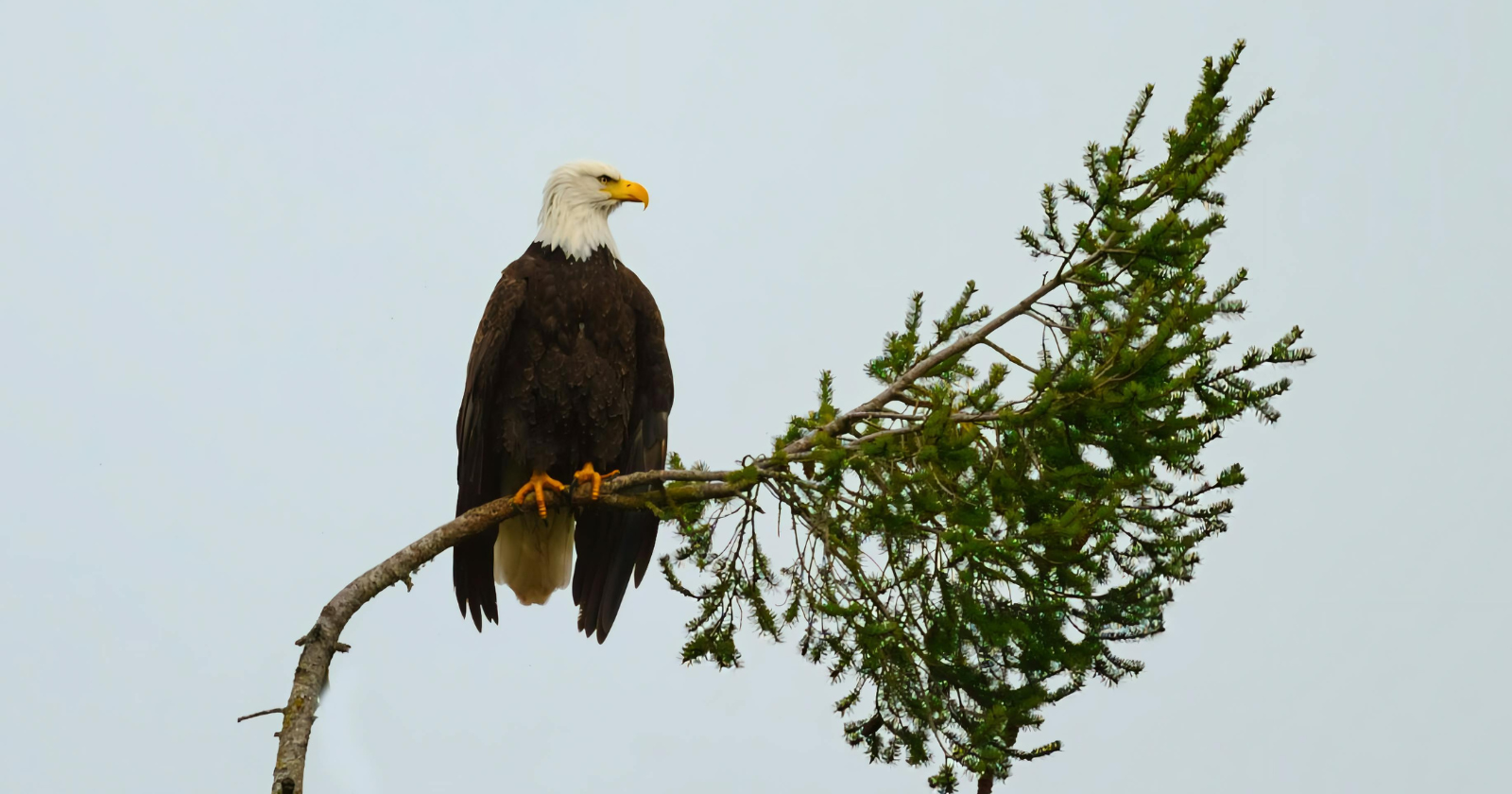
The outside world caught up in the winter of 1986, when bald eagles were found roosting on the arsenal, wintering birds drawn to the prairie dog colonies and the undisturbed cottonwoods. The eagle was then still an endangered national icon, and its presence on a Superfund site made headlines and forced a question nobody had thought to ask: what exactly had been thriving behind the government’s fence all this time? Surveys eventually counted more than 300 species of wildlife living on the property.
Cleanup and handover
The discovery reshaped the site’s fate. The arsenal had been declared a Superfund site in the 1980s, and what followed became one of the largest environmental cleanups in American history, running roughly $2 billion over more than two decades. Contaminated soil was dug out, in places ten feet deep, and sealed in engineered containment cells; the old basins were capped; groundwater treatment systems went in and still run today.
In 1992, with the eagles as its emblem, Congress passed a law with a title that says everything: the Rocky Mountain Arsenal National Wildlife Refuge Act. As cleanup finished section by section, land transferred from the Army to the U.S. Fish and Wildlife Service, and in 2004 the refuge opened to the public. Today it spans roughly 15,000 acres, one of the largest urban wildlife refuges in the country, with the sealed remnant of the contaminated core held back behind its own fences inside it, monitored in perpetuity.
Bison where the bunkers were
The transformation’s showpiece arrived in 2007, when 16 bison were trucked in from the National Bison Range in Montana, the first of their kind on this stretch of Colorado prairie in well over a century. The herd has since grown to around 250 animals grazing a fenced range of more than 10,000 acres, with the Denver skyline standing on the horizon behind them. Visitors watch from an 11-mile wildlife drive, cars only, windows-up when the herd is close.
Then came the rarest tenants of all. In 2015 the refuge began releasing black-footed ferrets, a prairie predator once declared extinct until a tiny remnant population turned up in Wyoming in 1981. Ferrets live by eating prairie dogs and moving into their burrows, and the arsenal’s sprawling, protected prairie dog towns are exactly the habitat that vanished almost everywhere else. About 30 of them now hunt the refuge by night, part of the national effort to rebuild one of the most endangered mammals in North America, on land where the Army once stored nerve gas.
What the arsenal proves
It is fair to keep the story honest: the refuge is not pristine, and never will be. The containment cells will need watching essentially forever, parts of the site remain closed, and the eagles and bison thrive on the buffer lands, not on the capped square mile itself. The wildlife did not conquer the poison; it flourished around it, in the space the poison’s secrecy protected.
But that is precisely what makes the arsenal instructive. The animals never needed the land to be perfect. They needed it to be left alone, and a chemical weapons plant, of all things, guaranteed that better than any park. Sarin bought this prairie its fence, the fence bought it forty undisturbed years, and the eagles that moved in converted the whole grim arrangement into a refuge. Conservationists call places like this involuntary parks. Denver simply calls it the arsenal, and takes the kids on weekends to see the bison.