

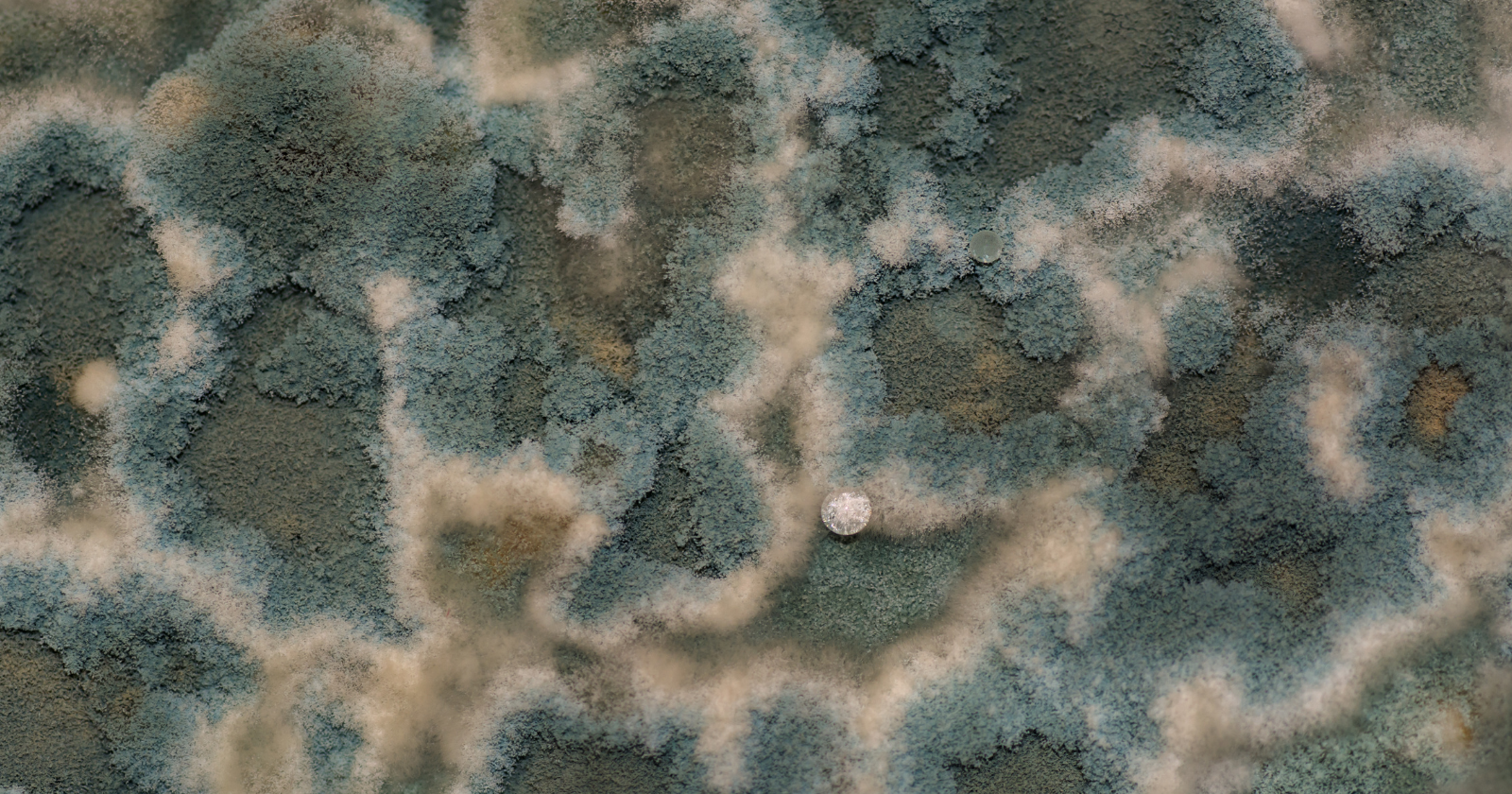
Industrial fermentation, the process now used to brew antibiotics by the tonne in steel tanks the size of houses, did not exist yet in 1940. When Howard Florey and Ernst Chain’s team at Oxford’s Sir William Dunn School of Pathology proved that penicillin, first noticed by Alexander Fleming in 1928, could actually treat infection in a living body, they had no industrial process to make enough of it. What they had was Norman Heatley, a junior member of the team with a gift for improvisation, and a growing problem: the mould needed shallow, wide trays to grow well, and nobody had anything close to enough of them.
Heatley’s early solutions were whatever was on hand: sheep-dip cans, pie dishes, biscuit tins, milk churns, and hospital bedpans borrowed from the Radcliffe Infirmary. When the hospital ran out of bedpans to lend, Heatley sketched his own design for a purpose-made vessel, rectangular and stackable, glazed for sterilising, holding roughly a litre of culture broth. A Staffordshire pottery firm, James Macintyre & Co, manufactured them at ten shillings apiece.
James Macintyre & Co made 700 of them in total, though the first batch of 174 arrived in December 1940, and around half of those were seeded with mould spores on Christmas Day that year.
A cottage industry doing a hospital’s work
Oxford was effectively running a cottage industry under wartime strain. Each ceramic vessel had to be filled, seeded, incubated, and eventually harvested by hand, the mould skimmed off and the broth beneath it extracted for whatever penicillin it contained. There was no shortcut for scale: more penicillin meant more vessels, and more vessels meant more hands to tend them.
Those hands mostly belonged to six women recruited to the Dunn School as technical assistants: Ruth Callow, Claire Inayat, Betty Cooke, Peggy Gardner, Megan Lancaster, and Patricia McKegney. Male colleagues at the time reportedly called them the Penicillin Girls, according to accounts collected by Oxford’s own history project and the Smithsonian’s National Museum of American History. They worked at least six days a week, much of it in a cold-room extraction plant, handling equipment and chemicals that carried real physical risk, for wages historical accounts put at around £2 a week, low even by the standards of 1940s laboratory work.
Their names appear only fleetingly in the standard histories of penicillin’s discovery, including the record around the 1945 Nobel Prize in Physiology or Medicine, which recognised Fleming, Florey, and Chain but not the technicians who kept the Oxford production line running through the war’s most acute drug shortages.
What the shortage actually cost
The stakes of that production bottleneck are easiest to see in a single case. Albert Alexander, an Oxford police constable, developed a severe bacterial infection after suffering facial wounds during an air raid in late 1940. In February 1941, Charles Fletcher administered what Oxford’s cottage-industry production could supply. Alexander improved noticeably within days, according to Fletcher’s own notes at the time, in what was one of the first clear demonstrations that penicillin worked in a human patient. But the supply ran out before the infection was fully cleared. The team even recovered and reprocessed penicillin from his urine to stretch the remaining stock further, a documented measure of how genuinely scarce the drug was. Alexander relapsed and died in March 1941.
That single case is why the phrase pre-antibiotic era isn’t just a historical label. It describes a period, ending only in the early-to-mid 1940s, in which infections that are now treated in days could still kill routinely, and in which the difference between having enough of a new drug and running out could be measured in a single patient’s life.
From bedpans to Peoria
Oxford’s ceramic-vessel operation could never have supplied wartime demand at scale, and its limits were obvious to the people running it. In 1941, Florey and Heatley travelled to the United States to work with the US Department of Agriculture’s Northern Regional Research Laboratory in Peoria, Illinois, where researchers developed a corn steep liquor growth medium and pioneered deep-tank submerged fermentation, the direct ancestor of the industrial process used today. That shift, from individually tended surface cultures to fermentation tanks that could run continuously and at far greater volume, is what eventually turned penicillin from a scarce, hand-produced substance into a mass-manufactured one.
For roughly a year, the only thing standing between a promising laboratory result and a usable medicine was several hundred bedpan-shaped ceramic pots and the women who kept them alive.