

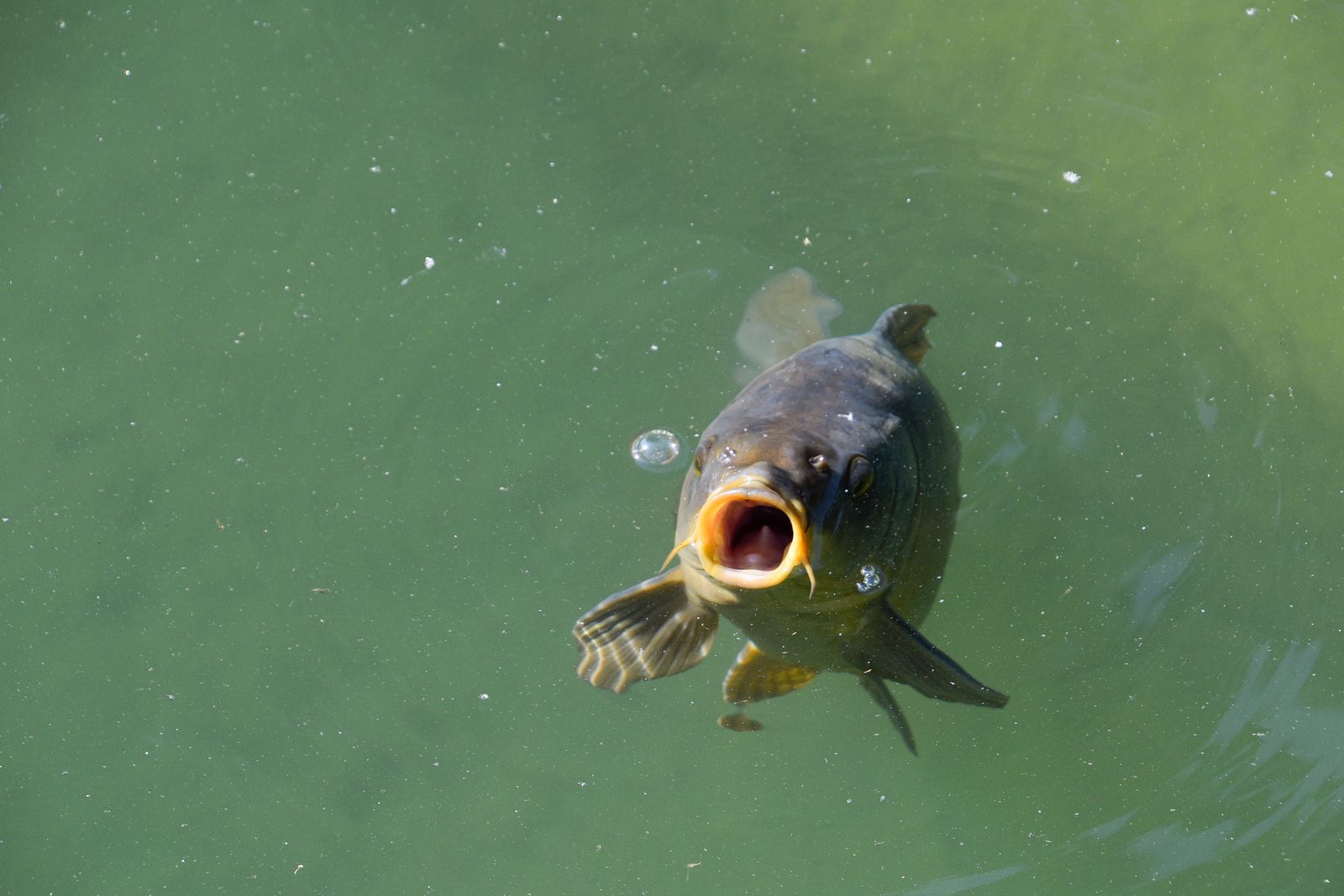
Somewhere in the warm coastal waters between the Gulf of California and Ecuador, a snapper is swimming with a crustacean in its mouth where its tongue used to be. The animal is Cymothoa exigua, an isopod barely an inch long, and it is the only known creature on Earth that anatomically replaces one of its host’s organs and then does the job of that organ for the rest of the host’s life.
It enters through the gills. It severs the blood vessels feeding the tongue. The tongue withers. The louse clamps onto the stub of muscle and connective tissue that remains, and the fish, remarkably, keeps eating.

What the animal actually looks like
Picture something the size of a pea or a pencil eraser, up to about an inch and change at its largest. Cymothoa exigua is an isopod, a relative of the woodlouse crawling under the flowerpot in your garden and the giant deep-sea isopods that look like alien tanks. Its body is segmented, armored in a pale exoskeleton, and equipped with seven pairs of legs tipped in sharp hooked claws called dactyli.
Those claws are the key to the trick. As Forbes reported in 2024, the louse uses its dactyli to pierce and pinch off the arteries supplying the fish’s tongue, cutting the organ’s blood flow until the tissue necroses and falls away.
The louse then settles into the vacant space, gripping the tongue’s remaining stub with the same claws it used to kill it.
The entry through the gills
Young Cymothoa exigua are free-swimming. They drift through warm water looking for a host, most often a spotted rose snapper (Lutjanus guttatus), though the louse has been recorded on at least seven other fish species. When a juvenile finds a suitable fish, it slips in through the gill slits, the way a burglar might use a side window.
The isopods that enter are male. Like many crustaceans in the family Cymothoidae, C. exigua is a protandrous hermaphrodite: individuals begin life male and can transition to female. Typically two lice colonize a single fish. The larger one becomes female and moves to the tongue. The smaller stays male and attaches to the gill arches. They mate inside the fish.
According to NPR’s reporting on the louse, the female’s occupation of the tongue is a one-way ticket. Once anchored, she does not leave.
Why the fish survives
Here is what makes the story stranger than a horror-movie logline. The fish does not die. It does not even, in most cases, appear especially unwell.
Once the original tongue is gone, the louse sits in its place with its body oriented along the floor of the mouth, holding on to the tongue stub. The fish presses food against the isopod’s back the way it once pressed food against its own tongue. The mechanics of feeding continue. So does the fish.
This is the detail that biologists keep circling back to. In a piece for WIRED’s Absurd Creature of the Week, science writer Matt Simon put it plainly: the louse becomes, functionally, the tongue. The parasite feeds on the host’s blood and mucus, and the host keeps hunting, keeps swallowing, keeps living.
No other known parasite does this. The fact-checking outlet Africa Check verified the mechanism in 2022 after the claim went viral on social media, consulting marine biologists who confirmed that Cymothoa exigua is the only documented case of a parasite functionally replacing a host organ.
The distinction from other body-snatchers
Parasitology is full of grisly manipulators, and it is worth being precise about what makes this one different.
The barnacle Sacculina carcini infects crabs, threading root-like tendrils through their bodies and hijacking the reproductive system to make the crab tend the barnacle’s larvae as if they were its own eggs. That is puppetry. The barnacle does not become an organ.
The lancet liver fluke Dicrocoelium dendriticum infiltrates the brains of ants and rewires their behavior, driving them to climb blades of grass at dusk so they will be eaten by grazing cattle, the fluke’s next host. That is mind control. The fluke does not replace anything.
Ophiocordyceps fungi grow through the bodies of ants and erupt from their heads. Horsehair worms compel crickets to drown themselves. Trematode Leucochloridium takes over a snail’s eyestalks and pulses them like caterpillars to attract birds. All are extraordinary. None of them becomes an anatomical part of the host that the host then uses.
Cymothoa exigua stands alone on that specific branch of the parasitism tree.
Where it lives, and how often it is found
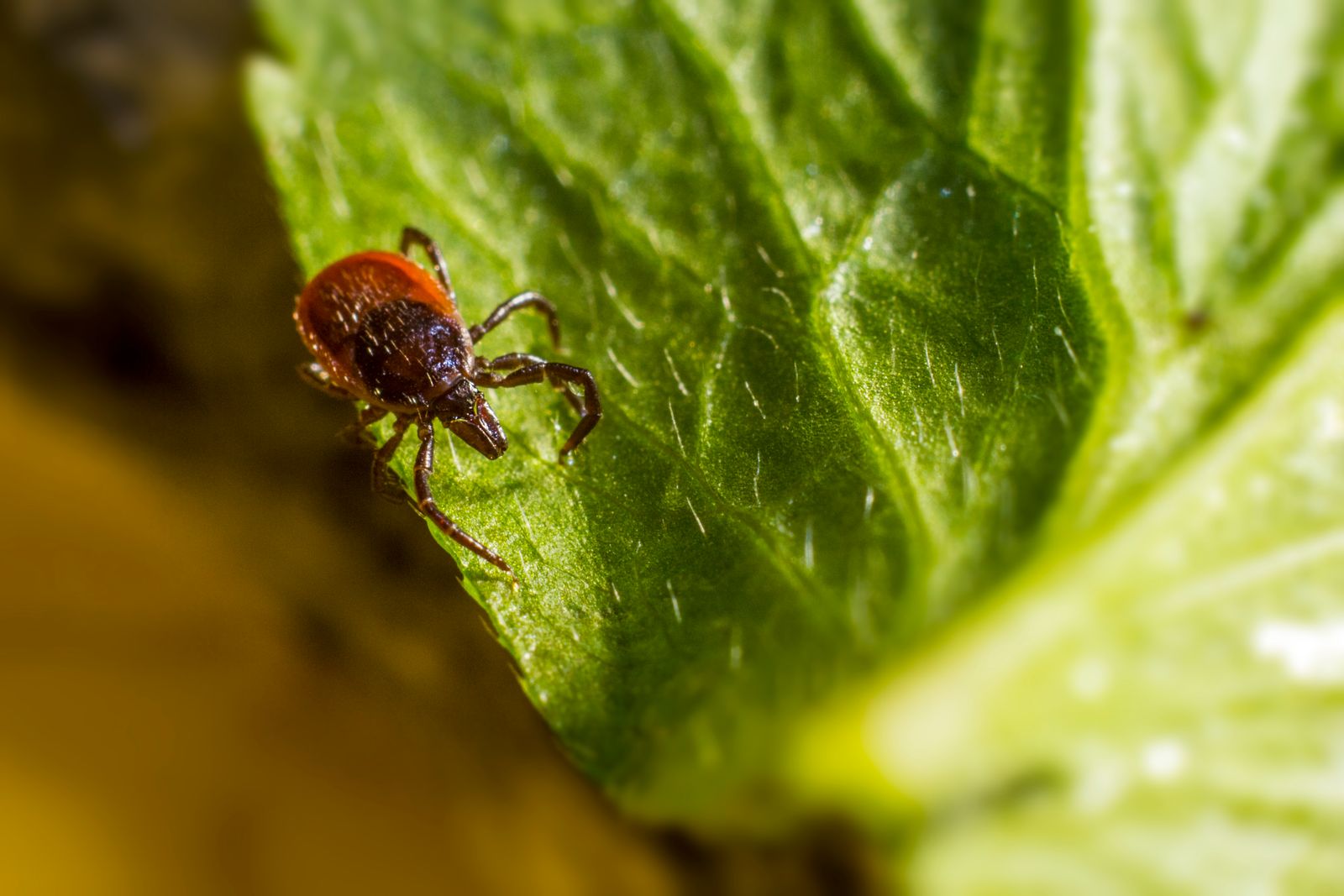
The louse’s classical range runs the eastern Pacific coast from the Gulf of California down to the northern edge of the Gulf of Guayaquil in Ecuador. Its preferred hosts are snappers in warm, shallow water. In some fisheries, infection rates in adult snappers have been reported above 40 percent, which is why anyone who has cleaned a large batch of Pacific snapper for market has likely met one.
The range appears to be growing. In 2005, a fishmonger in the United Kingdom found one in the mouth of a red snapper imported from the tropics, an event covered widely in the British press. Specimens have been recorded in the Mediterranean and off the Atlantic coast, though scientists debate whether these represent range expansion, misidentifications of related species, or hitchhikers arriving with the global seafood trade.
The isopod family Cymothoidae contains dozens of tongue-and-mouth-attaching species. Only C. exigua is known to complete the full organ replacement.
The overfishing wrinkle
Fish infected with a single female louse tend to do fine. Fish carrying multiple isopods do not. Growth slows. Body condition declines. The animal loses weight it cannot afford to lose.
Observations of Mediterranean isopod species have shown that fish in overfished waters are more likely to be infected than fish in protected reserves, and the infected fish in the overfished zones are in worse condition than infected fish in healthy ecosystems.
The mechanism is straightforward. Predatory fish keep isopod populations in check. Strip out the predators and the parasites bloom. A fishery under stress becomes a fishery of thin, tongue-swapped fish.
How long the arrangement lasts
Once installed, a female Cymothoa exigua can live on her host for years. She grows. She broods eggs in a pouch under her body. She releases juveniles into the water, which set off to find their own fish. She does not migrate to a new host. She dies on the tongue-stub she claimed as a juvenile.
What happens to the fish after she dies is not fully understood. Some observations suggest that once the louse detaches or dies in place, the fish continues to feed with no tongue at all, which is possible for many bony fish species whose tongues are less muscular than a mammal’s. Others suggest the wound and lost function eventually catch up with the animal.
Detailed studies of the reproductive cycle and the endpoint of infection remain thin. Reviews of the literature repeatedly note how little is known about the louse’s full life history despite its fame as an internet curiosity.
Why this animal keeps getting rediscovered
Every few years, Cymothoa exigua resurfaces in the news. A tourist finds one in a red snapper at a Puerto Rican market. A biologist posts a photograph. A tabloid runs a headline. In 2012, a horror film called The Bay used a fictionalized cousin of the louse as its monster, imagining human infection. That is fiction. The animal does not target humans, cannot survive in mammalian tissue, and poses no danger to anyone eating a cooked snapper.
What draws people back to it is the specific ratio of horror to accommodation. The louse is not simply destructive. It settles in. It works. It performs a function. The fish, having lost an organ, is fitted with a new one that also happens to be a living animal drinking small amounts of its blood. Both parties, in some ecological sense, keep going.
Biologists sometimes describe the relationship as parasitism edging toward something more complicated. The louse eats mucus and blood. It does not eat the fish itself. The fish, deprived of a tongue, is at least handed a replacement structure to press food against. Whether the fish would prefer no louse at all is not a question biology can answer.
A creature best understood in scale
Consider the size of the thing. An adult female Cymothoa exigua is about the length of a paperclip. Its claws are smaller than the teeth of a comb. Its body weighs a fraction of a gram. And with those tools, working from inside the mouth of a fish that could swallow it if it slipped, it dismantles a functional organ and installs itself as the replacement.
There are perhaps five million species of parasites on Earth, by conservative estimate, and this is the one that anatomically becomes a piece of its host. The eastern Pacific has been running that particular experiment, generation after generation of snapper and louse, for as long as the two species have shared the coast. Somewhere in the warm water off Baja California right now, a young isopod is drifting into a gill slit, dactyli extended, looking for the arteries under a tongue.