

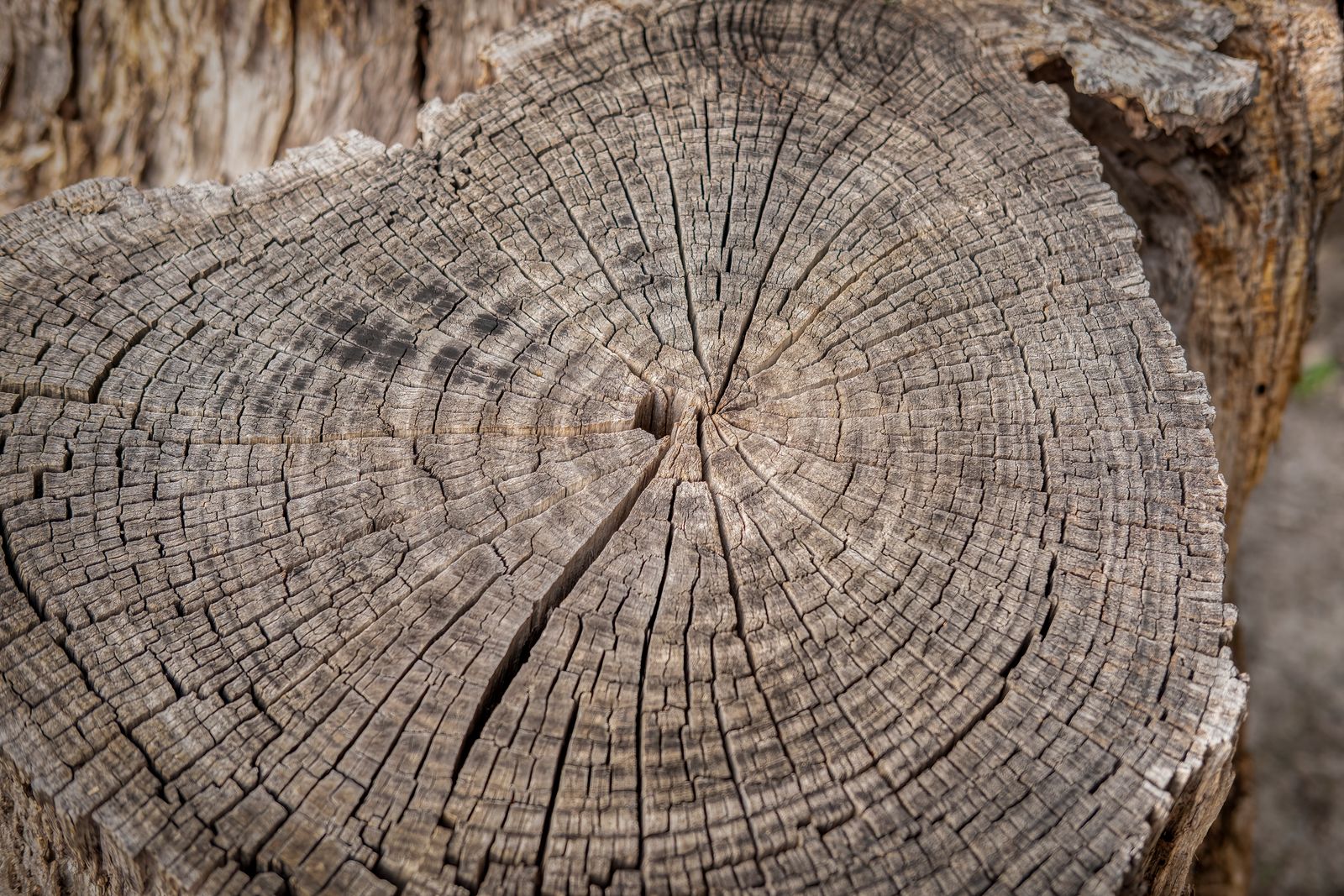
High on a limestone ridge in California’s White Mountains, a Great Basin bristlecone pine has been adding growth rings for roughly forty-eight centuries. The tree is called Methuselah. USDA describes its age as more than 4,789 years when sampled in 1957, consistent with an estimated germination date around 2833 BC. It is among the oldest confirmed living non-clonal trees.
Its exact location is a secret. The U.S. Forest Service will not say which tree in the Schulman Grove of Inyo National Forest is Methuselah, because the previous record-holder was cut down.

A seedling older than the pyramids
The arithmetic is worth sitting with. If you accept the ring count and the roughly 2833 BC germination date, Methuselah was already a sapling by the time the earliest known industrial-scale beer production was under way in Egypt — dated to around 3000 BC. The tree predates writing systems in most of the world. It predates the wheel in much of Europe. It predates Stonehenge’s sarsen circle by several centuries.
By the reign of Khufu, who according to the mainstream Egyptological timeline ruled from roughly 2551 to 2528 BC, the pine on that Californian ridge was pushing 300 years old. It was already older than any oak in a European forest today.
When Khufu’s workers finished the Great Pyramid — a 481-foot structure built from massive quantities of stone — Methuselah was a middle-aged tree with a trunk already thickened by centuries of freezing wind.
How a tree lives for nearly five millennia
Great Basin bristlecone pines (Pinus longaeva) do not survive by growing fast or growing large. They survive by growing badly, on purpose, in places nothing else wants.
The species is native to only three states — California, Nevada and Utah — and clings to dolomite and limestone soils above 9,500 feet. The trees are adapted to intense winds, snow, and dry cold; their twisted, half-dead appearance is not damage but strategy. Wood laid down in these conditions is so resin-rich and slow-grown that it resists insects, fungi, and rot to a degree ordinary pine cannot match.
The most remarkable trick is architectural. In a bristlecone, each vertical strip of living bark feeds only the section of trunk directly above it. If a root dies — struck by lightning, undermined by erosion, killed by drought — only the ribbon of tree connected to that root dies with it. The rest keeps going. A bristlecone can lose 90 percent of its living tissue and remain, in the strictest botanical sense, alive.
That is why Methuselah looks, in every photograph the Forest Service has ever released of the grove, more like weathered bone than a tree. Most of its trunk is dead wood. A single narrow lane of bark is still doing photosynthesis.
The man who found it, and the tree that came before
Methuselah was identified in 1957 by Edmund Schulman, a dendrochronologist working out of the University of Arizona’s Laboratory of Tree-Ring Research. Schulman took core samples — thin pencils of wood extracted with a hollow borer — from bristlecones scattered across the White Mountains and counted their rings under a microscope. One tree kept producing more rings than any other. He named it after the biblical patriarch who lived 969 years.
Schulman died in 1958. The grove he worked in now bears his name.
The reason Methuselah’s coordinates remain classified is a cautionary tale from 1964. A geographer named Donald R. Currey was studying ice age glaciology on Wheeler Peak in eastern Nevada. He had permission from the U.S. Forest Service to core bristlecones in the area. His borer got stuck in an especially gnarled specimen. Rather than lose the tool, he asked for the tree to be cut down.
Ring counts later showed the tree — later named Prometheus — had about 4,862 growth rings, and some estimates placed its true age closer to 4,900 years. It was, at the moment it was felled, the oldest known non-clonal organism on Earth.
The Forest Service has never publicly identified Methuselah’s exact tree in the grove since.

What Egypt was doing while the tree grew
Set the two timelines side by side and the pine becomes a kind of biological witness to almost everything called ancient history.
Around 2833 BC — the approximate germination date implied by the ring count — Egypt was still in its Early Dynastic Period. The step pyramid of Djoser at Saqqara, usually credited as the first monumental stone building in Egypt, had not yet been designed. That would come under the architect Imhotep about a century later.
By the time Khufu’s project began, Methuselah’s trunk had already laid down roughly three centuries of rings. The Great Pyramid is astounding, but it’s a very human monument. The mark of the human hand is everywhere. A papyrus logbook found in 2013 at the Red Sea port of Wadi el-Jarf, kept by a boat captain named Merer, records the daily logistics of hauling stone. Merer was writing his log while Methuselah was pushing 300.
By the time the pyramid’s capstone was in place, the tree was around 320 years old and had another 4,500 years of ring-laying ahead of it.
A ruler that doesn’t lie
The reason dendrochronologists trust ring counts to this depth of time is that bristlecone rings can be cross-matched. A wet year in the White Mountains leaves a thick ring in every tree at that elevation. A drought leaves a thin one. Chain enough overlapping specimens together — living trees, dead standing trees, ancient wood fallen and preserved in the dry cold — and you build a continuous calendar stretching back thousands of years.
That bristlecone chronology is one of the anchors used to calibrate radiocarbon dating worldwide. When an archaeologist reports that a seed from a tomb dates to a particular century BC, part of what makes the number trustworthy is a scaffolding of tree rings from these same White Mountains groves.
Which is why fringe claims about the pyramids being tens of thousands of years old collapse under scrutiny. A study by an engineer at the University of Bologna, posted to ResearchGate and summarised by IFLScience, tried to back-calculate the pyramid’s age from surface erosion and produced an average estimate of around 22,916 BC. The problem is that seeds from securely dated contexts — including material from Tutankhamun’s tomb and a chamber under Djoser’s step pyramid — consistently confirm the conventional chronology. Bristlecone-calibrated carbon dating is one of the tools that pins those seeds to their centuries.
Methuselah, in other words, is not only a survivor of the era in question. It is part of the ruler used to measure it.
What it looks like now
Visitors who hike the Methuselah Trail, a 4.5-mile loop through the Schulman Grove at around 10,000 feet, walk past the tree without knowing it. Signs point out other ancient bristlecones. None points at this one. Rangers describe the grove’s oldest trees as gnarled, silvered, often no taller than a two-storey house, with trunks twisted into ribbon-like flanges. The wood, where it is exposed, has been polished by wind-driven ice into something closer to marble than bark.
There are more than a dozen bristlecones in these mountains older than 4,000 years. Any of them could be Methuselah. That ambiguity is the point.
The Patriarch Grove, higher up in Inyo National Forest, holds a related record: the largest known Great Basin bristlecone by trunk volume, a tree called the Patriarch. It is not the oldest. In this species, size and age are almost inversely correlated — the fast-growing lowland specimens rot within a millennium, while the stunted, wind-tortured trees on the highest ridges are the ones that reach five thousand.
The next ring
Sometime this coming summer, if the winter snowpack in the White Mountains is deep enough and the July storms bring in moisture off the Sierra, a thin band of new cells will form under Methuselah’s remaining strip of bark. It will be narrow — bristlecone rings at this elevation are often less than a tenth of a millimetre wide — and it will record, in its width and density, exactly how wet and how cold the summer of 2026 was.
Somewhere in a future laboratory, a scientist may core a bristlecone stump and read that ring alongside a ring from 2833 BC, laid down when the Egyptian state was still consolidating and the first stone pyramid had not yet been imagined. The same tree, the same wood, the same calendar. Still writing.