

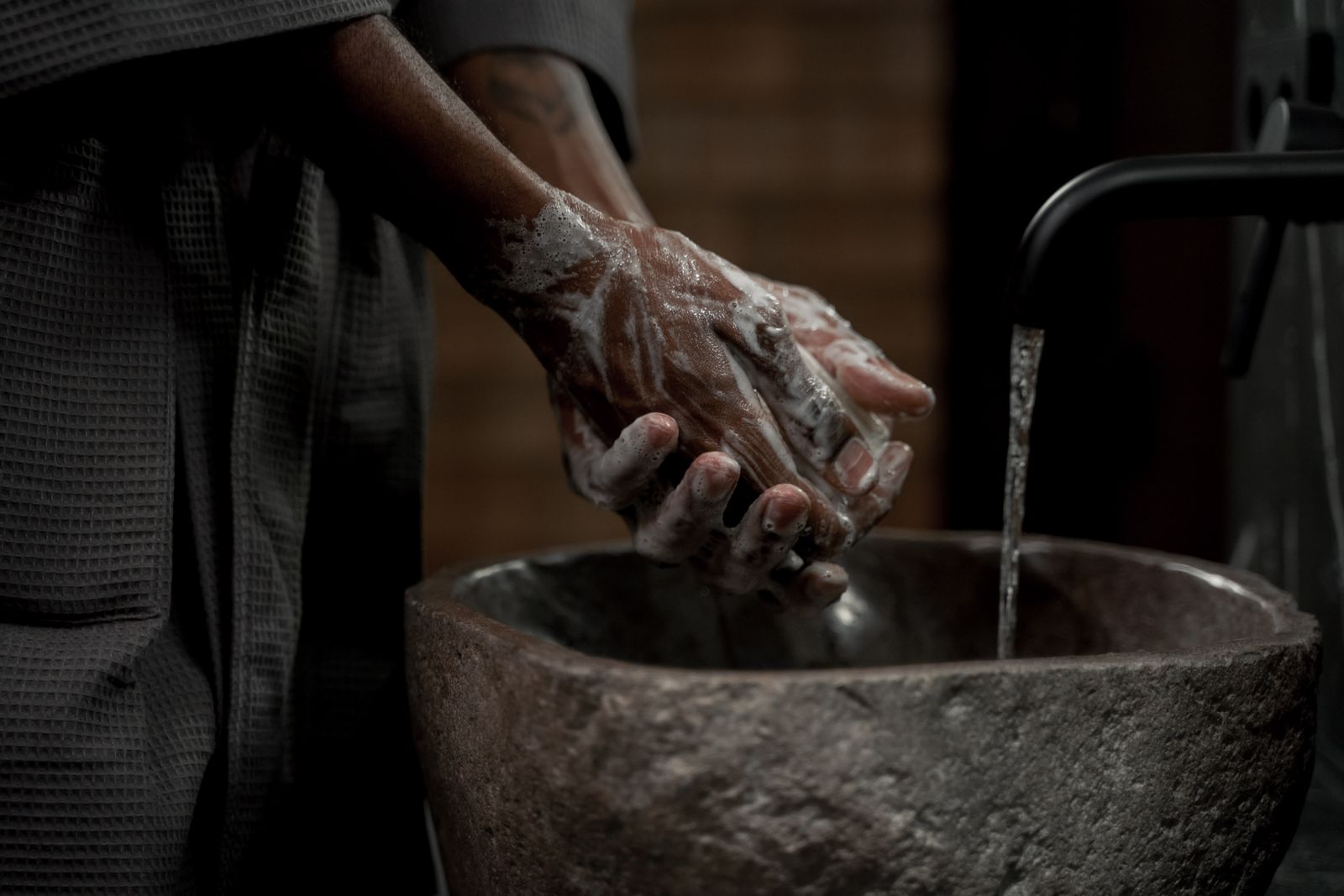
In May 1847, at Vienna General Hospital, Hungarian obstetrician Ignaz Semmelweis ordered the doctors and medical students working under him to disinfect their hands with chlorinated lime before examining women in labour. The mortality rate in his clinic had reached 18.3 percent in April. In June it fell to 2.2 percent, followed by similarly low figures in July and August.
Semmelweis did not know about bacteria. What he had was a disturbing difference between two maternity clinics, the death of a colleague after an autopsy injury, and a set of hospital records showing that women stopped dying when physicians cleaned their hands. His discovery was resisted, misunderstood and adopted far too slowly. His own ending was tragic, although more complicated than the familiar claim that doctors simply had him beaten to death for proving them wrong.

Two wards, one hospital, wildly different odds
The Vienna General Hospital operated two maternity clinics. The First Clinic trained physicians and medical students. The Second trained midwives. Patients were admitted on alternating days, dividing women between the clinics in something resembling a natural experiment.
The outcomes were dramatically different. An ABC reconstruction of the case describes mortality in the doctor-run clinic as reaching nearly five times the rate in the midwives’ clinic. The precise ratio changed according to the period being compared, but the broad pattern was unmistakable. In 1846, for example, maternal mortality was about 11.4 percent in the First Clinic and 2.8 percent in the Second.
Women knew the reputation of the clinics. Some begged not to be sent to the doctors’ division. Semmelweis later described women deliberately giving birth before reaching the hospital because patients who delivered in the street appeared less likely to develop the fever than those examined inside the First Clinic.
The killer was puerperal fever, or childbed fever: a broad historical term for bacterial infections following childbirth. Epidemic cases were often associated with streptococcal bacteria, including Streptococcus pyogenes, although postpartum infections can involve several different organisms.
The hospital’s growing emphasis on pathological anatomy gave Semmelweis an important clue. Physicians and students performed autopsies and then moved into the maternity clinic, often without adequately cleaning their hands. As The Conversation’s history of the case explains, midwives did not participate in dissections.
Semmelweis counts the dead
Semmelweis examined almost every difference he could identify between the clinics. He considered ventilation, overcrowding, delivery positions and even the route taken through the ward by a priest ringing a bell. None explained why the doctor-run clinic was so much deadlier.
The decisive clue arrived after the death of his friend and colleague Jakob Kolletschka, a professor of forensic medicine. During an autopsy, Kolletschka was accidentally cut with a student’s scalpel. He developed a systemic infection and died.
Semmelweis studied the findings from Kolletschka’s autopsy and recognised patterns resembling those found in women who had died from childbed fever. Kolletschka had never been pregnant. What connected him to the women was exposure to material from a corpse.
Semmelweis concluded that doctors and students were carrying what he called “cadaverous particles” from the dissection room to the maternity ward on their hands and instruments.

The chlorine solution
Semmelweis had no germ theory to guide him. Louis Pasteur’s influential work on microorganisms and fermentation was still to come, as were Joseph Lister’s antiseptic surgical methods and Robert Koch’s identification of specific disease-causing bacteria.
What Semmelweis noticed was that the smell of the autopsy room clung to physicians’ hands even after ordinary washing. Chlorinated lime removed that smell. He reasoned that it might also remove whatever invisible material was causing the disease.
Beginning in mid-May 1847, anyone entering the First Clinic was required to wash with the chlorine solution. The Guardian’s history of hand hygiene describes the resulting fall in mortality from as high as 18 percent to around 1 percent.
The month-by-month figures were striking. Mortality fell from 18.3 percent in April to 12.2 percent during the transition month of May, then to 2.2 percent in June, 1.2 percent in July and 1.9 percent in August. In 1848, the First Clinic’s annual mortality rate was approximately 1.3 percent, and individual months passed without a single recorded maternal death.
As NDTV’s medical-history account notes, the change took only weeks. A basin of chlorinated lime had largely erased a mortality gap that years of argument had failed to explain.
Why the evidence was not enough
The popular version of the story depicts Semmelweis producing perfect evidence while every other doctor stubbornly refused to look at it. The reality was less simple, although hardly more flattering to 19th-century medicine.
Miasma theory remained influential. Disease was widely attributed to foul air, atmospheric conditions, bodily imbalances and other causes. Semmelweis could demonstrate that his procedure worked, but he could not identify the agent being removed or explain the biological mechanism.
His original theory was also broader than modern bacteriology would support. He argued that nearly every case of childbed fever came from absorbed decaying material. His critics could point to infections that did not follow autopsy exposure, even though the practical value of disinfecting hands remained overwhelming.
Professional pride mattered too. The suggestion that educated physicians were carrying fatal contamination from corpses to patients was not merely inconvenient. It meant that respected healers had unknowingly caused many of the deaths they were trying to prevent.
Acceptance was further slowed by Semmelweis’s reluctance to publish a full account promptly. Early reports circulated through colleagues, allowing his argument to be misunderstood or reduced to the older idea that childbed fever was simply contagious.
His Vienna appointment ends
Johann Klein, the head of the obstetrics department, did not renew Semmelweis’s appointment when its term expired in March 1849. Describing this simply as Semmelweis being fired for handwashing leaves out institutional rivalries, political tensions following the revolutions of 1848 and disagreements over his theory.
Semmelweis sought permission to teach obstetrics independently in Vienna. Approval came only after a long delay and under restrictive conditions. Soon afterward, he left Vienna for Pest, now part of Budapest.
That departure damaged his ability to defend the work he had begun. It also meant that the doctors controlling one of Europe’s most influential medical centres no longer had its most forceful advocate for hand disinfection inside the institution.
Budapest, and the result appears again
In Pest, Semmelweis worked at St. Rochus Hospital, where childbed fever was again a serious problem. He introduced chlorine disinfection and achieved low maternal-mortality figures there as well.
He later became professor of theoretical and practical obstetrics at the University of Pest. His clinical success was therefore not confined to one brief period in one Viennese clinic. He had applied the principle in another hospital and again recorded a sharp reduction in deaths.
In 1861 he published Die Ätiologie, der Begriff und die Prophylaxis des Kindbettfiebers, translated as The Etiology, Concept, and Prophylaxis of Childbed Fever. The book contained extensive mortality tables but was long, repetitive and combative.
Prominent physicians, including the influential pathologist Rudolf Virchow, rejected Semmelweis’s explanation. Others accepted parts of the practical intervention without accepting his claim that childbed fever had one underlying cause.
Semmelweis responded with increasingly furious open letters. He accused leading obstetricians of allowing women to die and sometimes called them murderers. His anger was understandable, but the attacks further narrowed his ability to persuade the profession.
The asylum
By 1865, Semmelweis’s behaviour had deteriorated sharply. Historians and physicians have proposed several possible explanations, but no retrospective diagnosis can be established with confidence.
Friends and colleagues arranged for him to be taken to a Viennese psychiatric institution. Accounts say he was brought there under a pretext, realised what was happening and attempted to leave. He was restrained, and reports state that attendants beat him.
Semmelweis died on August 13, 1865, two weeks after his admission. He was 47. His recorded cause of death was pyemia, a severe bloodstream infection associated with an infected wound on his hand.
The precise origin of that wound remains disputed. A Times of India retrospective correctly notes that historians continue to debate both his mental decline and the exact circumstances of his death. One influential account connects the fatal wound to the struggle with asylum attendants, but the surviving evidence does not justify claiming with certainty that he was deliberately beaten to death for advocating handwashing.
He was buried in Vienna. The funeral received little attention, and only a small number of colleagues attended.
Vindication came after his death
The scientific framework Semmelweis lacked emerged over the following decades. Pasteur’s experiments helped establish that microorganisms drove fermentation and putrefaction. Lister began publishing results from antiseptic surgery in 1867. Koch later isolated particular microorganisms associated with particular diseases.
These discoveries did not merely vindicate the importance of cleanliness. They supplied the missing mechanism: microscopic organisms could be transported by hands and instruments, enter damaged tissue and cause fatal infection.
Recognition of Semmelweis grew slowly. The medical faculty that traced its history through the University of Pest became an independent medical university in 1951 and adopted his name in 1969. His birthplace became a medical-history museum.
The phrase “Semmelweis reflex” later entered discussions of science as shorthand for rejecting evidence because it conflicts with an established framework. The term can oversimplify the real history, but it captures the enduring symbolic power of his experience.
A basin of chlorine, and an unfinished lesson
Modern infection control is not a direct copy of Semmelweis’s procedure. Alcohol-based hand rubs, sterile gloves, instrument sterilisation and detailed protocols rest on more than a century of microbiology. But the central insight remains the same: hands can carry dangerous organisms from one patient or surface to another.
The World Health Organization describes Semmelweis’s work as helping create a new paradigm in infection control. His chlorinated-lime basin belongs to the same lineage as the alcohol-gel dispenser outside a modern hospital room.
Semmelweis was not destroyed in one simple act by a united medical establishment. Some doctors supported him, some tested his method, others misunderstood it, and many rejected the theory beneath it. His own delays, absolutism and increasingly hostile communication also affected the reception of his work.
None of that erases the central failure. A cheap intervention produced an enormous and repeatable fall in deaths, yet it did not transform European medical practice in time to help thousands of women who continued to die.
The strongest version of the Semmelweis story does not need the uncertain claim that he was beaten to death for telling doctors to wash their hands. The verified record is devastating enough: the mortality curve fell, the hospital ledger showed why, and medicine still took a generation to understand what the numbers were saying.