

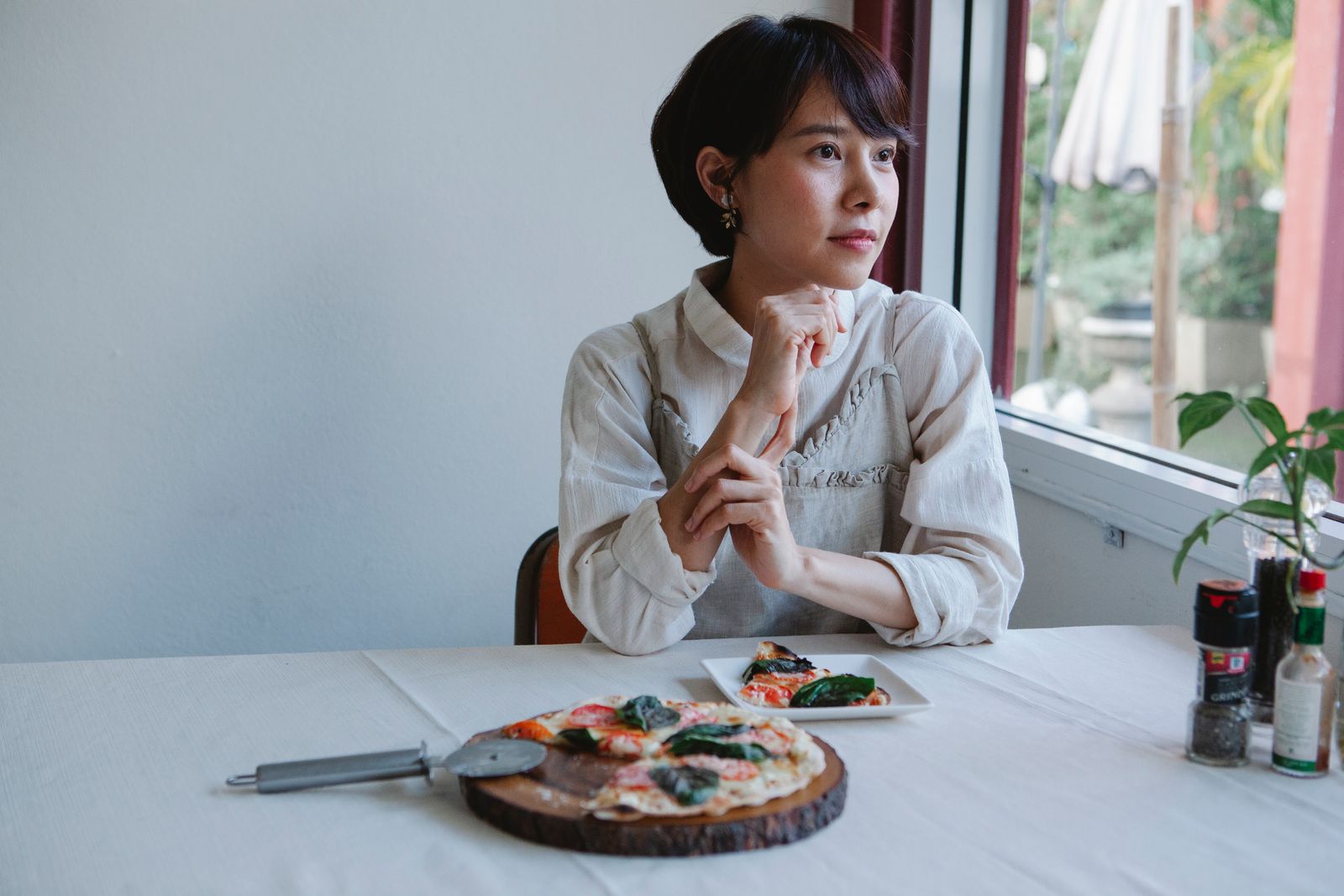
The Toast reservation data tells a small story with a big shape. In the third quarter of 2025, reservations for one at full-service restaurants rose 22 percent compared with the same quarter a year earlier. At quick-service restaurants, solo orders climbed 52 percent since 2021, according to Yum Brands’ 2026 Food Trends Report. The people booking these tables are not, by and large, sad. They are tired.
That is the argument worth taking seriously. Not that solo diners have opted out of connection, but that they have found one of the last remaining pockets of an ordinary day where nobody expects them to perform.
This is a reading of research and reporting, not clinical advice. We are writers, not psychologists.
What the numbers actually say
The Yum Brands figures come from a corporate trend report, which is worth flagging. It is a marketing document as much as it is a data source. Still, the direction is consistent across independent sources. Toast, a restaurant software company with visibility into millions of bookings, showed the same climb at sit-down restaurants. Solo reservations are still a small share of total bookings, under one percent by Toast’s count. The rate of change is what matters here, not the absolute size.
Yum Brands’ chief marketing officer told Axios that customers are looking for “small moments of control” in an unpredictable world, and that food is one of the easier places to find them. That is a corporate framing. It is also, on the available evidence, roughly right.
About 24 percent of solo diners say they are eating out alone to satisfy a personal craving, according to the Yum Brands data, and more than half spend between ten and thirty dollars or more per visit. They are not clipping coupons. They are buying themselves dinner.
The concept doing the heavy lifting is emotional labor
The term comes from the sociologist Arlie Hochschild, who used it to describe the work of managing feelings and expressions to meet occupational demands. Psychologists have since widened the frame to include relational and domestic life. A useful summary of the current thinking sits in a recent Forbes piece by psychologist Mark Travers, which lays out how much of the work happens before a conversation even starts.
Travers draws on the emotion-regulation model developed by Stanford’s James Gross, which distinguishes between antecedent strategies, deployed before an emotional response fully forms, and response-focused strategies, deployed after. Antecedent work includes situation selection, cognitive reappraisal, and attention deployment. Rehearsing a difficult conversation in the shower is antecedent labor. Softening your face before you walk into the kitchen is antecedent labor. So is scanning a partner’s tone at the door and calibrating your own accordingly.
The load is cumulative. Sustained emotion regulation demands are linked to elevated cortisol and increased fatigue, and emotional dissonance combined with low autonomy predicts higher burnout. In a Psychology Today piece on hidden emotional labor, the pattern is described as invisible work that supports team functioning but rarely appears in job descriptions.
Meals are a common site of that work.
The meal is a social performance most of the time
Eating with other people is one of the most reliable predictors of self-reported happiness in the research literature. It is also, for the same reason, one of the more socially demanding hours in the day. You are expected to attend, respond, laugh at the right moments, ask the follow-up question, notice the mood, ferry the conversation past its awkward patches.
None of this is bad. It is what shared meals are for. But it is work.
For a parent, a caregiver, a manager, a person with an anxious partner or a difficult in-law, the dinner table is often where the day’s regulatory demands stack up. Cook the food. Read the room. Absorb the child’s meltdown. Steer the conversation away from the argument. Perform enough warmth that the meal does not become a referendum.
An hour later, the plates are cleared and the person who did most of that work has not rested. They have paid.
What solo dining seems to offer
The psychology research on solitude has become more careful in the last decade about distinguishing chosen aloneness from social withdrawal. Netta Weinstein and colleagues, in a 2021 paper in Frontiers in Psychology, gathered narratives about time alone across the lifespan and found that people described it in terms of autonomy, self-connection, and recovery from social demands, not primarily in terms of avoidance. Thuy-vy Nguyen’s collaborators have shown, across several studies, that solitude entered by choice looks psychologically quite different from solitude imposed by circumstance.
Virginia Thomas and Margarita Azmitia developed a Motivation for Solitude Scale specifically to separate self-determined solitude, which is protective, from not-self-determined solitude, which tracks with loneliness and lower wellbeing. A useful Psychology Today summary of this literature makes the point plainly: authentic solitude is the kind you would choose again.
A table for one, in this frame, is not the absence of company. It is the presence of something else. Nobody at the table needs anything from you. There is no tone to monitor. No preemptive softening. No calibration. The waiter arrives, takes the order, and leaves.
For roughly the length of a meal, the antecedent regulation machinery gets to switch off.
Why this reads as rest and not withdrawal
The distinction matters because the same behavior can mean two very different things. A person who eats every meal alone because nobody invites them anywhere is not resting. They are lonely, and the meal is a symptom. A person who eats one lunch a week alone because it is the only reliably quiet hour in their schedule is doing something else entirely.
The research on solitude keeps landing on this fork. Chosen or unchosen. Restorative or corrosive. A recent Psychology Today essay by Hans Rocha IJzerman and colleagues argues that even hospitality, the act of hosting others, can hide loneliness when it becomes the only way a person knows how to be in the room. The behavior does not tell you which one is happening. The person’s relationship to the behavior does.
The solo diner picking a restaurant, making a reservation, sitting down with a book, and paying thirty dollars for a plate of food is exhibiting the behavior of a person exercising a preference, not enduring an absence.
What this fits with, culturally
The trend also fits a broader pattern we’ve been watching on this beat. People are quietly editing their social lives to protect a smaller amount of attention. We’ve written about the people who leave family group chats and stop replying to acquaintances, not because they have given up on other people, but because they have run out of surplus to distribute. And in a recent piece on aging, I argued that the adults who seem to move most easily through later life are often the ones who stopped auditioning for people who were never going to clap.
Dining alone belongs on that list of small, chosen edits. It is not a symptom of a colder society. It is a symptom of a society in which people have started to notice how much invisible work goes into an ordinary Wednesday.

What the trend does not show
The data cannot tell us whether solo diners are, on average, less lonely than shared-table diners. It does not tell us whether the person at the two-top is happier than the person at the one-top. It tells us that a growing share of restaurant visits are chosen, individual, and paid for at ordinary prices. It tells us that Gen Z and millennial customers are driving much of the growth, and that specialty drinks are increasingly bought on their own, which reads more like small indulgence than resigned isolation.
The New York-Presbyterian psychiatrist Gail Saltz, quoted in the Fox News reporting, sounded the appropriate caution: loneliness is rising across all age groups, and the fact that some people enjoy dining alone should not become a reason to stop deepening relationships. That is a fair line. A person can eat lunch alone on Tuesday and eat dinner with three friends on Friday, and both facts can be true at once.
The broader shift toward doing things alone, including travel and events, is part of the same pattern rather than proof of anything darker.
What the meal is really doing
The most honest reading of the trend is small and unglamorous. People are looking for an hour in the week where the regulatory apparatus can go quiet. Not solitude as a lifestyle. Solitude as a tactic. A person who spends most of their day monitoring other people’s moods, at work and at home, cannot easily recover from that by adding another social meal to the calendar. The meal alone is not the point. The absence of preemptive softening is the point.
If you find yourself craving one, it is worth asking whether the rest of your week is actually demanding what you think it is demanding. Not to fix anything. Just to see it.
None of this is an argument against shared meals, or against the value of company. Eating with other people remains one of the more reliable social pleasures on offer. The solo table is not competing with the shared one. It is compensating for a life in which most of the other hours are already spoken for.
If the pattern of chronic overfunctioning is something you recognize in yourself, and it has started to feel less like a preference and more like exhaustion, that is a conversation worth having with someone qualified to help.
The person eating alone at the next table is probably not lonely. They are probably resting in the only way their week allows.