

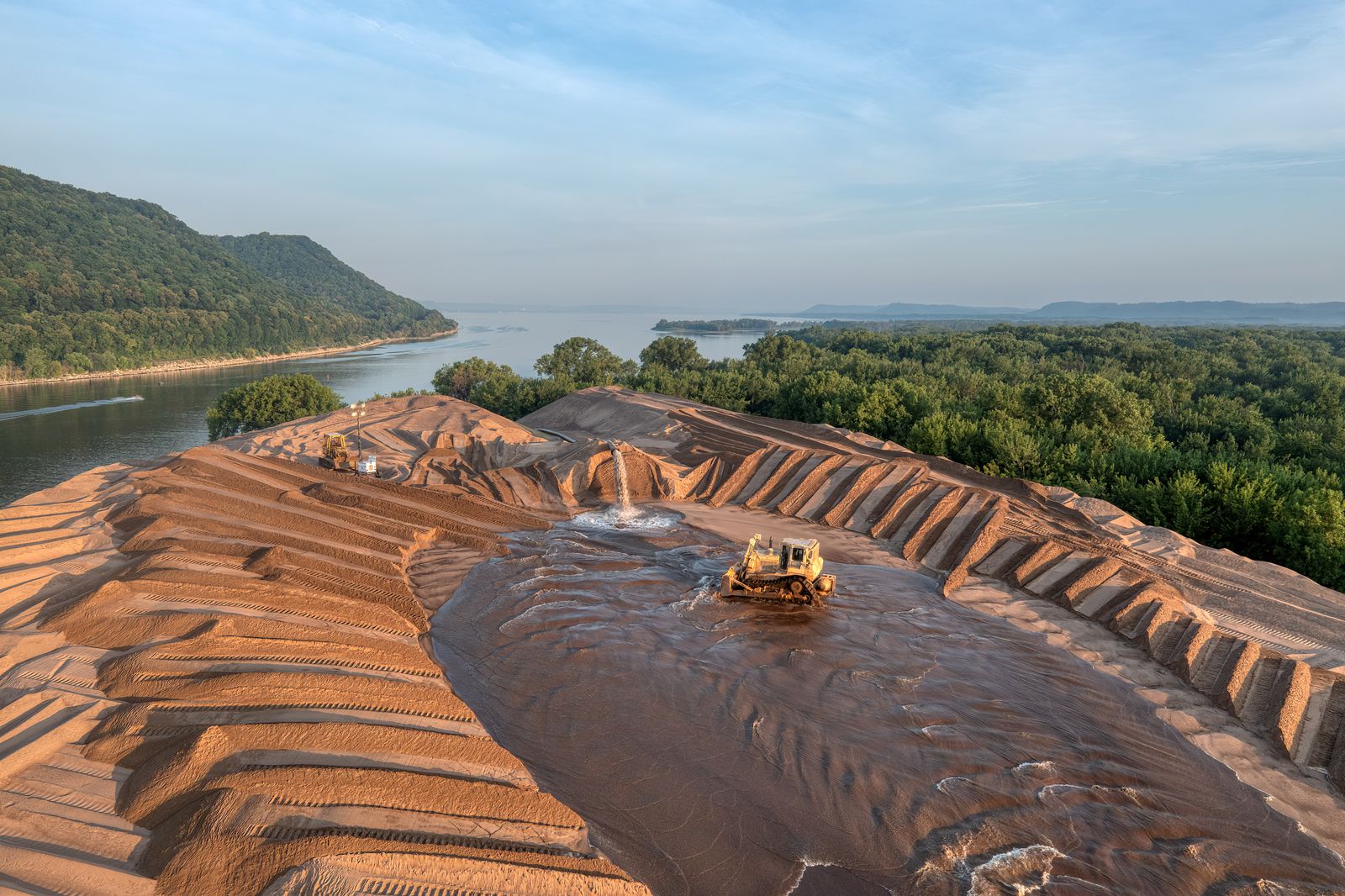
On May 27, 2026, officials from the Environmental Protection Agency, the Minnesota Pollution Control Agency, and the Minnesota Department of Natural Resources gathered at Thomson Reservoir in Carlton, Minnesota, to mark the completion of sediment cleanup projects on the state’s side of the St. Louis River. The final project addressed 225,000 cubic yards of contaminated sediment at Thomson at a cost of $30.5 million.
The other bookend is Minnesota Slip in Duluth. In 2018, 37,000 cubic yards of contaminated sediment there were remediated, but that does not mean 37,000 cubic yards were hauled away. Project records describe a capping remedy: about 2,500 cubic yards were moved within the slip to level the bottom, then clean sediment and stone were placed over the contaminated material.
At Thomson, the distinction matters for the same reason. EPA’s May 2026 completion announcement says the project addressed 225,000 cubic yards of contaminated sediment. It did not dredge that entire volume out of the reservoir.
What an Area of Concern actually is
The designation comes from the Great Lakes Water Quality Agreement between the United States and Canada, which identified heavily degraded locations around the Great Lakes for concentrated cleanup and restoration. The St. Louis River, which forms part of the Minnesota-Wisconsin border before reaching Lake Superior at Duluth and Superior, was designated an Area of Concern in 1987.
Areas of Concern carry a list of what agencies call beneficial use impairments. These are specific ways pollution or habitat damage interferes with uses of the waterway, including fish consumption, aquatic habitat, dredging, and other ecological or recreational functions.
The St. Louis River originally carried nine such impairments. EPA reported in May 2026 that four had been formally removed, while work and monitoring continued on the others.
The 2018 start and the 2026 finish
EPA describes Minnesota Slip as the starting point for the eight-project Minnesota sediment-cleanup sequence completed between 2018 and 2026. The 37,000-cubic-yard figure measures sediment remediated at the site, while the physical remedy relied primarily on capping contaminated material in place.
Over the following years, projects tackled shipping slips in the Duluth-Superior harbor, reservoirs and river sites affected by heavy metals, dioxins, PCBs, and other remnants of historic industry. One Duluth shoreline project, MPR News reported, excavated nearly 20,000 dump trucks’ worth of old timber waste that had been dumped into the river.
Thomson Reservoir was the final Minnesota sediment-remediation project. Its 225,000 cubic yards of affected sediment would cover an American football field to a depth of more than 100 feet, but the cleanup method was very different from large-scale dredging.
Why activated carbon, and not a dredge
At Thomson, crews spread activated carbon over contaminated portions of the reservoir. The material settled onto the sediment and bound to dioxins and furans left by historic pulp and paper manufacturing.
The contaminated sediment remains in place. The purpose of the carbon layer is to reduce the contaminants’ bioavailability to bottom-dwelling organisms, limiting how easily those pollutants can enter the aquatic food web.
LaRae Lehto, identified by MPR News as a Superfund supervisor at the Minnesota Pollution Control Agency, said the activated-carbon treatment was, to the agency’s knowledge, the largest project of its kind in North America. The distinction is about the scale of this particular remediation technique, not the overall volume of every cleanup carried out along the St. Louis River.
Dioxins, furans, and why they matter
Dioxins and furans are persistent contaminants that can be produced by industrial processes, including older pulp and paper operations. Because they break down slowly and can accumulate in animal tissue, they can move through an aquatic food web from bottom-dwelling organisms into fish and other wildlife.
For the general population, food is the dominant route of exposure to dioxin-like compounds, particularly foods containing animal fat. In a contaminated river system, reducing the availability of pollutants to organisms living in or on the sediment can reduce their movement farther up the food chain.
That does not make the sediment chemically clean. At Thomson, the remedy is designed to isolate and bind contaminants so they are less available to the ecosystem above them.
The money
The federal government has invested heavily in Great Lakes cleanup through the Great Lakes Restoration Initiative and Great Lakes Legacy Act partnerships, alongside state, local, and industry contributions.
The 2021 Bipartisan Infrastructure Law added another major funding stream. EPA announced in February 2022 that $1 billion from the law would be directed toward accelerating cleanup and restoration of Great Lakes Areas of Concern, including work connected with the St. Louis River.
By May 2026, EPA said it had provided $250 million in Great Lakes Restoration Initiative funding across the St. Louis River Area of Concern, leveraging another $208 million from state, local, and industrial partners.
What is not finished
The completion ceremony at Thomson marked the end of the eight sediment-remediation projects on the Minnesota side. It did not mark the end of every restoration project in the watershed.
Habitat work and monitoring continue, and projects remain on the Wisconsin side of the estuary. Full delisting of the St. Louis River as an Area of Concern requires the remaining beneficial use impairments to be removed after agencies determine that restoration goals have been met.
Lehto told MPR News that she expected the overall cleanup process to wrap up around 2030 or 2031 after remaining Wisconsin projects are completed. That is an estimate rather than a fixed completion date.
What people are doing on the river now
Thomson Reservoir is already used for recreation. During the cleanup itself, the Great Lakes Restoration Initiative said public access was maintained, specifically noting recreational paddlers who use the reservoir and its outfalls.
That continued after construction. In August 2026, the St. Louis River Alliance partnered with the University of Minnesota Duluth Recreational Sports Outdoor Program and Day Tripper of Duluth on a beginner kayak workshop at Thomson Reservoir.
The broader change in how people use the river predates the Thomson project. WDIO’s account of the river’s decline and recovery traces the improvement back through wastewater treatment, pollution controls, sediment remediation, and habitat restoration carried out over several decades.
Across the Area of Concern, agencies reported by May 2026 that more than 1.9 million cubic yards of contaminated sediment had been addressed and more than 1,000 acres of habitat restored.
What the numbers mean, and what they do not
Bookending the Minnesota sediment program with 2018 and 2026 still tells a useful story, but the verbs matter. Minnesota Slip involved 37,000 cubic yards of sediment remediated largely through capping. Thomson Reservoir involved 225,000 cubic yards addressed through an activated-carbon amendment costing $30.5 million.
Neither figure means that the full stated volume was physically dug up and removed from the waterway. Different sites required different remedies, from dredging and disposal to clean caps and carbon treatments designed to isolate contamination where it lay.
Nor does completion of the Minnesota sediment projects mean the St. Louis River has been fully delisted. Wisconsin projects, habitat work, and monitoring remain part of that longer process.
For now, Thomson Reservoir is open to paddlers, the white pines still rise above the shoreline, and the activated carbon is settled over the contaminated sediment below, binding pollutants that agencies spent decades trying to keep out of the food web.