

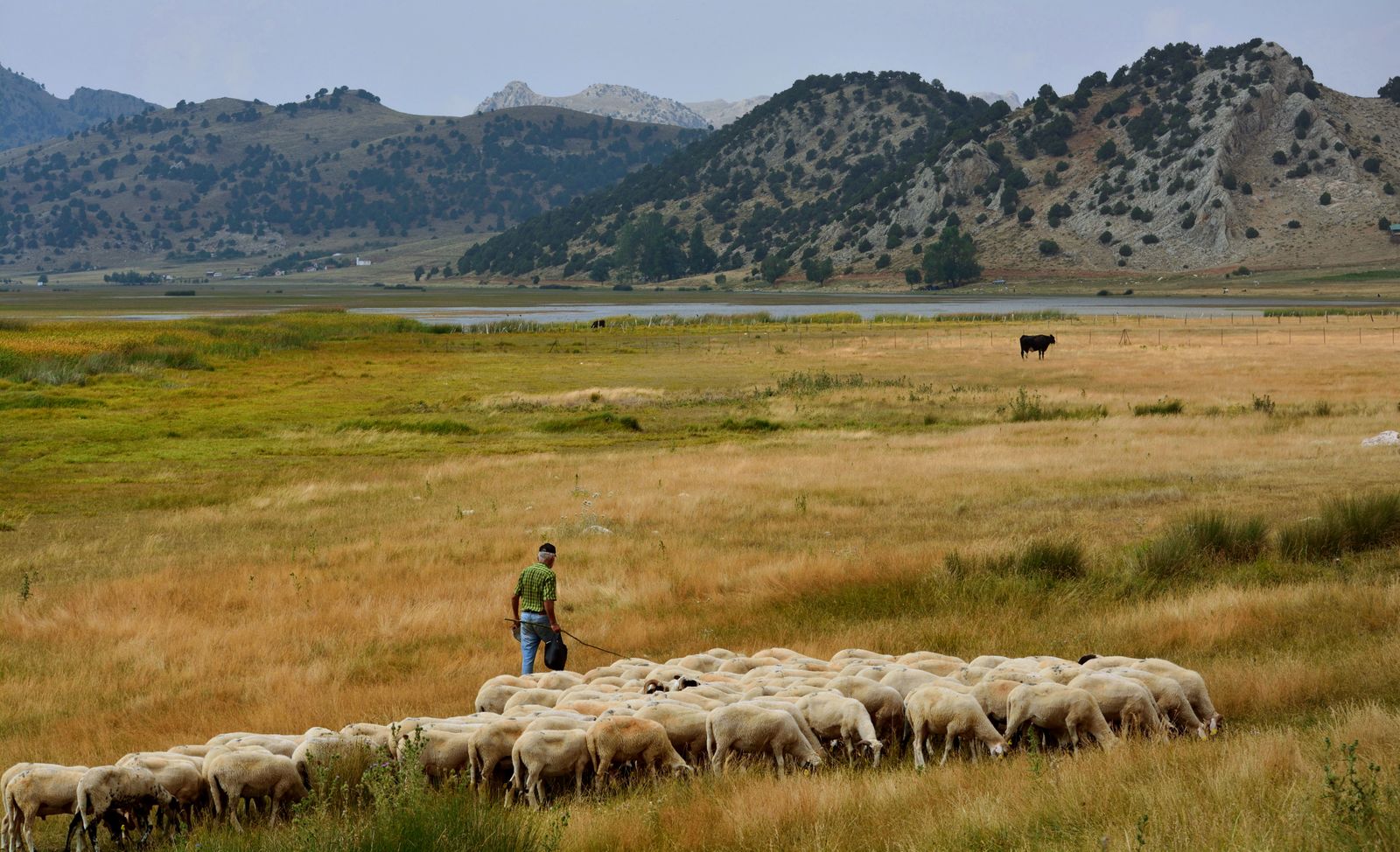
On the eastern flank of Sardinia, in a cluster of villages called the Ogliastra, an unusual number of men have lived past 100 while tending sheep on limestone ridges that rise sharply from the Tyrrhenian Sea. Villagrande Strisaili, one of these villages, has produced so many centenarians per capita that demographers drew a literal blue marker around it on a map — one of the original Blue Zones. The men here carry a Y-chromosome signature, haplogroup I2a1a-M26, that is common in Sardinia and vanishingly rare almost everywhere else in Europe. Geneticists have spent two decades trying to work out whether that isolation, sustained for roughly 10,000 years since the first farmers reached the island, is what made the place a longevity outlier.
The answer, so far, is: partly. And the story of how researchers arrived at that hedged, careful “partly” is more interesting than the tidy version the wellness industry sells.

A Y-chromosome that stayed home
Haplogroup I2a1a-M26 is a paternal lineage — passed father to son, unrecombined, for thousands of generations. In most of Europe it appears at low frequencies. In Sardinia it represents a substantial portion of the male population, and in some inland villages it climbs higher still. A 2015 analysis in the European Journal of Human Genetics traced the Italian genome in fine detail and identified Sardinia as a genetic outlier on the peninsula, with a signature dating back to the Neolithic peopling of the island.
That signature persisted because Sardinia is, in genetic terms, a slow-motion vault. The Mediterranean cut it off from mainland gene flow. The mountainous interior then cut the interior off from the coast. Malaria, endemic in the lowlands until the 20th century, discouraged outsiders from settling inland. Shepherds in villages like Talana, Urzulei and Arzana married other shepherds from villages a few valleys over, and the same surnames — Cabras, Mereu, Piras — repeat down the parish registers for centuries.
The M26 lineage is the paternal fingerprint of that closure. It is not a longevity gene. It is a marker that a population has stayed put long enough for other things — including any variants that happen to nudge lifespan up or down — to accumulate at unusual frequencies.
Why isolation matters for aging research
Population geneticists prize isolates for the same reason chemists prize pure reagents. When a group has been reproductively closed for a long time, rare variants that would be diluted out in a big mixing population instead drift upward in frequency through founder effect and genetic drift. If one of those variants happens to affect, say, cholesterol metabolism or DNA-repair efficiency, its footprint becomes easier to spot.
Sardinia has been a favourite hunting ground for this reason since Luigi Luca Cavalli-Sforza’s group began mapping the island’s surnames. That work, later formalised in Nature and other journals, showed that Sardinian Y-chromosome distributions carry a paradigmatic signal of founder effect and long isolation. The Ogliastra, tucked behind the Gennargentu massif, is the deepest pocket within that pocket.
The centenarian ratio nobody could ignore
In 1999, the Sardinian demographers Gianni Pes and Michel Poulain drew concentric blue rings on a map to mark villages where an unusual fraction of men were reaching 100. The bullseye landed on the Ogliastra. Sardinia’s centenarian sex ratio — men to women — shows more parity than most populations, whereas globally centenarians skew heavily female. That parity is one of the things that made the island famous.
The Blue Zone label stuck, then spread, then got contested. Academic debates continue over how much of the centenarian signal in places like Sardinia and Okinawa is real biology versus poor record-keeping and pension fraud. Sardinian researchers push back that their parish registers, kept by the Catholic Church since the 1500s, are among the cleanest longevity records on Earth.
Whatever the correction factor, the Ogliastra excess is not going away. It is smaller than the tourism brochures suggest and larger than the sceptics allow.
What genes actually contribute
Here is where the story gets careful. When Sardinian researchers looked for specific longevity-associated variants — the ones that show up in centenarian studies elsewhere — they mostly did not find them enriched on the island. A study published in the Nature portfolio found a lack of association between common polymorphisms linked to successful aging and longevity in the Sardinian Blue Zone population. In other words, the typical genetic markers from centenarian genome-wide association studies don’t explain why these shepherds live so long.
That is a strange result, and an important one. It suggests either that Sardinian longevity runs through variants that haven’t been catalogued yet — plausible, given how much of the island’s genome is still under-studied — or that the genetic contribution is smaller than the reputation implies and something about the environment does most of the work.
Twin studies have estimated the heritability of lifespan at around 25 percent — a figure some researchers now think under-counts genes because it lumps in deaths from accidents and infections. Even at the higher end, three-quarters of the variance is not written in DNA. It is written in food, work, altitude, family, and the tempo of daily life. Large-cohort genetic analyses have shown that the number of genetic markers linked to lifespan continues to grow — meaning the genetic picture is real, but diffuse.
The shepherd’s day
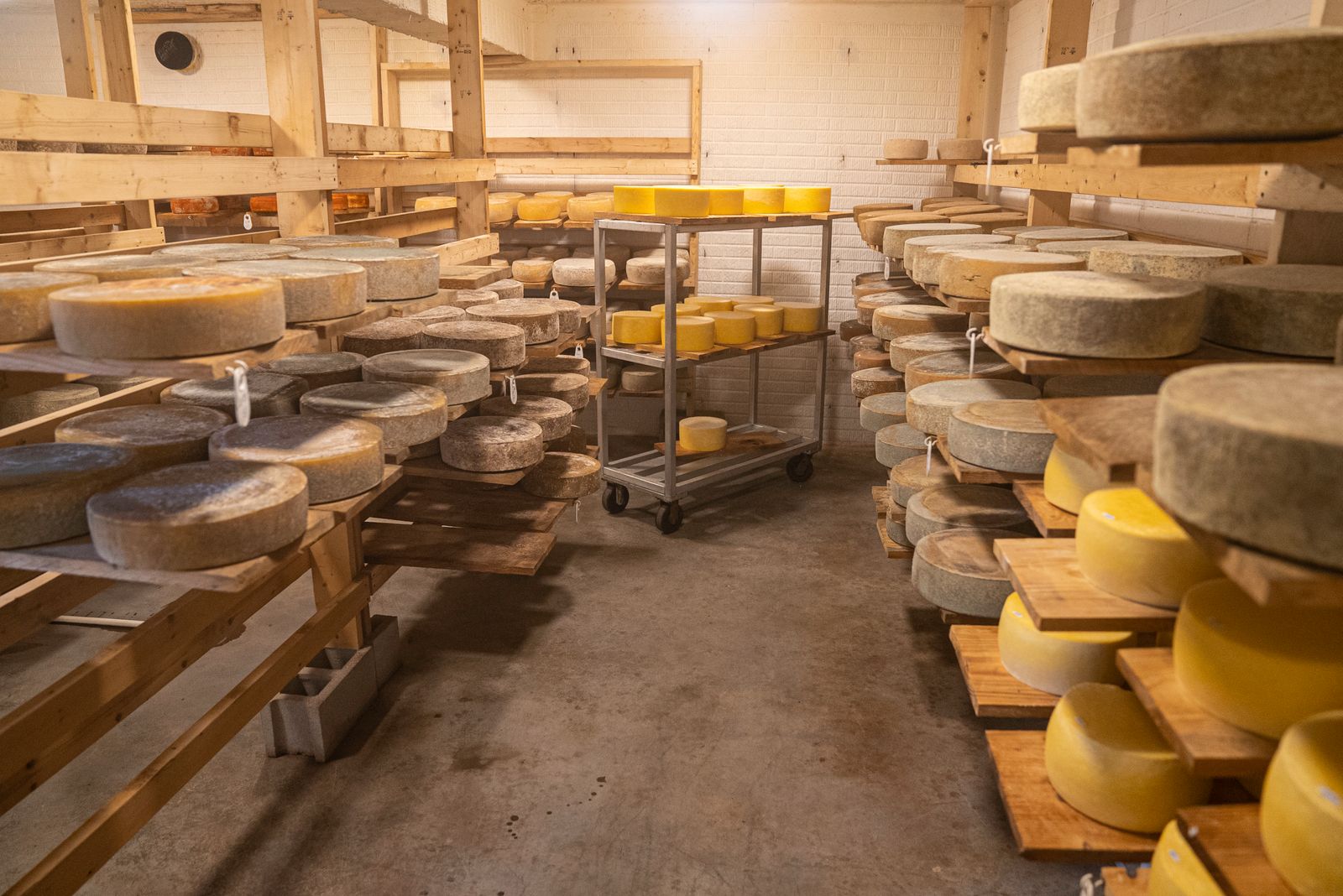
In Villagrande, a 91-year-old named Antonangelo still gets up before dawn to milk his sheep and turn the milk into pecorino, according to a Deutsche Welle report on the village. Antonangelo told Deutsche Welle reporters that he believes staying active through work keeps him alive. His neighbour Giuseppino, aged 100, still walks the steep paths of the village on foot. The gradients here are punishing — some streets rise at 15 percent — and everyone climbs them, every day, for a hundred years.
That is not a metaphor for exercise. It is exercise. A Sardinian shepherd walking his flock across the Supramonte is estimated to cover around 15 to 20 kilometres a day across broken terrain, at altitude, in every season. Cardiologists studying the region have noted that the men’s resting heart rates and cardiovascular profiles in their 70s and 80s look like those of much younger populations elsewhere in Europe.
The diet reinforces the pattern. Sardinian inland cooking leans on barley bread (fresa), fava beans, wild greens, minestrone thickened with beans and fennel, small amounts of pecorino from their own sheep, and red wine — Cannonau — that carries high polyphenol content. Meat appears on Sundays and feast days. Fish, despite the island being surrounded by sea, plays a smaller role inland than one might expect, because the mountain villages historically had almost no contact with the coast.
The Okinawa comparison
Okinawa, the other classic Blue Zone, tells a parallel story with a darker ending. The Okinawa Centenarian Study has tracked thousands of participants across multiple decades. Historically, the island had an exceptionally high concentration of centenarians. The traditional diet was predominantly plant-based and low in calories — with the purple sweet potato, not rice, doing most of the work.
Then American fast food arrived after the Second World War, the sweet potato receded, and subsequent generations showed declining longevity outcomes. Same island. Same isolate genetics. Different food environment. The result was a natural experiment nobody designed, and it collapsed the longevity signal within two generations.
The Sardinian shepherds have so far been insulated from the equivalent shock, partly because the terrain still makes industrial agriculture impractical and partly because the older generation kept eating the way their parents did. But the sons and grandsons increasingly do not. Ogliastra teenagers eat pizza and drink Coca-Cola like teenagers everywhere.
Why the M26 clue still matters
The M26 haplogroup is not the reason these men live long lives. It is the reason we can tell that the population is old, closed, and biologically distinctive enough to be worth studying at all. It is a tracer dye in the pedigree, revealing that the same families have farmed the same slopes since farming reached the western Mediterranean around 8,000 years ago.
That closure is what allowed whatever genetic contributors do exist — likely rare, likely still uncatalogued, possibly involving inflammation control or lipid metabolism — to reach frequencies where they can be detected. The Frontiers research programme on exceptional longevity and Blue Zones now treats isolates like Sardinia, Okinawa and Nicoya as complementary experiments: each one holds a different combination of genes, diet, and social structure constant, and researchers try to read the differences.
A separate strand of work on sexual dimorphism in immunity among the oldest old has focused on Sardinia specifically because of its unusual male-to-female centenarian parity. Whatever is going on there — hormonal, immunological, or behavioural — the island is one of the few places on Earth where it can be studied at all.
The vault is opening
Roads reached the deepest Ogliastra villages only in the 1950s. Television arrived in the 1960s. The sheep economy that sustained the shepherd lifestyle is shrinking every year, as young people leave for Cagliari or the mainland. Reviews of centenarian research note that the modifiable inputs — diet, movement, social connection — appear to matter at least as much as the fixed inputs of DNA, which is both encouraging (you can copy them) and sobering (Okinawa shows how fast the signal can disappear).
Antonangelo will keep milking his sheep at dawn. Giuseppino will keep walking uphill. The M26 lineage will keep passing father to son in the parish registers of Villagrande, marking the men whose ancestors climbed off a Neolithic boat and never really left. Whether their grandsons, eating differently and working sitting down, still make it to 100 is the question the island is quietly, unwillingly, answering right now.