

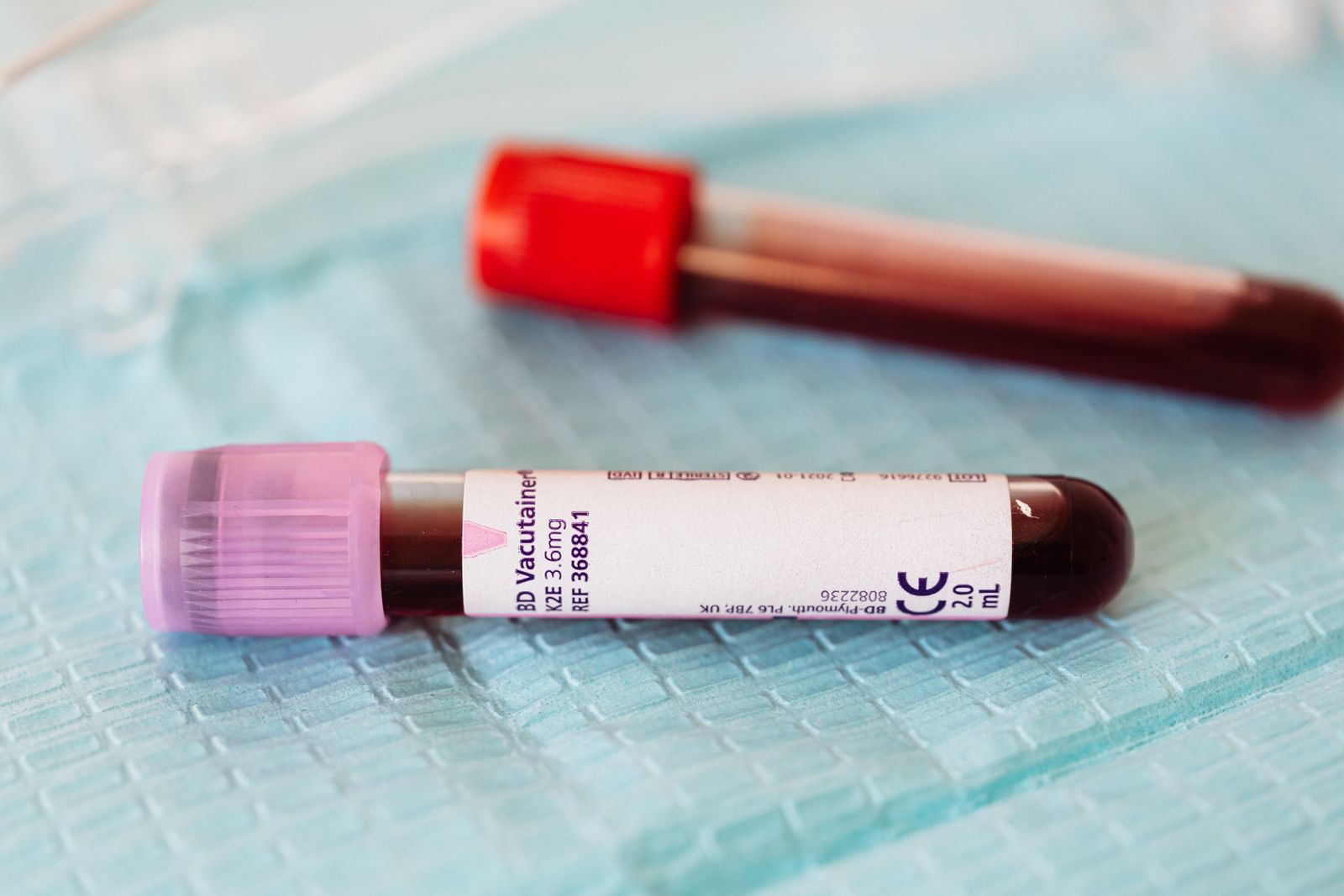
A blood test that can flag Alzheimer’s disease five to ten years before memory symptoms appear is moving from research curiosity to clinical reality. Researchers presenting at the Alzheimer’s Association International Conference this week described panels of plasma biomarkers that showed strong predictive accuracy for cognitive decline in participants tracked across a decade, with the most powerful signal coming from a single phosphorylated form of the tau protein.
The finding, echoed across several new studies published in Nature Communications and The Lancet, marks a shift in how the disease is defined. For most of the last century, Alzheimer’s was diagnosed after damage was already visible — in behavior, in cognition, and eventually on a brain scan. That window is closing.

The molecule doing the work
The biomarker at the center of the news is phosphorylated tau 217, usually shortened to pTau217. It is a modified version of tau, the same protein that in its tangled, misfolded state forms the neurofibrillary lesions found at autopsy in Alzheimer’s brains.
Under normal conditions, tau stabilizes the microtubule scaffolding inside neurons and keeps axonal transport running. Pathological post-translational modifications — phosphorylation chief among them — disrupt that binding, promote aggregation, and release tau into the space between cells, where it appears to propagate in a prion-like fashion across neural and glial networks, according to a recent review of tau-mediated mechanisms in Alzheimer’s pathogenesis.
That biology is why a blood measurement works at all. Small quantities of pTau217 leak from the brain into the bloodstream, and modern immunoassays can now detect them at very low concentrations.
What the new data actually show
The most closely watched study came from a Mass General Brigham team led by Hyun-Sik Yang, published in Nature Communications. Researchers followed cognitively healthy adults enrolled in the Harvard Aging Brain Study for several years, combining repeated blood draws, amyloid and tau PET imaging, and cognitive testing.
Participants with higher baseline pTau217, and those whose pTau217 rose fastest, went on to show accelerated amyloid buildup, tau accumulation on PET, and cognitive decline. In several cases, blood pTau217 was climbing before amyloid PET scans crossed the positivity threshold — a scan that itself typically turns positive 10 to 20 years before symptoms.
According to Medical News Today’s coverage of the research, Yang noted that pTau217 levels appear to rise before amyloid PET scans show positivity—scans that typically detect changes 10 to 20 years before symptoms emerge. Yang’s team found that pTau217 can be detected before clear abnormalities appear on amyloid PET scans, according to Medical News Today‘s reporting.
Yang told the same outlet the finding was unexpected. His team had assumed amyloid deposition would come first and tau phosphorylation would trail it. The reverse pattern, he suggested, likely reflects the sensitivity of the plasma assay rather than a change in the underlying disease sequence.
Pushing detection into midlife
A second study, published in The Lancet and drawn from the long-running Coronary Artery Risk Development in Young Adults (CARDIA) cohort, extended the biomarker work into a younger population. Researchers measured pTau217, amyloid-β42, and amyloid-β40 in midlife adults, none of whom had dementia.
Six percent of participants tested positive for Alzheimer’s neuropathology based on the pTau217/Aβ42 ratio, according to a summary in Psychiatry Advisor. Those individuals were more likely to carry the APOE ε4 allele, the best-known genetic risk factor for late-onset Alzheimer’s, and they scored measurably worse on tests of processing speed and executive function.
The size of the effect was not trivial. Participants with positive amyloid ratios showed significantly higher odds of accelerated decline in verbal memory over the preceding five years. Positive pTau217 findings were associated with higher odds of accelerated decline in processing speed.
Associations were stronger among women, Black participants, and APOE ε4 carriers, though the authors cautioned that subgroup effects were not consistent across every analysis.
Why timing matters more than accuracy
Strong predictive accuracy for future cognitive decline is a striking finding, but the more important variable is when the test fires. The clinical logic of an early blood test rests on a specific bet: that intervening during the long preclinical phase — potentially decades before symptoms — will do more good than intervening after neurons are already dying.
Blood tests for Alzheimer’s disease have become available in recent years, and pTau217 assays are entering clinical use. Yang’s team argues these tests show excellent concordance with amyloid PET and outperform cerebrospinal fluid testing in some comparisons, at a fraction of the cost and invasiveness.
Two disease-modifying antibody therapies, lecanemab and donanemab, have shown modest but statistically significant slowing of cognitive decline in phase III trials by clearing amyloid from the brain. Both work better earlier in the disease. A screening tool that identifies candidates years before diagnosis would, in theory, expand the treatable window.
The prevention problem
The catch is that early prediction and early treatment are not the same thing. Yang himself was blunt on this point.
Yang expressed caution about clinical screening applications, telling Medical News Today that the benefits of early intervention remain unclear. Yang noted that it remains unclear whether early intervention at this stage would be beneficial, raising questions about the clinical utility of early screening strategies.
Put differently: a test that tells a healthy 55-year-old they are on track for Alzheimer’s in a decade may cause considerable distress without offering a clear preventive prescription. Lifestyle factors — sleep, exercise, blood pressure, hearing loss, and social engagement — are known to modify risk, but prevention trials in biomarker-positive but symptom-free adults are still ongoing.
That evidence gap is the main reason both the newly available tests and the new research findings are being positioned first as tools for clinical trial enrollment and for diagnostic clarification in patients who already have cognitive complaints.
A better filter for drug trials
One of the clearest near-term uses is trial design. Alzheimer’s prevention trials have historically been slow and expensive because most enrolled participants never progress fast enough to show a treatment effect within the study window.
Yang’s group found that participants with very low baseline pTau217 rarely became amyloid-positive during PET follow-up. Excluding that low-risk subgroup from prevention trials could sharpen statistical power considerably, letting sponsors run smaller and shorter studies without sacrificing the ability to detect a drug’s effect.
The same logic applies in reverse. Enriching a trial for people with elevated pTau217 concentrates the population most likely to benefit from an amyloid- or tau-targeting therapy — and most likely to decline without one.
The imaging that still matters
Blood tests are not replacing brain imaging so much as changing its role. PET tracers that bind amyloid plaques and tau tangles remain the reference standard for confirming pathology and mapping its distribution, and a growing class of fluorinated imaging probes is being designed to visualize the same molecular targets with greater specificity, according to a recent review of organofluoroprobes for brain imaging.
The likely workflow, if these tests become routine, is a tiered one. Blood first, at low cost and high throughput. Imaging second, for people who screen positive and need confirmation or staging before starting therapy. Cognitive testing throughout, because a biomarker signal alone cannot tell a clinician whether Alzheimer’s pathology is the actual driver of a patient’s symptoms.
The demographic pressure behind the science
More than 7 million American adults are living with Alzheimer’s disease, and the number is projected to roughly double by mid-century as the population ages. The economics of caring for that many people are punishing. The economics of catching the disease earlier, if earlier intervention proves useful, could be transformative.
That is the real reason the field has moved so fast on plasma biomarkers over the last three years. A test that costs a few hundred dollars and requires only a venipuncture is compatible with primary care in a way that a $5,000 PET scan is not.
Even in older populations, the biomarkers appear to carry predictive weight. A separate analysis published this month reported that plasma pTau217 and related markers predicted rapid cognitive decline in adults in their 80s and 90s, according to News-Medical — a group in which distinguishing Alzheimer’s from normal aging has always been difficult.
What is not yet known
Several important questions remain open. The CARDIA cohort included only Black and White adults, limiting what can be said about biomarker thresholds in other populations. Single-timepoint measurements may miss the trajectory information that appears most predictive. And the correlation between plasma pTau217 and eventual symptomatic Alzheimer’s, while strong, is not one-to-one — a meaningful fraction of biomarker-positive adults never progress within the observation windows studied so far.
There is also the harder problem of what to do with the information. Genetic testing for APOE ε4 has been available for years and is generally not recommended outside research settings for exactly the reasons Yang cites: a risk signal without a proven intervention.
The difference now is that disease-modifying drugs exist, imperfect as they are, and more are in trials. If the next generation of anti-tau or anti-amyloid therapies shows larger effects — or works in presymptomatic patients — the calculus around early screening will change quickly.
For the moment, the science has outpaced the clinical guidance. A blood draw can now see Alzheimer’s coming a decade out. Whether, and how, to act on that view is the question the next round of trials has to answer.