

Brain-computer interfaces have a frustrating problem. The deep learning models that power them are data gluttons, but getting clean brain recordings is expensive and slow. Every person’s brain is different, which makes training these systems a nightmare. Now, researchers from Tianjin University and UC San Diego think they’ve found a workaround that’s both clever and a little bit weird: they’re mixing and matching the background noise in people’s brainwaves to create artificial training data.
The team focused on a specific type of brain signal called steady-state visually evoked potentials, or SSVEP. These signals pop up when you stare at something flickering at a steady rate. A computer can decode these signals to figure out what you’re looking at, which sounds simple enough. But here’s the catch: your brain doesn’t produce a nice, clean signal. What comes out is part signal, part chaos.
Swapping Background Static Between Brain Signals
The researchers realized something interesting. An SSVEP recording actually contains two distinct parts: the stable, task-related component that shows up consistently when you’re watching that flickering stimulus, and the messy background noise that’s just your brain doing its regular, noisy thing. That background noise changes constantly, even when you’re doing the exact same task.
Their solution, called Background EEG Mixing or BGMix, exploits this split. First, they calculate an average template of the stable signal across multiple trials. Then they subtract that template from individual recordings to isolate just the background noise. The final trick is elegant: they swap this background noise between samples from different stimulus types while keeping the core signal intact.
“Recent advances in deep learning have promoted EEG decoding for BCI systems, but data sparsity, caused by high costs of EEG collection and inter-subject variability, still limits model performance.”
What you end up with is a huge pile of synthetic training data that’s diverse enough to teach models effectively, but still grounded in real neurological principles. It’s not just random noise generation. The method respects the actual structure of how brains work, unlike conventional data augmentation techniques that treat electroencephalogram (EEG) data like image data and ignore the underlying biology.
Testing on two public SSVEP datasets showed impressive gains. Classification accuracy jumped by 11 to 25 percent depending on the dataset. More dramatically, they managed to expand their training data by up to 120 times the original size. That’s a massive boost from what would otherwise require months of additional lab work.
A Transformer That Actually Pays Attention to Time
Creating mountains of synthetic data only matters if you have a model smart enough to use it properly. Standard convolutional neural networks, the workhorses of image recognition, have a critical flaw when it comes to brain signals. They lose timing information through their pooling operations. But with EEG, timing is everything.
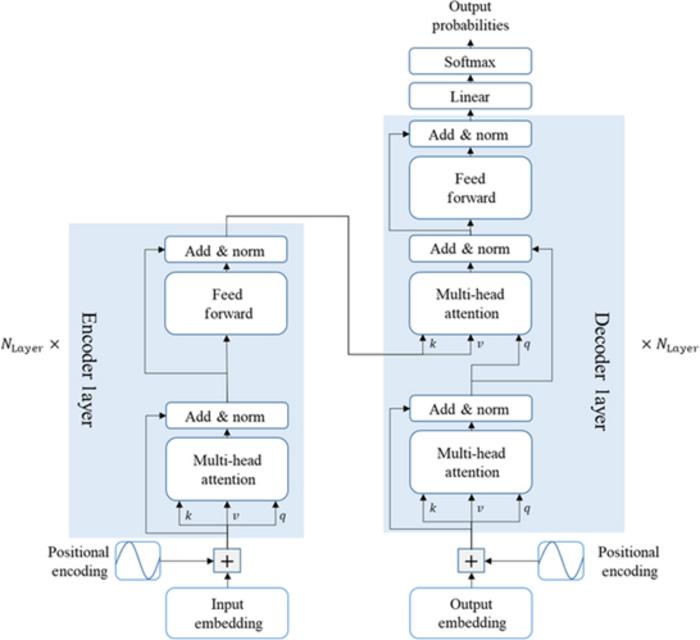
The team built a custom model called the Augment EEG Transformer, or AETF. It borrows the same Transformer architecture that powers ChatGPT and other large language models. The model has three main components: spatial filtering to handle different electrode positions, frequency analysis to catch the different oscillation rates, and a two-layer Transformer encoder that tracks how signals evolve over time.
“To process the augmented data and capture EEG’s spatiotemporal-frequential features, we designed AETF. Unlike CNNs that lose temporal information via pooling, AETF uses Transformer’s attention mechanism to retain sequence details, essential for dynamic EEG signals.”
Watching the attention mechanism in action is revealing. The first layer’s attention pattern looks scattered, almost random. But the second layer sharpens dramatically, concentrating on the most important moments within each half-second brain signal. It’s like the model learns to ignore the noise and zero in on what actually matters, creating a kind of digital spotlight that ensures no critical moment of neural activity gets lost.
When the researchers compared their system to existing models, the AETF dominated, especially when training data was limited. The combined BGMix plus AETF approach achieved information transfer rates exceeding 240 bits per minute on test datasets. That’s fast enough to make practical BCI applications, like brain-controlled spellers or rehabilitation devices, actually viable for everyday use.
There are downsides. The AETF is computationally expensive compared to traditional methods like eTRCA. And BGMix only works with deep learning frameworks right now, which locks out researchers using classical machine learning. The team acknowledges these limitations, and future work will need to address efficiency and compatibility.
Still, the core innovation here is significant. By understanding the neurophysiology of brain signals well enough to manufacture realistic synthetic data, and then deploying a model architecture sophisticated enough to process that data without losing critical timing information, the researchers have dramatically improved what’s possible with Brain-computer interfaces (BCI). Instead of spending months collecting more data, they’ve found a way to squeeze much more value out of what we already have. That’s the kind of practical advance that could actually move BCIs from the lab into the real world.