

The problem with engineered immune cells has always been timing. By the time doctors extract a patient’s cells, reprogram them to hunt cancer, grow enough copies to matter, and infuse them back, weeks have passed. The cancer keeps growing. Sometimes the patient’s condition worsens. And sometimes, frustratingly, the immune system attacks the very cells designed to save it.
Now researchers at MIT and Harvard Medical School think they have solved this rejection problem with a genetic sleight of hand that could transform how quickly cancer patients receive treatment.
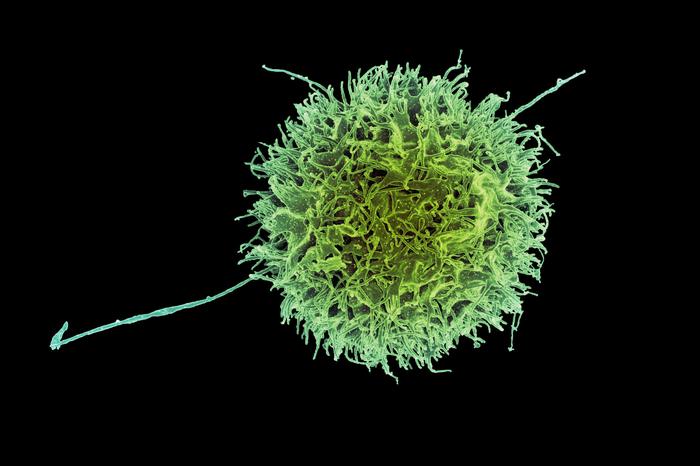
The breakthrough centers on natural killer cells, the immune system’s roving assassins that patrol for cancer and virus-infected cells. Scientists have been engineering these NK cells with chimeric antigen receptors (CARs) that work like guided missiles, directing them toward specific proteins on cancer cells. The approach mirrors CAR-T cell therapy, which has already won FDA approval for blood cancers like lymphoma and leukemia.
But CAR-NK cells have struggled with a fundamental flaw. When doctors use donor cells instead of a patient’s own cells (to create ready-made, off-the-shelf treatments), the recipient’s immune system often recognizes them as foreign invaders and destroys them before they can do their job.
The Invisibility Trick
Jianzhu Chen’s team at MIT’s Koch Institute discovered that NK cells could hide from the body’s T cells if they lacked certain surface proteins called HLA class 1. These proteins normally serve as identification badges, but in transplanted cells, they trigger alarm bells.
This enables us to do one-step engineering of CAR-NK cells that can avoid rejection by host T cells and other immune cells. And, they kill cancer cells better and they’re safer.
The researchers packaged multiple genetic modifications into a single DNA construct. They used short interfering RNA to silence HLA class 1 genes, added the CAR gene to target CD-19 (a protein common on lymphoma cells), and included either PD-L1 or single-chain HLA-E, both of which amp up the cells’ cancer-killing capabilities. Everything fits on one genetic platform, making the engineering process remarkably straightforward.
In mice with humanized immune systems, the results were striking. The modified CAR-NK cells survived for at least three weeks, nearly eliminating cancer in the test subjects. Standard NK cells and even CAR-NK cells without the full genetic package died within two weeks, attacked by the host immune system. The cancer in those mice spread unchecked.
Safer Than the Alternative
Perhaps equally important, these engineered cells showed a much lower risk of cytokine release syndrome, the sometimes-lethal inflammatory reaction that plagues many immunotherapy treatments. Patients receiving CAR-T cells have died from this complication when their immune systems go into overdrive.
Rizwan Romee, associate professor at Harvard Medical School and Dana-Farber Cancer Institute, co-led the study published today in Nature Communications. The work suggests CAR-NK cells might eventually replace CAR-T therapies entirely, offering similar effectiveness with better safety margins.
The one-step engineering process addresses another practical hurdle. Current CAR cell production takes weeks of careful cultivation, during which patient conditions can deteriorate. An off-the-shelf product would sit ready in hospital freezers, available within days of diagnosis rather than weeks.
Chen envisions adapting any CAR-NK cells currently in development by simply adding their construct. The team is now planning clinical trials with Dana-Farber colleagues and testing the approach for lupus treatment with a local biotech company (treating autoimmune diseases represents an unexpected application, since the same cells that hunt cancer might suppress overactive immune responses).
The research leaves unanswered questions about long-term persistence and whether the cells maintain their cancer-fighting abilities across multiple treatment cycles. Still, for patients whose immune systems have learned to reject foreign cells, this genetic camouflage might finally give engineered therapies enough time to work.