Whilst it is certain that we all must die,
Why is it that we must grow old with age?
Our final acts upon this mortal stage
Would seem less fierce if youth would not pass by.
But urchins in the sea do now defy
The thoughts that drown declining minds with rage:
Whilst it is certain that we all must die,
Why is it that we must grow old with age?
These oceanic tykes tore up the page
That life and ageing mutually comply.
And if somehow we can identify
This process then old age we can assuage,
Whilst it is certain that we all must die.
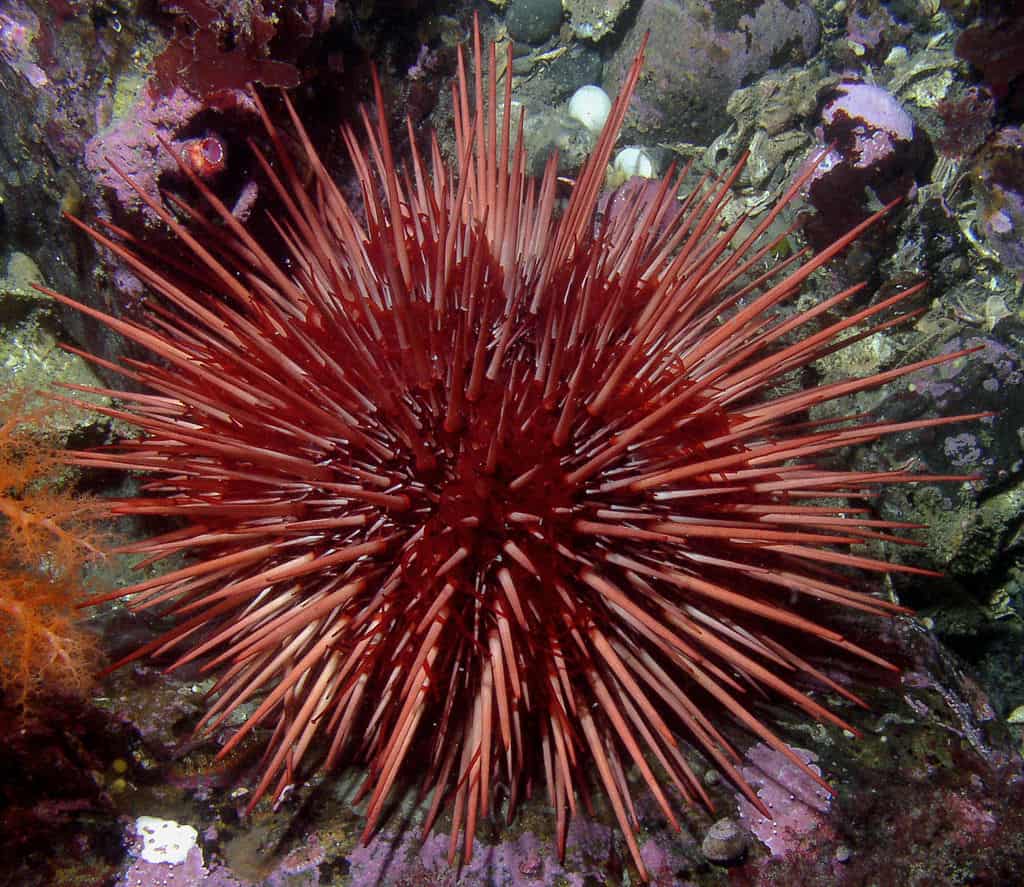
This is a Rondel written about recent research, which investigated the biological ageing (AKA senescence) in three different types of sea urchin, all of which had different life expectancies (4 years, 50 years and 100 years, respectively). It was expected that the sea urchins with shorter life expectancies would age more rapidly (i.e. their regenerative capacity would decline more rapidly) than their longer living counterparts. However, the researchers found no evidence of a decline in regenerative capacity with age, which suggests that biological ageing may not in fact be tied to a short life expectancy. Further studies of this longevity in sea urchins will help to inform evolutionary theory, and may also produce innovative solutions for humans in maintaining their health with advancing age.
An audio version of the poem can be heard here.