

Susan Varley tried everything. Antidepressants, therapy, different combinations of both. Nothing touched the severe depression that eventually landed her in hospital. She’d been a high-functioning nurse before the illness took hold, but now she couldn’t work, couldn’t function. Then she travelled for a course of transcranial magnetic stimulation, and something shifted.
“It has transformed my life,” says Varley. “I am back working as a nurse, lost four stone in weight and I am enjoying life again with family and friends.”
Her experience is hardly unique, yet fewer than one in seven NHS trusts offer TMS. The treatment has been approved by NICE since 2015, proven safe and effective, but commissioners have held back. The sticking point? Money. Without solid evidence that magnetic brain stimulation represents value for the NHS, most patients who might benefit simply can’t access it.
That calculation may be about to change. A major new economic analysis published this week in BMJ Mental Health suggests TMS isn’t just clinically effective for treatment-resistant depression; it’s cost-effective too, potentially even cost-saving when you account for the wider benefits to society.
The study, led by health economist Edward Cox from the University of Nottingham, analysed data from 442 people with difficult-to-treat depression enrolled in two large UK trials. His team built a detailed economic model comparing two forms of TMS—repetitive transcranial magnetic stimulation (rTMS) and the newer intermittent theta-burst stimulation (iTBS)—against usual specialist mental health care.
For the one in three people with depression who don’t respond to initial treatments, options narrow considerably. Treatment-resistant depression, defined as failing to improve after two courses of antidepressants, carries a punishing burden. It’s a leading cause of disability worldwide, and suicide from depression kills more 15- to 49-year-olds than you might imagine.
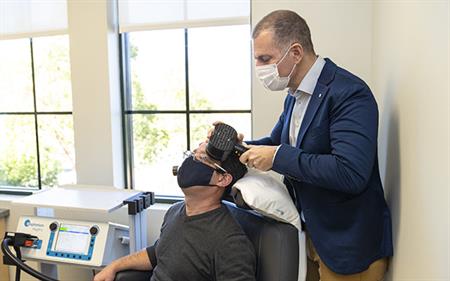
TMS offers a different approach entirely. Patients sit conscious whilst powerful magnetic pulses target the left side of the head, just forward of the temporal region. The magnetic field induces electrical currents in brain tissue, stimulating areas implicated in mood regulation. A typical course involves at least 20 sessions over four to six weeks, all done as an outpatient.
The treatment isn’t entirely new. NICE approved it nearly a decade ago. Yet despite being invented in the UK, with British industry producing the equipment, it remains frustratingly inaccessible. The missing piece has been economic evidence showing it represents sensible use of limited NHS resources.
Cox’s analysis fills that gap. From a health service perspective, both forms of TMS came in well below NICE’s cost-effectiveness threshold. The rTMS delivered benefits at £12,093 per quality-adjusted life-year gained compared with usual care. The iTBS, which uses MRI guidance and shorter sessions, cost £12,959 per QALY. NICE typically considers anything under £20,000 to £30,000 per QALY as money well spent.
But that’s just healthcare costs. Widen the lens to include informal care from family and friends, plus time off work, and the picture shifts dramatically. Both treatments actually saved money compared with usual care, all whilst reducing depression symptoms and the burden on carers. Patients receiving TMS required 28 to 34 fewer hours of informal care over the study period.
“The study found that a proportion of patients receiving TMS therapies can expect to achieve faster and more sustained improvements in depressive symptoms compared to usual care, and that these gains represent a cost-effective allocation of scarce NHS resources,” says Cox.
There’s a crucial caveat, though. The cost-effectiveness hinges entirely on how services deliver the treatment. High-throughput clinics running efficient sessions score a 98% probability of being cost-effective. Low-throughput services with prolonged delivery? That probability plummets to about 4%.
“It’s important to recognise that the cost-effectiveness of TMS is dependent specifically on how it is going to be delivered in wider practice,” Cox explains. Services achieving a streamlined, high-throughput model can expect to deliver highly cost-effective treatment.
The analysis drew on two major trials—BRIGHTMIND, which tested MRI-guided iTBS against standard rTMS, and the SMD trial, which established what usual care actually involves in UK specialist mental health services. A panel of seven clinical experts provided insights on the longer-term effectiveness of treatment and the operational realities of running TMS clinics.
Richard Morriss, who leads mental health and technology research at NIHR’s Nottingham Biomedical Research Centre, has watched these objections to TMS implementation dissolve one by one. The treatment was supposedly only effective short-term; the BRIGHTMIND study in 2024 showed benefits lasted at least six months. It lacked UK economic evidence; this new study provides exactly that.
“Compared to usual care, our study shows that TMS is cost-effective below the lowest NICE threshold for cost-effectiveness for health costs and cost saving if health, informal care and work productivity are included,” says Morriss. His view? TMS should be considered after second-line treatment failure, before more intensive interventions like electroconvulsive therapy.
The equipment itself presents modest barriers. Most healthcare professionals can be trained to administer TMS, sessions can run as short as 15 minutes, and the procedure works in various settings—primary care, specialist services, or community mental health teams. You can even deliver multiple sessions the same day, saving patients repeated trips.
For Varley, who found traditional treatments ineffective, TMS represented a lifeline. “I strongly believe that others suffering like me should be given the option of TMS under the NHS,” she says.
Whether commissioners will act on this evidence remains to be seen. The NHS Long Term Plan already emphasises linking mental healthcare to employment support, helping people with severe mental illness return to work. TMS fits neatly into that framework, potentially bridging the gap between pharmaceutical approaches and more intensive hospital-based treatments.
The challenge now isn’t whether TMS works, or even whether it represents value for money. It’s about building the high-throughput, efficiently delivered services that make the treatment cost-effective. For people like Varley, already back at work and rebuilding their lives, that can’t happen soon enough.
Study link: https://mentalhealth.bmj.com/content/29/1/e302237