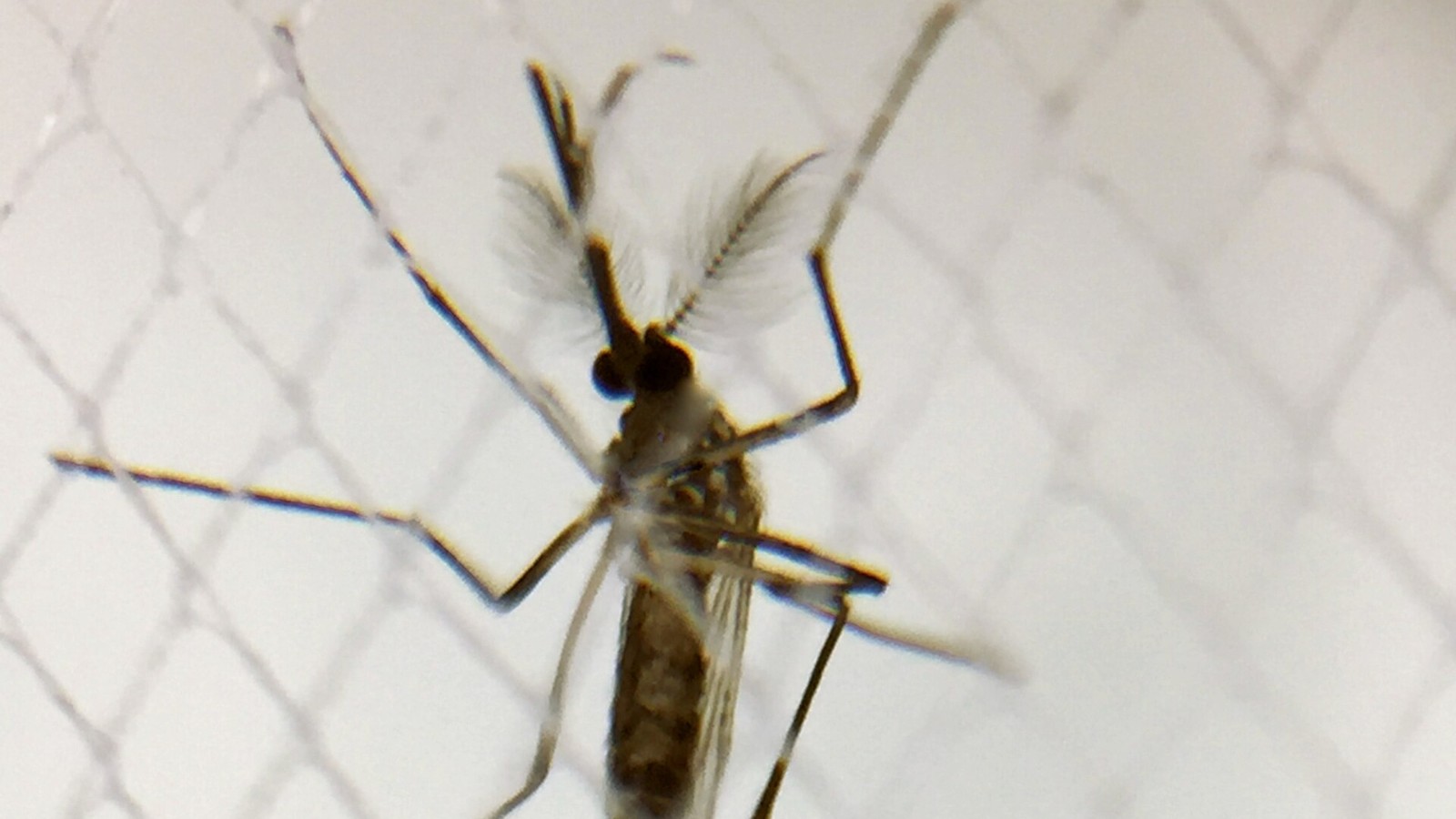
I live in one of the places in Singapore where mosquitoes are released on purpose, and lately I have been seeing a lot more of them. I have also not been bitten. Let us look at how this works, and how effective it really was.
The released mosquitoes are males, so they do not bite, and the wild females they mate with lay eggs that never hatch. In a trial across eight clusters of homes, researchers estimated that the releases averted 2,351 cases of dengue, according to a paper in eBioMedicine published in September.
Nobody can count dengue cases that never happened, though, so 2,351 is not a headcount. It comes from comparing areas with the mosquitoes to areas without them. The paper’s own tables show which parts of that comparison hold up and which are weaker.
The trick: eggs that never hatch
The released males carry Wolbachia, a bacterium that, according to Singapore’s National Environment Agency (NEA), lives naturally in more than 60% of insect species. In a male mosquito, it changes the sperm so that it only works with eggs carrying the same bacterium.
Zhiyong Xi, a researcher at Michigan State University, explained the rest in an email to ScienceBlog. Wild females do not carry Wolbachia. So when one mates with a released male, her eggs “die or will not hatch.” Do that twice a week and the mosquitoes thin out. (Xi’s lab supplied the original mosquito line used in the trial, according to the paper’s acknowledgements.)
I cannot tell which of the mosquitoes I see are the released ones, just by looking. But NEA warns residents that they may notice more mosquitoes on release days, males that do not bite but may be drawn to people while searching for females. That would explain what I have been seeing.
Two years, 15 neighbourhoods
The researchers picked 15 clusters of high-rise housing and, by chance, gave mosquitoes to eight of them. The other seven were left as a comparison. Everyone kept the usual mosquito control. For about two years, males were let loose twice a week, on the ground, middle and upper floors of the buildings.
It worked on the mosquitoes first. Traps in the release clusters caught about a seventh as many adult females as traps elsewhere. Then dengue cases fell too. Over the trial, the release clusters had roughly a third as many cases as the others. Before the releases, the two groups had looked almost identical.
The number that is not a count
So how do you count cases that never happened? The authors took the gap between the two groups and applied it to everyone living in the release clusters. That gives 2,351 fewer cases than there would otherwise have been. Those clusters actually reported 1,037, which means the releases cut dengue by about 70%. (That last sum is ours, not the paper’s.)
Hannah Clapham, a researcher at the National University of Singapore, said in an email that Singapore has had excellent routine vector control for decades, yet dengue is still a problem. “In this trial we have seen that Wolbachia has large benefits on top of routine vector control,” she wrote. She called it “a really excellent study that has given us invaluable information about the possible impact of Wolbachia.”
Still, hold the number loosely. About 420 of those cases come from the first six months, before the paper says the benefit was clear. Everyone knew which areas got the mosquitoes. Cases are counted by home address, and only if someone gets tested. And 15 clusters is not many, so luck may have played a part.
It’s kind of fun for me to be a data point in a study like this.
A second paper, and a quiet year
A separate paper on the same trial, in the New England Journal of Medicine, measured something different: among people tested for dengue, far fewer in release areas turned out to have it. It puts the protection for an individual person at 71% to 72%, close to the 70% we got from the first paper’s numbers.
But the benefit was not steady. In 2023, a year with little dengue, protection dipped. For one stretch the cut was only about a quarter, too uncertain to tell apart from no effect. In the next stretch it was back above 80%.
The authors say the protection weakened in that quiet spell. Clapham said the reason is “interesting and worth exploring,” but that she does not think it is “something to be concerned about.” She gave three reasons. Among “linked” cases, those close together in place and time, the benefit held even when cases were low. Mosquito numbers stayed “vastly different” between the two groups. And the benefit was still there when the quiet spell ended.
Is it safe?
NEA says the mosquitoes are not genetically modified, and the males neither bite nor spread disease.
Sorting males from females is not perfect, so a few females slip into each batch. Xi said the mosquitoes are irradiated to make those females sterile, so no Wolbachia-carrying offspring are born in the wild. NEA says that is what keeps Wolbachia from establishing itself in the wild mosquito population.
Another Wolbachia method works the opposite way. It releases males and females so the bacterium spreads through the local mosquitoes, and a 2021 trial in Yogyakarta, Indonesia found it protected people there. NEA sticks with suppression, which does not need biting females released at all. I am happy to be spared that.
So why is there still dengue?
Two reasons. The trial covered only part of the country, and NEA says it will reach more than 800,000 households, about half the total, by the end of 2026. And the method only works on one species, Aedes aegypti, so other mosquitoes that can spread dengue are untouched. NEA says clearing standing water is still the cornerstone.
Clapham said the next step is rolling the method out to as much of Singapore as possible. Vaccines, she wrote, “work in different ways to protect the population,” and the big question is how to use the two together.
Could anyone else copy this?
Making enough males used to be the hard part. Telling males from females was “a major bottleneck,” according to a 2024 Science Robotics paper from Xi’s group, which describes a machine sorter that lets one person separate 16 million males a week. Xi said sorting is no longer a bottleneck. But that paper’s field test was in Guangzhou, China, on a different species, the Asian tiger mosquito, so it says little about Singapore’s own production. The eBioMedicine paper gives no cost or weekly production numbers either, so other cities cannot yet price the idea.
Clapham was cautious about copying it elsewhere. “Globally this study adds to the body of evidence that Wolbachia is an effective control measure,” she wrote, but it “will however require much thought about what approach and how it could be used in other places.” Even so, she believes it “should be considered, alongside the vaccine, in all countries suffering from dengue.”
From the ground
What strikes me, living inside the experiment, is how little of the result I can see. The mosquitoes I notice are the ones that do nothing. The success is everything that does not happen: the bite that did not come, the fever that skipped someone. The 2,351 is made of days like that, spread over many thousands of people, and no one in it will ever know which of them was spared.
Maybe that is why the number needs a careful read. From the ground, a good result looks like an ordinary week, with a few extra mosquitoes drifting about and nothing else happening.