It often starts as a painless lump or swelling. Within about four weeks it can break open into an ulcer that eats into skin and soft tissue, and without early treatment it can leave permanent disfigurement and long-term disability.
The disease is called Buruli ulcer, and in the Australian state of Victoria it is now reaching into the inner suburbs of Melbourne.
A sore that starts with a bite
It is caused by a bacterium, Mycobacterium ulcerans, a relative of the germs behind tuberculosis and leprosy. At least 33 countries have reported it, according to the World Health Organization, across Africa, South America and the Western Pacific. In Australia, it has surged in Victoria.
The state recorded 5.8 cases per 100,000 people in 2024 and now routinely sees more than 350 cases a year. In one coastal town, the yearly rate has hit 770 per 100,000, or roughly one resident in every 130.
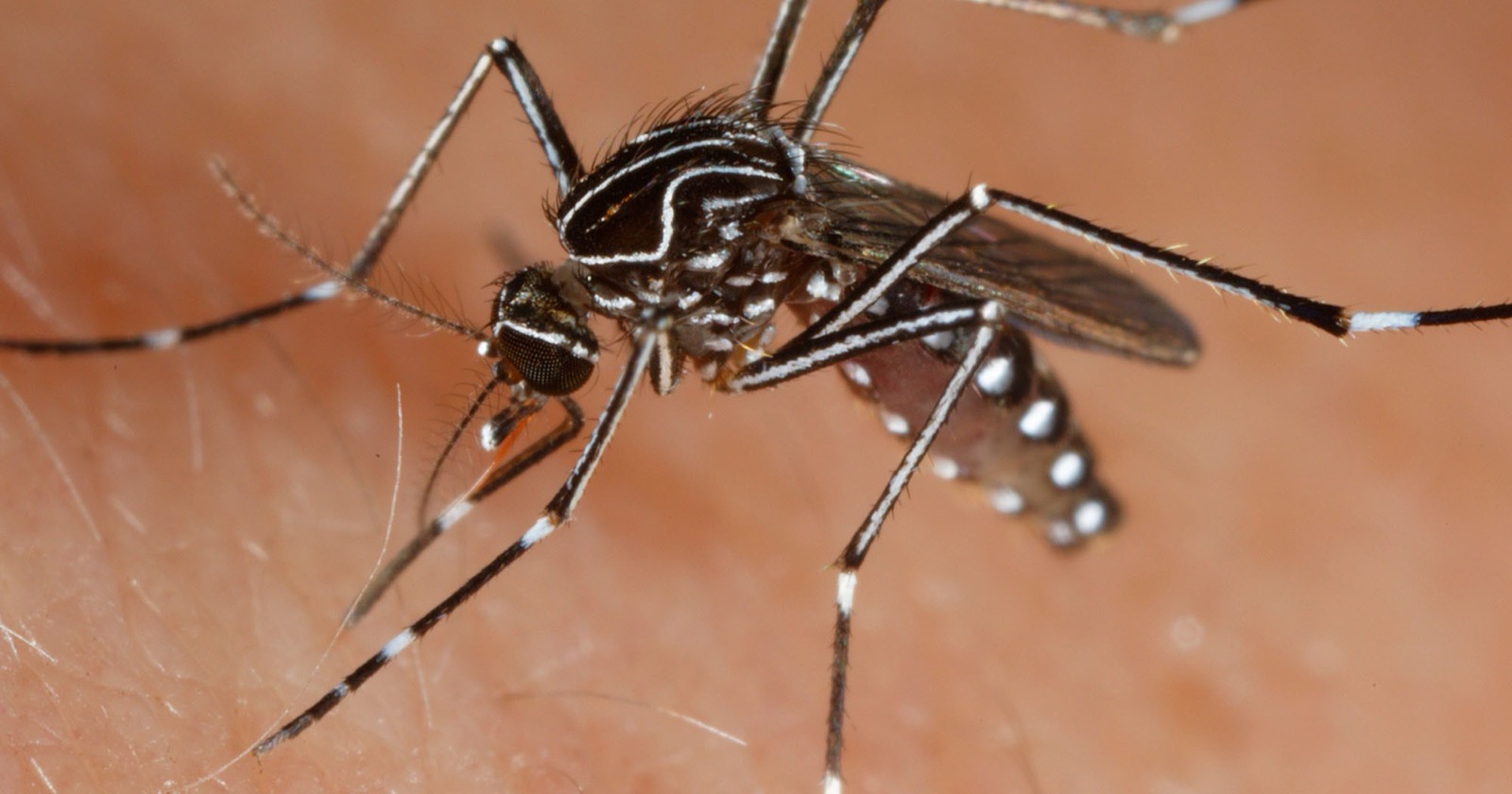
For decades, nobody could say how people caught it. In Victoria the bacteria live in native possums, which develop ulcers of their own and shed the bacteria in their droppings. A 2024 study pinned down the missing link. Researchers found matching bacterial genomes in mosquitoes, possum droppings and human patients on the Mornington Peninsula, and concluded that Aedes notoscriptus, a mosquito the University of Melbourne describes as a common backyard species, probably carries the infection from possums to people.
That raised an obvious question. If mosquitoes spread it, would killing them stop it?
Traps the mosquitoes take home
To find out, researchers from the University of Melbourne and the Doherty Institute picked a 50 square kilometre patch of Melbourne’s inner north-west where Buruli ulcer was already spreading. The suburbs included Brunswick West, Essendon and Moonee Ponds. In a randomised trial, published in Nature Microbiology, they matched 12 areas of about 80 houses each, and a random number generator split them into six treatment areas and six controls.
Between 25 January and 21 March 2024, the team set out 593 In2Care stations, a commercial mosquito trap, in the treatment areas. That’s roughly 100 per area, or about one every 400 square metres. They went into shaded spots in residents’ yards, on nature strips and on other public land.
Each station is a small tub of water that a mosquito visits to lay eggs. Inside, a gauze strip is dusted with two things. One is pyriproxyfen, a larvicide that stops young mosquitoes from developing into adults. The other is Beauveria bassiana, a fungus that infects insects and kills the adult mosquito within about 8 to 10 days.
The clever part is what happens after the mosquito leaves. Coated in larvicide, it flies on to other places it would breed, such as buckets and pot-plant saucers, and contaminates those too. The mosquitoes do the spraying for you, including in spots no one would think to check.
A drop the weather can’t fully explain
To count mosquitoes, the team set out 480 egg traps, simple buckets of water baited with alfalfa pellets, before and after the trial. In the three weeks after the stations came out, the treatment areas had about 70% fewer eggs than the control areas. Statistically, it was a clear result (P = 0.0076), and the drop was still there two weeks after the stations were removed.
However, a dry spell complicated things. Rain was a strong predictor of egg numbers, and very little fell during the trial, so eggs dropped everywhere. In the ten traps that started with the most eggs, counts fell from an average of 672 to 21 in treatment areas, and from 491 to 34 in the controls.
This is why the control areas matter. “There was definitely a drop in mosquito egg counts across all 12 areas due to the change in climatic conditions from very hot and wet to very hot and dry,” Véronique Paris, a medical entomologist at the University of Melbourne and the Doherty Institute and one of the study’s two first authors, said in an email to ScienceBlog. “However, the intervention areas still had a significantly greater drop in egg counts than the control areas.”
The paper found the same gap even among those hotspot traps. On mosquitoes, the stations worked.
But this hasn’t been the case everywhere they’ve been tried. The paper notes that the same stations failed to bring down mosquito numbers in a Florida deployment, where too few were used, and in a Hawaii trial, where there were probably too many other places for mosquitoes to breed.
Too few cases to be sure
Checking the disease was much harder. Buruli ulcer takes about 4.8 months on average to show up, so someone bitten in summer usually doesn’t notice a sore until winter. To tie cases to the trial, the researchers had to count backwards from when each patient first noticed symptoms to roughly when they were bitten.
The trial also wasn’t set up for this. It was designed to count mosquitoes, and the analysis of human cases was only worked out afterwards.
Over the eight weeks the stations were out, the researchers found no clear difference in the risk of catching Buruli ulcer. A wider count, covering infections from January to mid-May 2024, found 7 cases in treated areas and 9 in untreated ones, which the authors themselves call “not different.”
The 1-to-6 figure comes from a single day. The researchers expected the stations to work best around 21 March 2024, the last day of the eight-week deployment. Among infections traced back to that day, the treated areas had 1 case and the untreated areas had 6, an 83% drop. (The paper also highlights 8 March, when infections traced back to that day numbered zero in treated areas against 6 in untreated ones, but its summary and statistics use the 21 March figures of 1 and 6, and so does this article.)
Even that is shaky. Seven cases is too few to be sure of anything. The result only just clears the usual bar for statistical significance (P = 0.047), and the likely range of the true effect runs from a 97% drop in cases to a slight rise. That leaves room for the stations having had no effect at all.
In the stations’ favour, the same pattern didn’t show up over the same weeks in 2023 or 2025, when no stations were out. Still, the authors say a longer trial across more areas is needed to know whether the stations really prevent cases.
Put plainly, the stations cut mosquitoes. Whether they also prevented infections is still only a promising hint, not a finding.
Risks to other wildlife
If the stations do turn out to protect people, the next question is what a city-wide rollout would cost the rest of the garden.
“Both bioactives can have off-target effects,” Paris said. But putting them inside the stations, she added, “is quite targeted, as the stations are not attractive to many animals other than mosquitoes.”
The real test is where the larvicide ends up once it leaves the station. Paris said mosquitoes are unlikely to deliver enough to affect a pond. It is more likely to reach the spots where they breed, which she described as “small water-holding containers that do not support other aquatic organisms beyond mosquitoes.”
The fungus is less fussy about what it kills. Paris pointed out that it is widely used on farms and attacks many kinds of insects, not just mosquitoes. “There is some evidence suggesting that it could be transferred to insects sharing the same flowers for nectar,” she said. “There is certainly a need for further research into how a large-scale rollout could affect other wildlife.”
Until that research is done, the advice for people in affected suburbs is the familiar kind. Finn Romanes, director of Victoria’s Western Public Health Unit, recommends using repellent, maintaining fly screens and removing mosquito breeding sites around the home.
The stations clearly thinned out a backyard mosquito. Whether they belong in every backyard still depends on a question yet to be answered: what they would do to the bees and other insects that visit the same flowers.