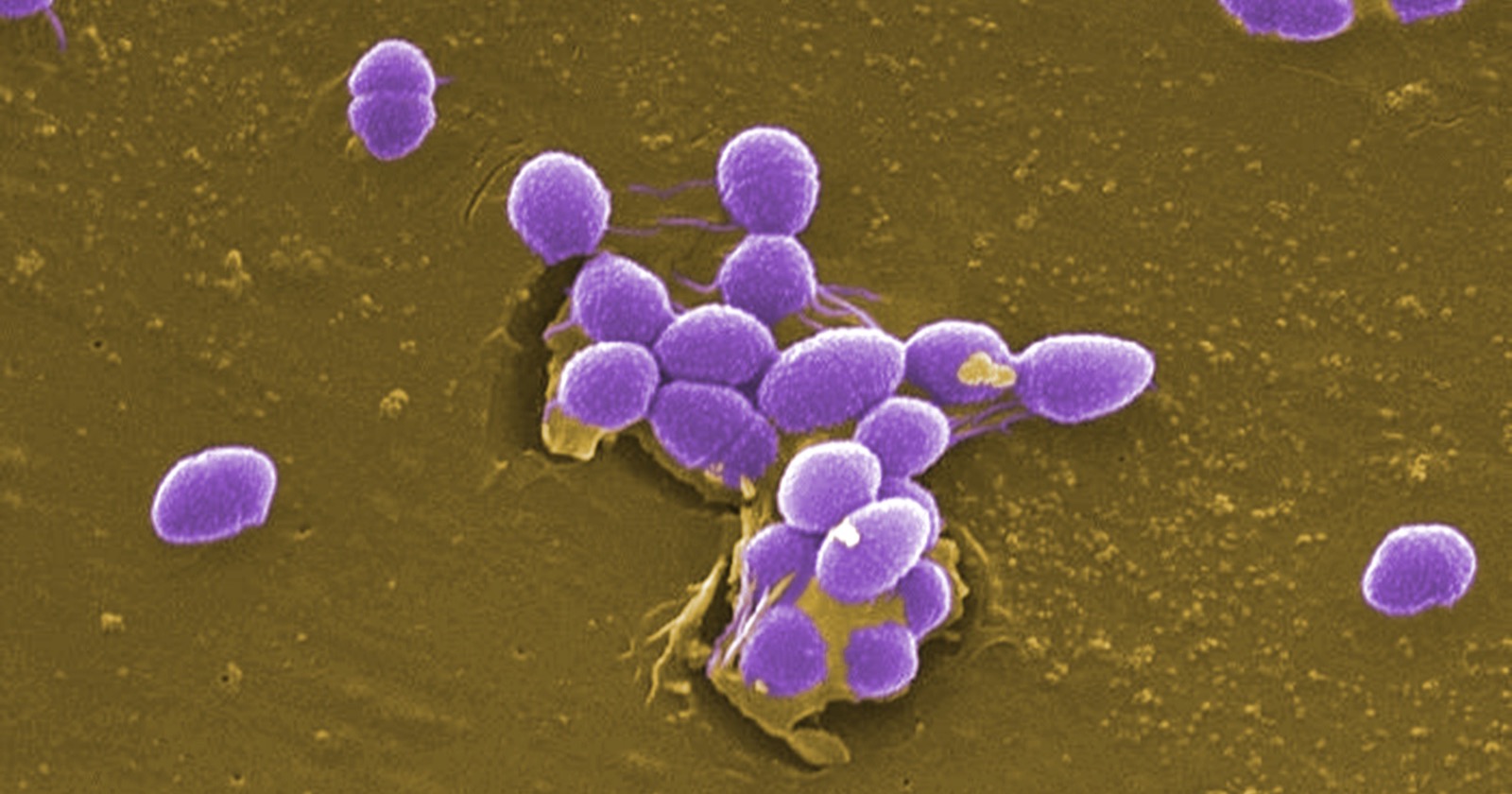
Sugar-rich foods and drinks may deepen the loss of gut bacterial diversity that broad-spectrum antibiotics cause, according to a study of stem cell transplant patients at Memorial Sloan Kettering Cancer Center published in Nature on 30 September. Broad-spectrum antibiotics act against many kinds of bacteria at once.
The researchers tracked 9,419 meals eaten by 173 adults admitted for a donor stem cell transplant, and analyzed 1,009 stool samples from 158 of those patients. In samples taken after broad-spectrum antibiotics, the team’s statistical model predicted a further 24.1 percent drop in gut bacterial diversity for every extra 100 grams a day of food from the “sugars, sweets and beverages” group, on top of the drop linked to the antibiotics themselves. The grams are dry weight, averaged over the two days before each sample.
In samples without recent broad-spectrum antibiotics, the analysis found no significant link between that food group and diversity. The human findings are associations drawn from hospital records, while an experiment in mice supports a causal role for sugar.
The paper, Sugar-rich foods exacerbate antibiotic-induced microbiome disruption, lists Anqi Dai and Annamaria Ballweg as co-first authors, with 42 colleagues at Memorial Sloan Kettering, NYU Langone Health and other institutions. The work comes from a single hospital, and its patients were seriously ill.
A record kept tray by tray
The authors note that most human studies have tied the microbiome to long-term diet, relying on surveys that ask people to recall what they ate. This one used the hospital kitchen.
Every meal tray that went to a transplant patient’s bedside came with a printout of what had been ordered, and patients marked whether they had eaten none, a quarter, half, three quarters or all of each item. The sheets went into the kitchen’s software, which held the recipe and weight of every dish.
That produced records such as a patient eating 142 grams of baked, broiled or roasted chicken breast the day before a stool sample, where a typical food survey might capture only “chicken two times per week.” Using a United States Department of Agriculture food database, the team sorted the 622 distinct foods into nine groups, among them grains, meats, fruits, vegetables, and the one at the center of this study: sugars, sweets and beverages.
The setting made that record possible. People receiving a donor transplant for a blood cancer typically spend several weeks in the hospital, where they get intensive chemotherapy and often antibiotics.
Their gut bacteria are severely disrupted and lose diversity, and Enterococcus is the one that most often expands. The new paper describes Enterococcus as an important cause of antibiotic-resistant bloodstream infections, and notes that the same team has previously linked lower gut diversity to higher mortality after these transplants.
The 100 grams is a dry weight
The 24.1 percent figure comes with a wide margin. The model’s 95 percent credible interval, the range of values it considers plausible, runs from a 7.7 percent to a 38.1 percent further drop. Diversity here is the inverse Simpson index, a score that rises with both the number of bacterial types present and how evenly they share the gut.
The figure’s unit matters as much as its size. Memorial Sloan Kettering’s announcement describes a 24 percent drop “for every 100-gram increase in sugar in the diet” while patients were on antibiotics, without specifying broad-spectrum ones, and likens that to the sugar in two cans of soda. In the paper’s methods, the 100 grams is the dehydrated weight of foods in the sugars, sweets and beverages group, with the water subtracted.
That makes it neither grams of pure sugar nor the food’s weight on the plate. The paper words the time frame two ways, too: one figure caption describes the intake as eaten “in the 2 days before” a sample, while the methods define it as a daily average over those two days.
Grams of sugar itself were counted separately, in a second model built on nutrients instead of food groups. That version gave a further 20.6 percent drop in diversity per 100 grams of sugar a day while on broad-spectrum antibiotics, with an interval of 2 to 35.6 percent.
ScienceBlog asked co-senior author Jonas Schluter of NYU Langone Health whether “sugary foods and drinks” was the fairer way to describe the group to readers. He replied, “Perhaps ‘such as sugary foods and drinks.'” The category is broader than sweets alone: the paper notes that tube-feeding formulas, which contain relatively less sugar, were classed in it too.
The counts in the announcement differ from the paper’s. It quotes Schluter describing “more than 40,000 meals recorded,” while the paper reports 9,419 meals, and its own summary refers instead to “more than 40,000 food items,” a count ScienceBlog could not find in the paper.
Were sicker patients drinking more shakes?
“When someone is going through cancer treatment and not feeling well or eating much, we often advise they drink smoothies, sports drinks, or nutrition shakes, thinking that at least this way they’ll get some fluids, protein, and electrolytes,” transplant physician Jonathan Peled of Memorial Sloan Kettering said in the announcement. The authors call the result surprising because sugar-enriched nutrition supplements are commonly recommended to transplant patients.
When the team split the group into finer categories, its model suggested that formulated nutritional beverages such as sports drinks and nutrition shakes were among the key contributors. It also pointed to added sugars rather than sugars occurring naturally in food, though added-sugar intake tracked total sugar intake closely in these patients’ diets.
The obvious objection is that sicker patients might drink more of these products. “My first thought was that it had to be something else, that patients who were sicker were simply eating more sugary foods,” Dai said in the announcement. “We went back and adjusted for the severity of both their disease and treatment, and the effect didn’t go away.”
The paper backs that with a series of checks. The link held in separate models that accounted for the underlying cancer, other illnesses, or heavy pain medication use as a marker of the sickest days, and it was not explained simply by total calories eaten in the two days before sampling.
It also held when samples taken during treatment of confirmed infections were removed, and when tube or intravenous feeding was excluded. The paper describes that last step both as excluding patients and as excluding 139 samples.
Before any modeling, the raw data points the same way, though with what the paper calls substantial variation. In samples taken after broad-spectrum antibiotics, more food from the group went along with lower diversity, at a correlation of about minus 0.2. Without those antibiotics, the correlation was close to zero.
Sugar for mice on antibiotics
To test whether sugar could be doing the damage, the team first gave mice a single injection of the antibiotic biapenem. That reproducibly caused what the paper calls a moderate expansion of their resident Enterococcus, a hundred to a thousandfold, peaking at day three and largely fading by day six.
Adding sucrose, or table sugar, to the mice’s diet worsened that bloom 16.3-fold at day three and 33.4-fold at day six, compared with mice given the antibiotic alone. In the same experiment, sucrose on its own, without the antibiotic, made no significant difference to Enterococcus levels. That main test pooled two independent experiments, with seven to 17 female mice per group.
Several follow-up experiments narrowed the explanation. Sugar did not appreciably reduce how much regular food the mice ate, and it still prolonged the bloom in mice on a fiber-free diet, pointing to an effect that did not depend on fiber. A commercial fruit smoothie, which the paper’s main text calls a blended fruit purée, also worsened the bloom at day six, though not significantly at day three.
In germ-free mice that were raised without any microbes, and then colonized with Enterococcus faecalis alone, sugar had no significant effect. The authors write that this suggests the effect requires a complex gut community already disrupted by antibiotics.
Single-microbe mice have shown sugar acting on gut bacteria in a different way. ScienceBlog ran a Technion summary last year of work in which sugar-sweetened water made a stretch of DNA in the common gut bacterium Bacteroides thetaiotaomicron turn up more often in its flipped orientation, in mice carrying only that microbe, and shifted their immune markers.
Most of those changes faded once the mice went back to plain water. The Memorial Sloan Kettering study asks a separate question: whether sugar deepens damage that antibiotics have already done to a whole community.
Very sick patients at one hospital
The Memorial Sloan Kettering authors list the weaknesses themselves. Broad-spectrum antibiotics are started for a clinical reason, usually fever or a suspected infection, and the paper acknowledges that this could tie the sugar finding to how ill patients were at the time. Records of food brought in from outside the hospital are also incomplete.
Nearly every patient was already taking preventive antibiotics, and the paper says the finding may more accurately reflect sugar eaten during a step up to broad-spectrum drugs than during any antibiotic. The announcement notes that these patients were also receiving chemotherapy, radiation and other treatments, all of which could affect the microbiome.
Over the hospital stay, changes in what patients ate were only moderately linked to changes in their gut bacteria, though the link was statistically significant. The patient data come from one cancer center between 2017 and 2022. According to the authors, studies in other, independent groups of patients will offer chances to generalize the findings.
In the paper’s competing-interests statement, all three senior authors, Peled, Schluter and Marcel van den Brink, declare equity, advisory roles or research funding from companies, among them Seres Therapeutics and Postbiotics Plus Research. The statement adds that Memorial Sloan Kettering itself has financial interests related to Seres Therapeutics.
The paper reports a survival signal that the announcement does not mention. In patients whose diets ran above the median share of sugar, each extra day of broad-spectrum antibiotics went with about a 12 percent higher hazard of death, a measure of risk over time. The days were counted from a week before transplant to day 12 after it, when the survival analysis begins; the estimate’s 95 percent confidence interval runs from 1 to 23 percent.
In patients below the median, that link was not statistically significant. Nor was the difference between the two groups. Patients above the median had also spent more days on broad-spectrum antibiotics, a median of 10 against 4, and the authors add that lower food intake could explain part of the extra risk.
The trials that would test it
Every patient was in the hospital for a stem cell transplant, and the researchers recorded what they chose to eat rather than changing it. The paper calls for prospective trials in transplant patients, and its closing line goes further, suggesting that beyond transplant care, limiting sugar intake during antibiotic therapy “may help mitigate microbiome injury.” The study itself did not include healthy people on a short course of antibiotics.
When asked by ScienceBlog whether he would change what patients on broad-spectrum antibiotics are offered ahead of those trials, Peled wrote that hospital diet recommendations are based mostly on traditional practice, with very few randomized trials. He added that practices around oral nutritional supplements, shakes, tube feeds and intravenous nutrition are better supported by expert opinion than by clinical trials. “For this reason, we really need trials to know what to advise patients to eat,” he wrote.
In the same reply, he wrote that “unlike a new drug that has to be procured, an action like deciding to avoid sweets while taking a week of antibiotics is something anyone is free to try on their own if they are motivated to do so and it is unlikely to be harmful. But we need a randomized trial before we announce broad recommendations.”
Schluter set out the next step in his own reply to ScienceBlog. “As we are learning how antibiotics damage the microbiome, we need new strategies to limit or prevent this,” he wrote. “Our study makes the prediction that eating less sugar while on antibiotics would help with that, and we now need clinical trials to test this prediction directly, to establish not only whether we can mitigate microbiome damage but also if that results in improvements to patient outcomes.”
Peled sketched what that trial could look like. The ideal version would enroll enough transplant patients to measure an effect on survival, which he said would require “a rather large trial of several hundred participants.” A smaller, more affordable trial run first “might be based around preservation of the microbiome as a primary endpoint,” he wrote, since the group has previously reported that microbiome disruption is a surrogate marker that predicts mortality.
For patients in transplant units, the harder part is practical. Clinicians recommend the shakes and sports drinks because these patients often eat little, and the paper notes their caloric needs rise during treatment. The trials would have to show that cutting back on sugar during antibiotics protects the gut, and that a protected gut keeps more patients alive.