
A view of the sea arrives as a bundle. There is moving water, open sky, wind, salt, sound and often a sense of having stepped away from ordinary demands. If the body relaxes, it is difficult to know which part of that bundle deserves the credit.
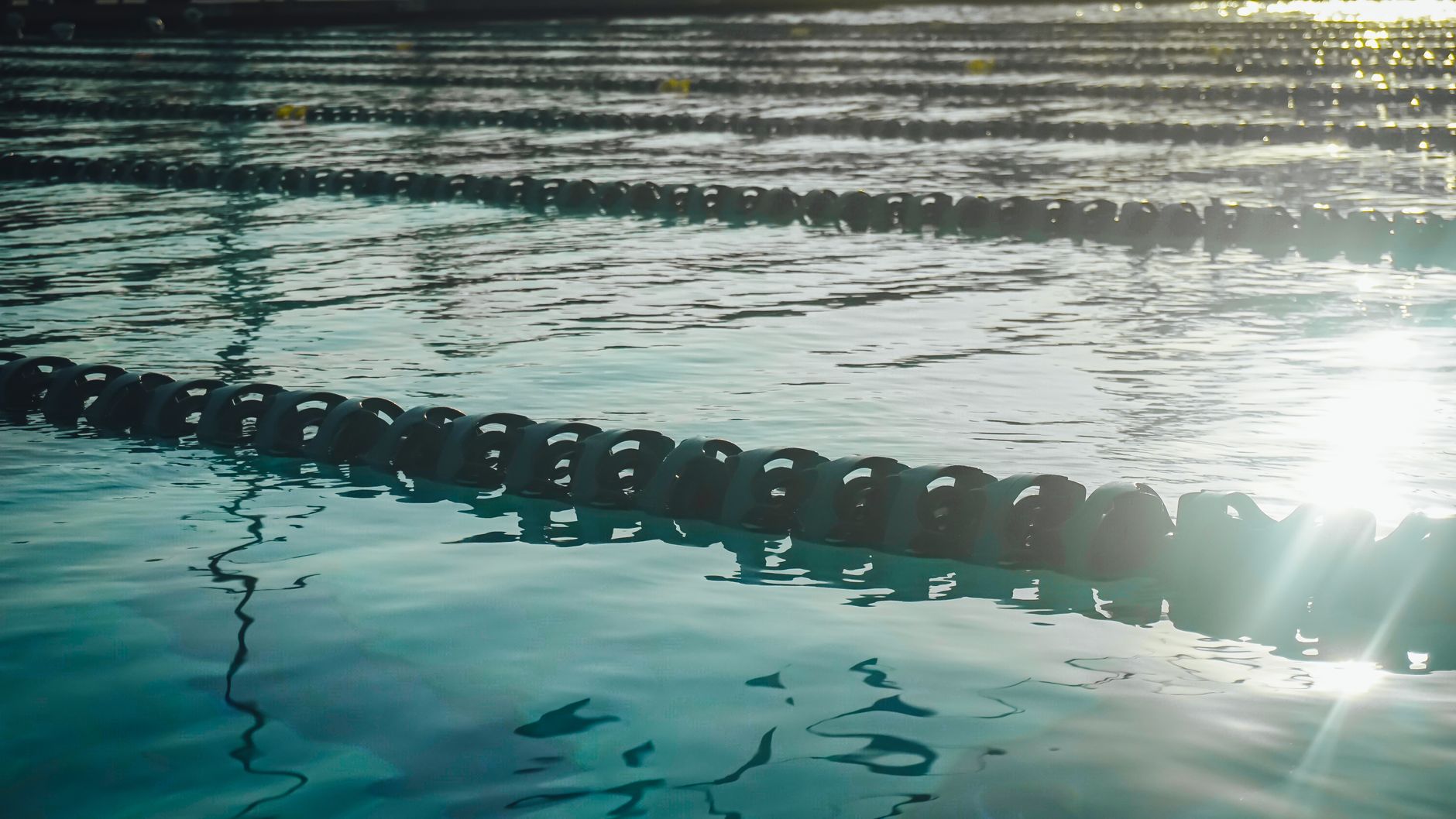
A small outdoor experiment at the University of California, Davis stripped away some of that ambiguity in an unexpectedly ordinary setting. There was no ocean, no surf and no marine aerosol. The water was in a swimming pool.
Thirty-two people stood and looked at the pool, a tree in a parking lot and a small sign above a busy street. Each viewing trial lasted one minute and 40 seconds. Blood-pressure measurements were lower on average during the water condition than during the tree and sign conditions, while heart rate was lower during the pool condition than during the sign condition.
It is a compact finding with an appealing implication: merely having water in view may be enough to shift autonomic activity. It is also a finding that needs tight boundaries. The study was small, the scenes differed in more than one way, and a temporary change recorded over 100 seconds is not evidence of lasting cardiovascular benefit.
The swimming pool is the point
Research on coasts often struggles to separate visual experience from everything that accompanies it. ScienceBlog recently examined how breaking waves place bacteria, endotoxins and organic compounds into coastal air. Those aerosols can affect signalling pathways in cultured human cells, although health effects in coastal residents remain unconfirmed.
None of that mechanism was required here. A swimming pool supplied water’s reflective surface without salt air, surf or marine biology. If cardiovascular measurements differed at the pool, an ocean-specific chemical explanation could not account for the result.
That does not mean the trial isolated vision perfectly. The participants were outdoors at three separate places. Traffic, light, viewing distance, movement in the scene and expectations about a pool could all vary. The cleaner conclusion is that a brief view of pool water was associated with a different physiological state from the two comparison views.
This narrower interpretation is still interesting. It makes water itself, or the visual and attentional qualities that often accompany it, a plausible part of the relaxation people report beside coasts, lakes and rivers.
What the 32 participants actually did
Richard G. Coss and Craig M. Keller described the experiment in a 2022 paper in the Journal of Environmental Psychology. Each participant visited three outdoor locations in a preselected randomized order.
At the pool, the person stood roughly two metres from the edge and fixed attention on a point on the water. In the parking lot, the target was a tree about 18 metres away. Beside Russell Boulevard, it was a small triangular sign approximately 105 metres away and above a busy street.
Participants stood still without speaking and held a wrist blood-pressure cuff on the left arm at heart level. They first looked at the target for one minute. The researcher then activated the monitor while they maintained fixation, with measurement beginning about 15 seconds later during approximately 25 seconds of cuff deflation.
The full period at each target was therefore one minute and 40 seconds. The monitor was removed before the participant walked to the next site, and the device’s memory retained systolic pressure, diastolic pressure and pulse.
The randomized site order was useful. If everyone had visited the pool last, a simple settling effect could have made the final readings lower. Varying the sequence reduced that particular concern, although it could not make three real-world places identical.
What “lower blood pressure” meant
The paper’s principal blood-pressure outcome was the ratio of systolic to diastolic pressure, often written as the S/D ratio. Systolic pressure is the higher number recorded as the heart contracts; diastolic pressure is the lower number between beats.
The S/D ratio was reliably lower while participants looked at the pool than while they looked at either the tree or the sign. The result supports a short-term difference in autonomic tone, the largely automatic regulation of cardiovascular activity.
Heart rate requires a little more precision. The overall analysis did not find significant main effects or interactions for heart rate. A planned pairwise comparison did find a lower mean during the pool view than during the sign view: 62.50 versus 64.38 beats per minute. The difference was statistically reliable, with a reported probability value of 0.035.
The authors did not report the same reliable heart-rate contrast between water and the tree. It would therefore be too strong to say that the pool slowed every cardiovascular measure relative to both alternatives.
Nor was this a before-and-after medical test. The useful comparison was within the same participants across three scenes. The result describes an average condition difference, not a promise that every individual’s reading fell whenever water entered view.
A tree was a demanding comparison
The tree makes the first study more informative than a simple water-versus-concrete test. Greenery already features prominently in research on restorative environments. If any natural object produced the same response, the tree might have erased the pool’s advantage.
Instead, the blood-pressure ratio was lower during the pool condition. This suggests that the result was not reducible to a broad “nature good, city bad” contrast.
But one tree in one parking lot cannot stand for green space generally. It was farther from participants than the water target, surrounded by a different setting and visually unlike the pool. The experiment compared complete scenes, even though participants were instructed to fixate specific points.
The street sign was more different still. It sat above active traffic and much farther away. Lower heart rate at the pool than at the sign could reflect water’s calming qualities, the street’s stimulating qualities, or some combination of both.
Small field experiments often face this trade-off. A highly controlled screen-based study can match brightness and viewing distance but loses the experience of standing in a real place. An outdoor study gains realism while allowing more differences to enter.
The second experiment strengthened the pattern
The same paper included a larger follow-up with 73 people along a 1.62-kilometre route through the UC Davis Arboretum. At six locations beside a creek and two small lakes, participants alternated between looking at water and looking at adjacent ground containing grass and trees.
Averaged across the six sites, the S/D blood-pressure ratio and heart rate were lower during water views. Participants also reported feeling more relaxed. Because water and ground were paired at each location, this design reduced some of the broad site differences present in the pool experiment.
ScienceBlog’s earlier coverage of the paper examined both studies together, including the arboretum walk and the authors’ evolutionary explanation. The first trial deserves separate attention because its artificial pool establishes a particularly useful boundary: an immediate response does not require an ocean or even a natural body of water.
At the same time, the follow-up is not a large replication in a new population. It was conducted by the same research team in the same university setting, and it still measured brief changes during deliberately structured viewing.
Why might visible water matter?
Coss and Keller proposed an evolutionary hypothesis. For humans and earlier ancestors in dry environments, spotting drinkable water could resolve an urgent survival problem. Natural selection may therefore have favoured sensitivity to visual cues that signal water and physiological relief.
The idea is plausible, but the experiments did not test evolutionary history. They measured modern people looking at a chlorinated pool and landscaped waterways. No comparison could determine whether the response was inherited, learned or assembled from both.
Other explanations do not require a specialised water-detection system. Water offers repeated motion, reflection and complexity without demanding that the viewer solve a task. It can hold attention gently. People may also associate pools and lakes with leisure, safety or time away from work.
Visual scale may matter too. In the arboretum study, wider sections of water sometimes produced different responses from narrower ones. An open surface can expand the field of view in a way that a single tree or small sign does not.
These possibilities can coexist. An evolved sensitivity can be shaped by experience, while visual properties, memory and cultural meaning can all influence the same autonomic system.
Rapid does not mean lasting
The speed of the result is part of its appeal. Participants were not asked to meditate beside the pool for an hour. The measured period fit inside 100 seconds.
Yet the experiment did not establish that the effect continued after they looked away. The paper describes the changes as transient, and the researchers called for work on whether sustained viewing could produce effects beyond a temporary feeling of relaxation.
A short dip in a blood-pressure ratio is not evidence that watching water prevents hypertension, reduces cardiovascular events or treats anxiety. The study was not designed to answer any of those questions.
Blood pressure and pulse also move naturally with posture, breathing, temperature, recent activity and emotion. A repeated average difference under a study protocol can reveal a real response while remaining far too small and brief to carry a clinical conclusion.
A precise but useful finding
The study’s strength is not that it proves water is medicine. It is that three mundane scenes produced measurably different averages within a very short period.
The pool result narrows the possible explanation. Marine compounds, breaking-wave sounds and a grand coastal horizon were unnecessary. Something about seeing that contained surface of water, or about the complete poolside scene, coincided with lower blood-pressure measurements than the tree and street-sign conditions.
Future studies could separate the components more cleanly. Researchers could match viewing distance and brightness, compare still and moving water, manipulate sound independently, measure expectations, and repeat the protocol in larger and more varied groups. Virtual scenes could improve control, while outdoor replications would test whether the effect survives real-world complexity.
For now, the evidence supports a modest conclusion: water’s visual presence can accompany a rapid, temporary relaxation response. It does not show that every person will respond, that the change lasts, or that a view should be prescribed as treatment.