

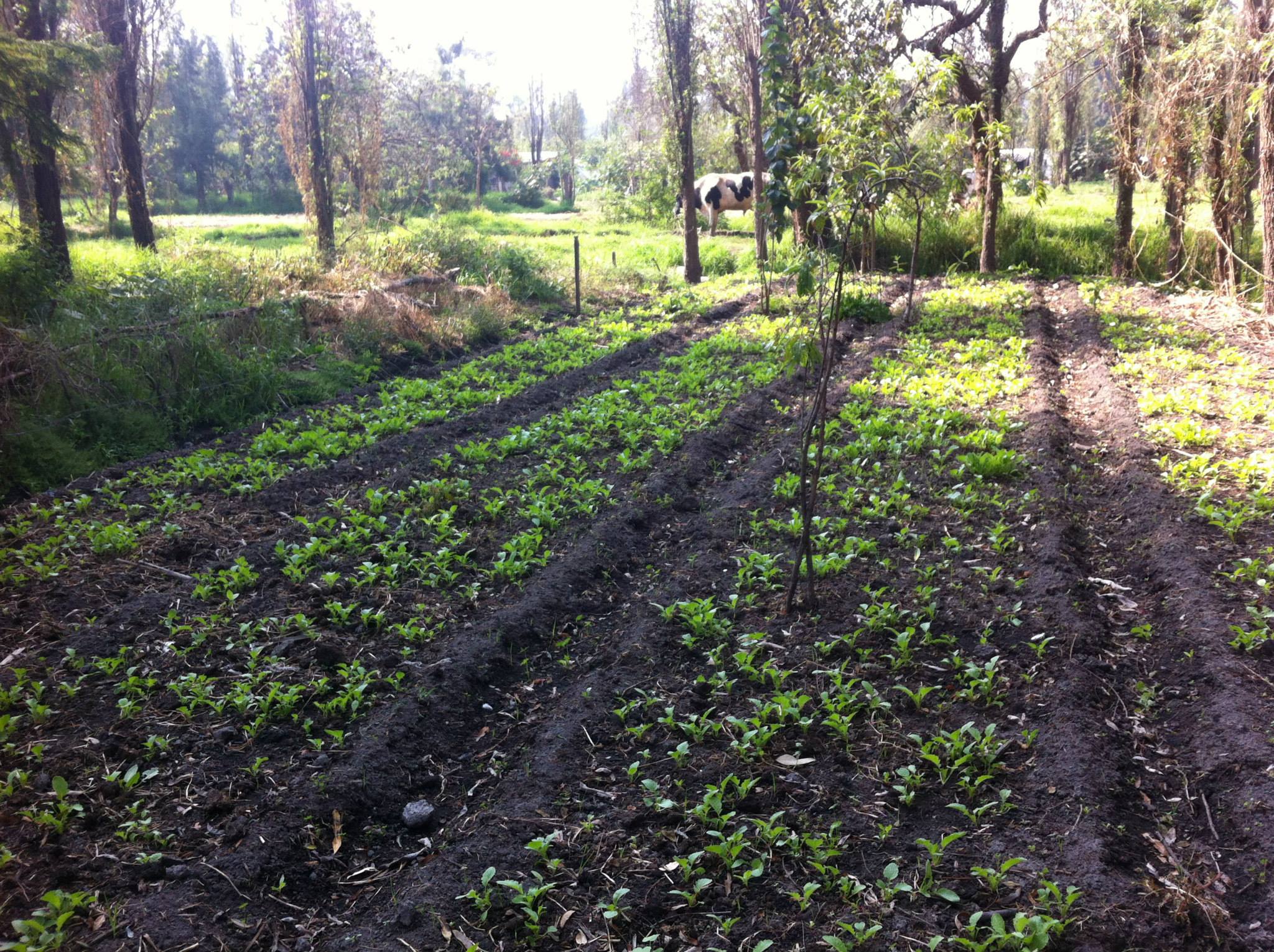
Chinampa farming could produce several crops from the same plot within a year, and one modern review says complex rotations can yield as many as seven harvests. That does not mean farmers in 14th-century Mexico harvested maize seven times annually, nor is there a global dataset showing that no later farming system ever surpassed chinampas.
The supported claim is still substantial. Farmers in the Basin of Mexico engineered wetland soils, canals, water levels, seedbeds, crop combinations and nutrient recycling into one of the most intensive forms of preindustrial agriculture known. The system generated food beyond household subsistence and helped sustain large urban populations without synthetic fertilizer or mechanical pumps.
The headline’s language needs three corrections: chinampas did not float, they were not invented from scratch by the Aztec Empire, and the absence of irrigation pipes did not mean an absence of irrigation. Those corrections make the system more interesting because they replace a neat legend with a large piece of managed infrastructure.
Seven harvests means rotations, not seven identical crops
The widely repeated seven-harvest figure can be traced in recent literature to a review by Roland Ebel published in HortTechnology. Ebel’s 2020 paper says that complex crop rotations and associations allow up to seven harvests per year. “Up to” matters, as do “rotations” and “associations.” A farmer might move several short-cycle vegetables through one bed, stagger plantings across beds, and grow different species together.
That is different from taking seven full harvests of a long-season staple. Maize was central to pre-Hispanic food production, but leafy vegetables, chiles, tomatoes, squash, beans, herbs and flowers could follow other schedules. Even official descriptions do not use a single number consistently. A 2016 Food and Agriculture Organization account reported that chinampas could produce up to five harvests a year.
There is another limit on the claim. The seven-harvest number describes the capacity of the chinampa system as documented through historical and modern practice. It is not a direct count from a 14th-century farm ledger. Archaeologists reconstruct ancient productivity from field remains, pollen, plant traces, colonial records, ethnography and models, each of which answers a different part of the question.
Seven is best read as an upper-end cropping intensity, not a universal annual average.
The fields were fixed to the lakebed
“Floating gardens” is an old and appealing name, but mature chinampas were long, narrow raised fields built in shallow wetlands. Farmers marked a plot with stakes, wove or placed vegetation around its edges, and filled the enclosed area with layers of plant matter, sediment and soil. Willow trees known as ahuejotes helped stabilize the margins. Canals remained between the plots for water management, transport and access to mud.
The technology also has a longer history than the phrase “Aztec invention” suggests. The Mexica founded Tenochtitlan in the 14th century and expanded chinampa landscapes as political and urban demand grew, especially in the freshwater lakes of Xochimilco and Chalco. But raised-field farming in the Basin of Mexico predates the empire. Christopher Morehart and Charles Frederick reported in Antiquity that an extensive pre-Aztec chinampa system at Xaltocan was abandoned after a 14th-century conquest.
A 2022 pollen study led by Sara Rosales-Torres pushed the local chronology further back. In the Journal of Archaeological Science: Reports, the team described an excavated chinampa at Xochimilco whose radiocarbon dates suggest construction after roughly AD 340 to 540, with later use in the centuries before the Mexica empire.
The 14th and 15th centuries were a period of major expansion and integration, not a clean starting date.
Canals did the work of pipes and fertilizer factories
Chinampas did not need modern irrigation pipes because water was built into the landscape. Canal water kept the water table close to crop roots. Moisture could rise through the soil by capillary action, reducing the need to carry water onto a bed, although farmers also watered seedlings and managed water actively. In Irrigation and Drainage, Victor Robles and colleagues describe the chinampa as an ancient sub-irrigation system, not as rain-fed ground that happened to be near a lake.
The same canals supplied fertility. Farmers dredged nutrient-rich mud and placed it on the beds, incorporated aquatic plants and other organic material, composted residues, and raised seedlings in small blocks of lake mud. Nutrients moved through the wetland, crops and soil rather than arriving in a bag of industrial nitrogen.
No synthetic fertilizer does not mean no fertilizer.
The FAO’s agricultural heritage description emphasizes constant organic inputs, canal irrigation, intercropping and agroforestry. Rows of willows reduced erosion and wind exposure, while the surrounding water moderated temperature and could lessen frost damage. Year-round production came from the interaction of those features, not from a single trick.
Productivity depends on what is being measured
Calling chinampas the most productive agricultural system on Earth creates a comparison that available evidence cannot settle. Productivity can mean kilograms of one crop per hectare, total edible output from several crops, calories, market value, output per liter of water, output per hour of labor, or output per unit of outside energy. A greenhouse growing lettuce, a mechanized maize field and a mixed chinampa can lead under different measures.
Chinampas perform especially well when the measure is annual production per unit of cultivated land. Multiple cropping leaves little time when a bed is unused, and intercropping makes use of vertical and seasonal space. Their nutrient and water systems also rely less on industrial inputs than conventional high-yield monocultures.
They are not low-effort farms. Building fields, clearing canals, dredging mud, preparing seedbeds, transplanting and harvesting repeated crops demand skilled labor. Alastair Robertson’s 1983 doctoral study, a quantified analysis of chinampa agriculture, concluded that the system sustained high yields per unit area without large material and energy subsidies. That is not the same as saying it always produced the most food per worker.
The strongest comparison is narrower: chinampas were among the most land-intensive and input-efficient agricultural systems developed before industrial fertilizer and machinery. Claims of an unbeaten world record go beyond the comparative data.
This was urban surplus agriculture
The familiar category of “subsistence farming” is too blunt for the Basin of Mexico. Families worked fields and ate part of what they grew, but chinampa production was also connected to markets, tribute, political institutions and dense settlements. Food moved by canoe through a regional network. Tenochtitlan did not live on chinampas alone, yet the southern lake districts formed an important part of its food system.
Morehart’s reconstruction of Postclassic Xaltocan, published in Ancient Mesoamerica, combined remote sensing, artifacts, plant remains, chronology, demographic estimates and environmental data. The model found that the integrated raised-field system could produce a sizable caloric surplus above the estimated needs of the polity and the workers required to maintain production. It is a model, not a surviving harvest record, but it directly challenges the picture of every preindustrial farmer barely feeding a household.
Chinampas also remain a living agricultural system rather than an archaeological curiosity. Their present condition makes simple celebration difficult. Urban development, polluted canals, groundwater change, invasive species, abandoned fields and conversion to tourism or other uses have reduced traditional cultivation. In a 2019 survey reported by the FAO, only 3,586 of 20,922 identified chinampas were active, producing a mixture of vegetables, maize and other crops.
The useful lesson is not that an ancient design can be copied anywhere. Chinampas depended on shallow wetlands, coordinated water control, local knowledge, land tenure, nearby urban demand and a great deal of labor. Restoring them means restoring those relationships as well as the raised beds.
Correction, September 20, 2026: The headline was revised to clarify that chinampas were fixed raised fields, predated the Aztec Empire, used canal irrigation and did not establish an unbeaten global productivity record.