

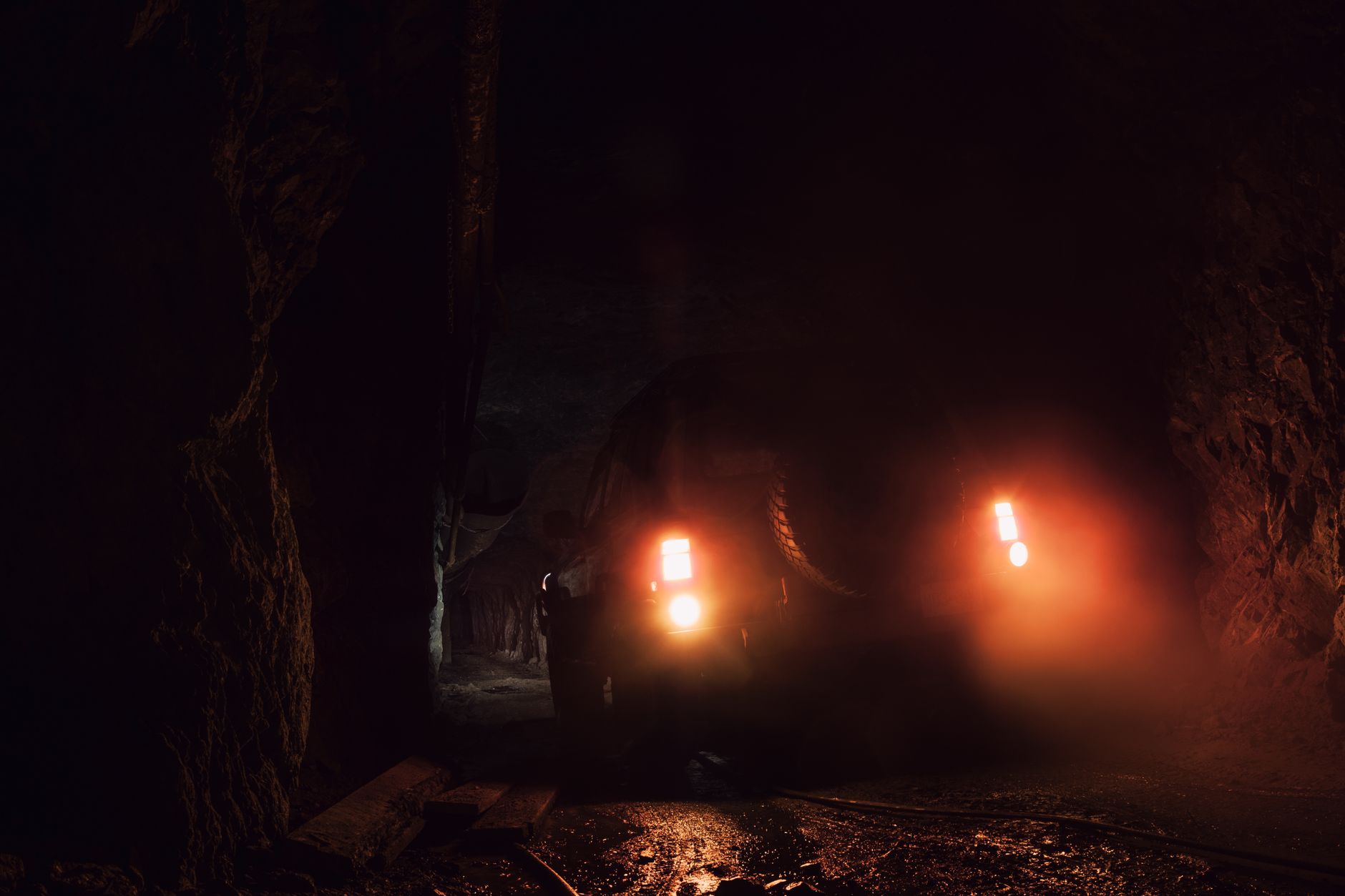
The strangest part of the story is not only that the water was old. It is that someone tasted it.
Barbara Sherwood Lollar, a University of Toronto geochemist whose work has helped define the study of deep ancient groundwater, was part of the team studying water flowing from fractures in the Kidd Creek mine system near Timmins, Ontario. The mine reaches roughly three kilometres below the surface, deep into the Canadian Shield, where water can remain isolated from the surface world for spans of time that make ordinary history disappear.
The water was not clean, fresh, or pleasant. A 2025 Times of India account reported that Sherwood Lollar tasted the water herself and described it as very salty and bitter, much saltier than seawater. That detail sounds almost theatrical, but it also points to the chemistry. This was water that had been sealed away long enough to become a dense brine, loaded with dissolved minerals and gases from the rock around it.
The taste matters because it collapses an almost impossible timescale into one human moment. The fluid had been underground since before animals, before land plants, before forests, and before any living thing had a tongue with which to notice bitterness.
How old was the water?
The main scientific basis for the age comes from noble gases, especially isotopes of xenon, helium, neon, argon, and related tracers. In a 2013 Nature paper, researchers including Sherwood Lollar reported deep fracture fluids from the Timmins mine system with a minimum mean residence time of about 1.5 billion years. The same study found evidence connecting parts of the system to processes around 2.64 billion years ago.
That is why the age is often summarized as roughly two billion years, or as a range from about 1.5 to 2.6 billion years. It is not a simple stopwatch reading. It is a reconstruction from isotopes, rock history, and the chemical memory carried by the water.
The distinction is important. Scientists are not saying every molecule in the sample had sat perfectly still since one exact date. They are saying the fracture-fluid system had been isolated from the surface for geological spans measured in billions of years. That isolation is the astonishing part.
Why deep mine water can be ancient
Groundwater near the surface is usually young by geological standards. It is fed by rain, snowmelt, rivers, lakes, and porous soil. Even when it moves slowly, it remains part of an active water cycle tied to the atmosphere.
Deep crystalline rock is different. The Canadian Shield is made of very old continental crust. Its fractures can hold water that seeps, reacts, becomes trapped, and then remains cut off from the surface for enormous lengths of time. The deeper the system and the lower the connectivity, the less it behaves like ordinary groundwater.
In such places, water becomes a chemical archive. It reacts with minerals, accumulates salts, and can carry gases produced by natural radioactivity in the surrounding rock. The taste Sherwood Lollar described was not a novelty. It was a sensory trace of a closed chemical environment.
A world without sunlight
The ancient water also matters because it raises a basic question about life: how long can a buried environment remain habitable without sunlight?
Deep fracture systems can contain hydrogen and other chemicals produced when water reacts with rock, or when natural radiation splits water molecules. On Earth, some microbes can use chemical energy rather than sunlight. That makes ancient groundwater more than a geological curiosity. It is a possible model for hidden ecosystems in deep crustal rocks.
The Nature study did not claim to find two-billion-year-old organisms living in the Kidd Creek water. The point was more careful than that. It showed that pockets of water with life-relevant chemistry can persist in the crust over billion-year timescales. For astrobiology, that is the part that travels.
If deep rock on Earth can preserve isolated, chemically active water for so long, then similar questions become harder to avoid on Mars, icy moons, and other worlds where sunlight may not reach the places most likely to hold liquid water.
The salt in the story
The salty, bitter flavor is easy to remember, but it should not be mistaken for a stunt. Field geologists have long used smell, color, texture, and sometimes taste as rough clues, especially when dealing with brines and minerals. No one needed a sip to prove the water’s age. The age came from laboratory measurements.
Still, there is something clarifying about the detail. We often imagine deep time as something found only in fossils, craters, or layers of stone. Here, it was liquid. It flowed out of a fracture in a mine wall, and its chemistry had been shaped in darkness for longer than complex life has existed.
That makes the water both ordinary and almost impossible to picture. Ordinary because it was still water, still wet, still able to touch a human tongue. Almost impossible because the world it had last known at the surface, if it had ever known the surface at all, was not a world with birds, flowers, insects, mammals, or grass.
A sample from before animals
Two billion years ago, Earth was microbial. Oxygen had risen compared with the planet’s earliest atmosphere, but complex multicellular life was still far in the future. The first animals would not appear for well over a billion years. Land plants would arrive later still.
That is what gives the Kidd Creek water its force. The sample was not just old in the way an artifact is old. It came from a hidden reservoir whose chemistry had been separated from the surface through most of the history of life as we know it.
The taste, salty and bitter, was a fleeting human contact with that deep isolation. For a moment, a modern scientist registered a flavor made in a place that had no use for taste at all.