

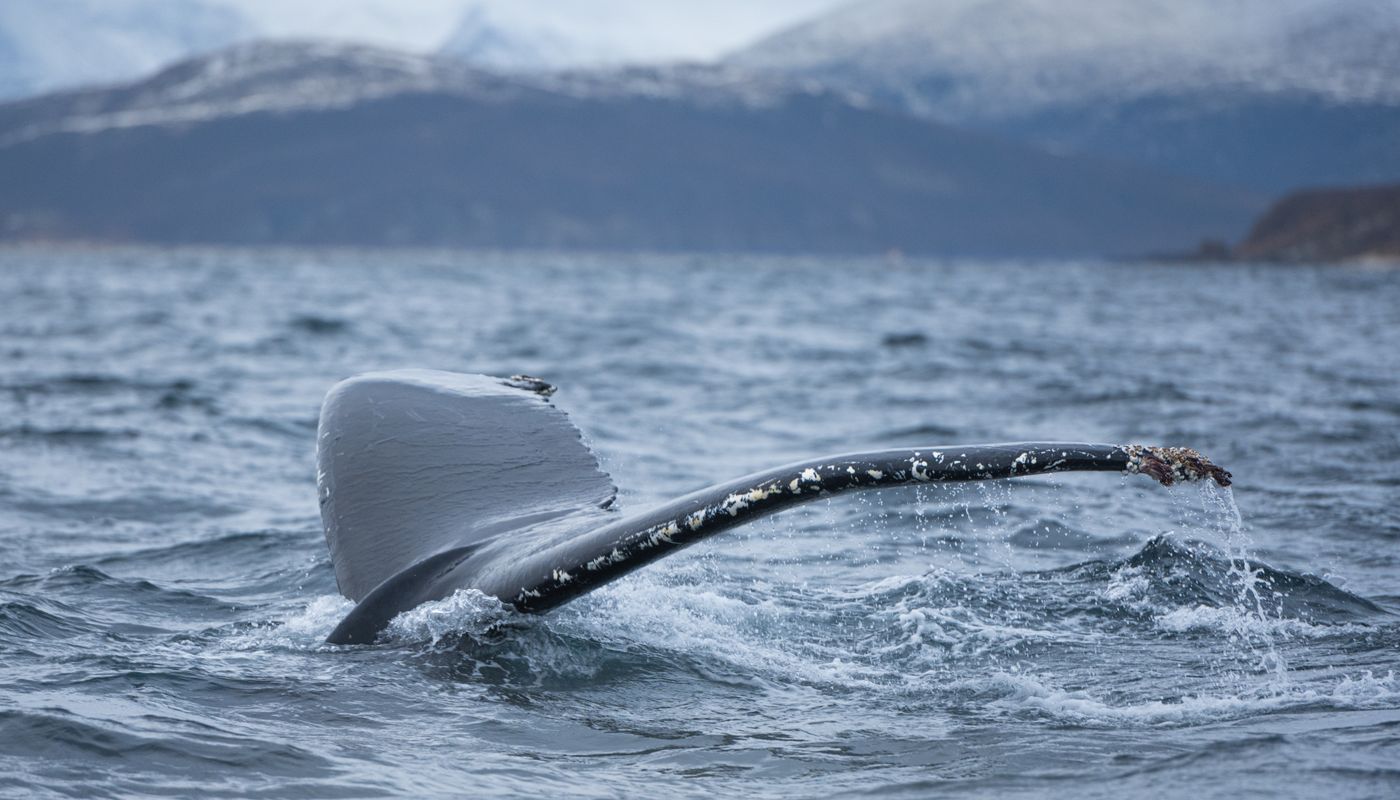
Bowhead whales are among the strangest animals in aging biology: enormous mammals that can live for more than two centuries, yet do not show the cancer burden their size and lifespan would seem to predict.
A 2025 Nature paper led by Denis Firsanov reports that bowhead whale cells repair certain kinds of DNA damage with unusually high efficiency and accuracy. The work is important, but it should not be read as the final word on aging, cancer, or any future human treatment.
We are writers, not clinicians. What follows is a reading of animal and cell biology research, not medical advice.
The whale at the center of Peto’s paradox
The puzzle begins with size. A bowhead whale has vastly more cells than a human and keeps those cells alive for far longer than most mammals. If cancer risk simply rose with the number of cells and the number of years those cells divide, very large animals should be unusually cancer-prone.
They are not. This mismatch is known as Peto’s paradox, a problem reviewed in BMC Biology by Marc Tollis and colleagues. Evolution appears to have produced different cancer-control strategies in different large, long-lived species. Elephants, for example, are often discussed because of extra copies of tumor-suppressor genes. Bowhead whales may be using another route.
The species’ age record is not folklore. In a 1999 Canadian Journal of Zoology study, J. Craig George and colleagues used aspartic acid racemization, a biochemical aging method, to estimate ages in bowhead whales, including individuals far older than 100 years and one estimate above 200 years. The numbers are not precise birth certificates, but they are strong evidence that the species can live past the human ceiling.
What the genome first suggested
The bowhead became a target for comparative genomics because it combines three traits that rarely sit together: very large body size, extreme longevity, and low apparent cancer incidence. A 2015 Cell Reports paper by Michael Keane and colleagues published the bowhead whale genome and looked for changes in genes connected to aging, DNA repair, cell-cycle control, and cancer.
That genome paper did not solve the question by itself. A genome can identify candidates, not prove how a living animal avoids disease for two centuries. But it helped move the bowhead whale from curiosity to model organism, at least in the sense that researchers could begin asking testable questions about its cells and proteins.
One lesson from that older work still matters: slow aging is unlikely to be one trick. Metabolism, immune function, body temperature, DNA repair, cell division, and tissue maintenance may all matter. The newer DNA repair work narrows in on one piece of that larger system.
The new DNA repair finding
Firsanov and colleagues examined bowhead whale fibroblasts, a type of connective-tissue cell often used in laboratory studies. The researchers focused on double-strand breaks, severe DNA damage in which both strands of the DNA helix are cut, and on mismatch repair, which fixes errors left after DNA copying.
According to the Nature paper’s summary, bowhead cells repaired double-strand breaks and mismatches with high efficiency and accuracy compared with other mammals. That wording matters. The claim is not that bowhead whales never suffer DNA damage. All living cells do. The claim is that their cells appear unusually good at putting some of that damage back together correctly.
The protein that drew particular attention was CIRBP, short for cold-inducible RNA-binding protein. The Nature paper reports that CIRBP was present at very high levels in bowhead whale cells relative to other mammals, and that CIRBP and a downstream protein, RPA2, increased the efficiency and fidelity of DNA repair in human cells in the lab.
That is a notable laboratory result, but it remains several steps away from a therapy. A protein that enhances repair in a cell culture does not automatically become a safe intervention in a whole body, where cancer control, cell death, inflammation, development, and tissue renewal all interact.
Why repair may matter more than resistance
One interesting turn in the Nature paper is that bowhead whale cells did not appear simply harder to transform into cancer-like cells. The authors report that after disruption of fewer tumor suppressors than required in human fibroblasts, bowhead fibroblasts could undergo oncogenic transformation.
That seems counterintuitive until the DNA repair result is brought in. The bowhead strategy may not be to tolerate endless damage. It may be to accumulate less dangerous damage in the first place because repair is more accurate.
This is one reason the bowhead whale has become so valuable to aging biology. It offers a different answer from the elephant story. Instead of mainly adding more cellular alarms that kill damaged cells, bowheads may preserve genome integrity by repairing damage before it becomes a permanent mutation.
What not to conclude
The tempting overstatement is that bowhead whales have revealed how to stop aging. They have not. The work shows a plausible mechanism that may help explain an extreme mammalian lifespan. It does not show that humans can copy the mechanism, live for 200 years, or avoid cancer by raising one protein.
It is also too simple to say bowheads “almost never” get cancer as though every individual has been medically screened. These are wild Arctic whales, not a hospital cohort. The better statement is that recorded cancer appears rare relative to what their size and lifespan might lead researchers to expect.
The most useful reading is narrower. Bowhead whales force researchers to explain why a huge, long-lived mammal does not follow a simple cell-number model of cancer risk. Their genome pointed to DNA repair and aging-related pathways. Their cells now give researchers a way to test one of those ideas directly.
That may be enough to make them one of the most important animals in aging research. Not because they offer an instant blueprint for human longevity, but because their bodies show that mammalian aging can be built differently from ours.