
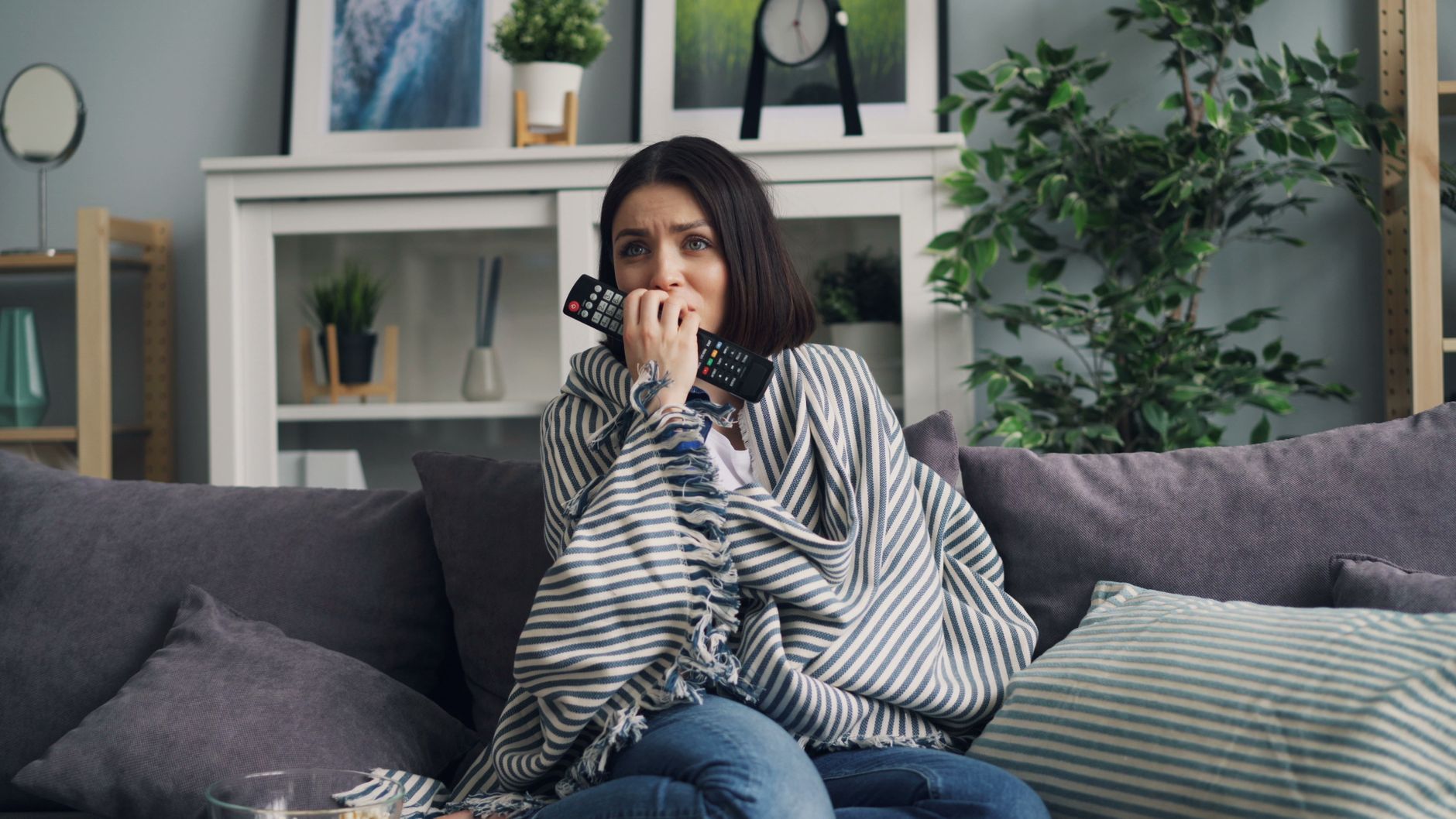
A cliffhanger did what suspense is designed to do. It left viewers with an unfinished story, raised their heart rate and interrupted the usual evening decline in cortisol. Then the volunteers went to bed in a sleep laboratory and, instead of lying awake longer, fell asleep slightly faster.
Among those whose suspenseful series stopped at the cliffhanger, average sleep onset came after about 19 minutes and 13 seconds. After the neutral documentary, it took about 21 minutes and 20 seconds. The two-minute difference was statistically significant within the experiment, but small, and it did not mean the rest of the night improved.
This is not medical advice. It is a close reading of one controlled experiment in healthy young sleepers.
This is one study, not settled consensus. Its most useful lesson is methodological: the time it takes to fall asleep, the structure of sleep and the body’s activity during sleep are related but distinct outcomes. A quicker transition into sleep does not by itself establish that sleep was deeper or more restorative.
Fifty young adults spent two nights in the laboratory
The study was published in Sleep Medicine in 2023 by Sandrine Baselgia, Selina Ladina Combertaldi and colleagues at the universities of Fribourg and Lucerne. It included 50 healthy participants, 39 of them women, with a mean age of 22.6 years.
Each participant spent two experimental nights in a sleep laboratory. On one night, they watched three or four episodes of a suspenseful television series before bed. On the other, they watched a neutral documentary series for an equivalent period. Because each person experienced both kinds of viewing, the researchers could compare a participant’s sleep after suspense with that same participant’s sleep after the control program.
The cliffhanger itself was a between-person manipulation. Half the participants saw the suspenseful series stop while an important action remained unresolved. The other half watched the same material edited to end at a calm point. As the University of Fribourg’s open repository record explains, the team then measured subjective stress, heart rate and salivary cortisol before recording sleep with electroencephalography and other laboratory sensors.
The unresolved ending produced the clearest arousal
Watching the suspenseful episodes increased participants’ reported stress compared with watching the documentary. The physiological response was more selective. Higher heart rate and cortisol were most evident when the suspenseful session ended with the unresolved cliffhanger.
Cortisol needs careful interpretation here. Its concentration normally declines during the evening, so the result was not necessarily a dramatic surge above daytime levels. In the cliffhanger condition, the usual decrease was reduced relative to the other conditions. Together with heart rate, that pattern indicated greater physiological arousal as bedtime approached.
The finding therefore concerns a specific package: roughly three hours of suspenseful narrative, immediately followed by bed, with half the sample left at an interrupted critical scene. It does not show that every exciting film, every episode or every screen produces an identical hormonal response.
The two-minute result was real, modest and unexpected
Pre-sleep arousal is usually expected to delay sleep onset, particularly when it involves rumination or worry. Yet the experiment produced a small main effect in the opposite direction. Participants fell asleep faster after the suspenseful series than after the neutral documentary.
The cliffhanger group gives the clearest title-sized comparison: 19 minutes and 13 seconds after suspense versus 21 minutes and 20 seconds after the documentary, a difference of two minutes and seven seconds. In the non-cliffhanger group, the corresponding times were 18 minutes and 51 seconds after suspense and 18 minutes and 39 seconds after the documentary, essentially no advantage.
The experiment was not designed to determine why the cliffhanger group fell asleep faster. Three hours of viewing may have created fatigue. The documentary may have affected alertness differently. Relief when the viewing session finally ended could have mattered. With only 25 people in each ending group, ordinary variation can also have a large influence on subgroup averages.
Most importantly, a statistically significant two-minute difference is not automatically a practically important benefit. It did not make the cliffhanger a sleep intervention, and it cannot support advice to use suspense as a remedy for difficulty falling asleep.
Faster sleep onset did not mean a clearly better night
The broad sleep results were reassuringly uneventful. Total sleep time, the number of awakenings and overall sleep-stage architecture did not differ meaningfully between the suspense and documentary nights. Participants’ own ratings of sleep quality also changed little.
Two narrower physiological measures pointed in another direction. Heart rate remained higher during the first two sleep cycles after the suspenseful series. After the cliffhanger specifically, the ratio of slow-wave to beta EEG activity was lower than in the non-cliffhanger and documentary conditions.
Slow-wave activity is associated with deeper non-rapid-eye-movement sleep, while beta activity is usually linked with faster cortical activity. The researchers treated a higher slow-wave-to-beta ratio as an indicator of more restorative sleep. A lower ratio after the cliffhanger therefore suggested that the brain remained in a somewhat more activated state, even though standard sleep-stage scoring showed no large disruption.
The University of Fribourg’s summary proposed that the unfinished narrative might be spontaneously reactivated during sleep, keeping wake-promoting systems more active. That is an interpretation, not something the experiment directly observed. The team recorded electrical patterns and heart rate, not the content of participants’ thoughts during sleep.
“Less restorative” describes a marker, not a measured recovery failure
The headline’s phrase “less restorative” needs that boundary. The study did not directly test overnight immune function, physical recovery, memory consolidation, mood or next-day performance. It found a lower EEG ratio that researchers use as an objective sleep-quality marker, plus sustained cardiac activation early in the night.
Those are meaningful measurements, but they do not establish that participants recovered less in a way they could feel or that affected their health. The paper itself concluded that suspenseful series and cliffhangers had only minor effects on sleep. The subtle EEG change is interesting precisely because the more familiar outcomes, including awakenings and total sleep time, stayed mostly stable.
This distinction also prevents “fell asleep faster” from becoming a misleading measure of success. A person can fall asleep rapidly because they are very sleepy or carrying a sleep debt. Conversely, a slightly longer sleep-onset time can still fall within a normal night. Sleep quality is a pattern across the night, not a race from lights-out to the first sleep stage.
The experiment cannot settle the wider screen-and-sleep question
The participants were healthy adults in their late teens and twenties. They slept in a laboratory, watched programs selected by researchers and had their viewing duration held constant. The result may not extend to people with insomnia, children, older adults or anyone whose “one more episode” pushes bedtime later and reduces the total opportunity to sleep.
That last issue is absent from this design. Everyone watched for roughly the same scheduled period before bed, so the experiment tested content and cliffhanger structure rather than bedtime displacement. A large Norwegian survey previously covered by ScienceBlog linked each additional hour of in-bed screen use with shorter sleep and higher odds of insomnia symptoms. That study was observational and could not prove causation, but it asked a different question about time taken away from sleep.
A National Sleep Foundation consensus review similarly treats screen effects as a combination of timing, duration, light, content and individual susceptibility. One tightly controlled thriller experiment cannot collapse those factors into a rule that screens are harmless, just as population correlations cannot show that a single suspenseful episode ruins a night.
Persistent difficulty falling asleep, repeated awakenings or daytime sleepiness is better discussed with a qualified clinician than diagnosed from viewing habits alone.
The laboratory result is narrower and more useful than either extreme. A suspenseful cliffhanger made 25 young viewers physiologically more aroused, yet they fell asleep about two minutes faster than after a documentary. Their sleep was not broadly disrupted, but the first part of the night carried subtler signs of continued activation. Faster, in this case, was not clearly more restorative.