

The asteroid that ended the age of dinosaurs is the extinction most people can name. It left a crater, a global layer of debris and an unforgettable victim in Tyrannosaurus rex.
It was not the worst mass extinction in Earth’s history.
That distinction belongs to the end of the Permian Period, about 252 million years ago. The crisis arrived before dinosaurs existed and struck a world filled with entirely different communities. In the sea, the latest estimates put the loss of marine animal species somewhere between 81 and 94 percent. On land, forests and animal communities also underwent a profound collapse.
The leading explanation begins with the Siberian Traps, an igneous province so large that ordinary volcanic comparisons stop being useful. This was not one mountain producing one cinematic eruption. For roughly a million years, magma repeatedly reached the surface through fissures, spread in enormous basalt flows and pushed sideways underground through sedimentary rock.
The amount of rock was extraordinary. So was the chemistry set that the magma encountered beneath Siberia.
This extinction came before the dinosaur age
The end-Permian extinction marks the boundary between the Permian and Triassic periods. The oldest unambiguous dinosaur fossils are roughly 233 million years old, about 19 million years younger than the extinction. A 2026 analysis of early dinosaur evolution inferred that the lineage itself may have originated between 250 and 240 million years ago. Even that earlier estimate places dinosaurs after the main crisis.
The animals affected were not dinosaurs waiting backstage. Permian oceans supported brachiopods, corals, ammonoids and many other lineages that had built complex Paleozoic ecosystems. On land, reptiles, amphibians and a great variety of synapsids occupied the continents. Synapsids are the broad evolutionary branch that would eventually produce mammals, although most Permian forms looked nothing like us.
The extinction removed many of those established communities. Dinosaurs later emerged and diversified in the altered Triassic world, but saying the catastrophe “made” dinosaurs would compress millions of years of evolution into a single cause. It cleared ecological space. What happened in that space depended on later climate, competition, geography and chance.
Siberia did not erupt like one gigantic volcano
The word “eruption” invites an image of a cone exploding once. The Siberian Traps were a large igneous province built in many pulses. Basaltic lava escaped through long cracks and spread as sheets across the landscape. Below the surface, magma traveled through vertical dikes and horizontal sheets called sills.
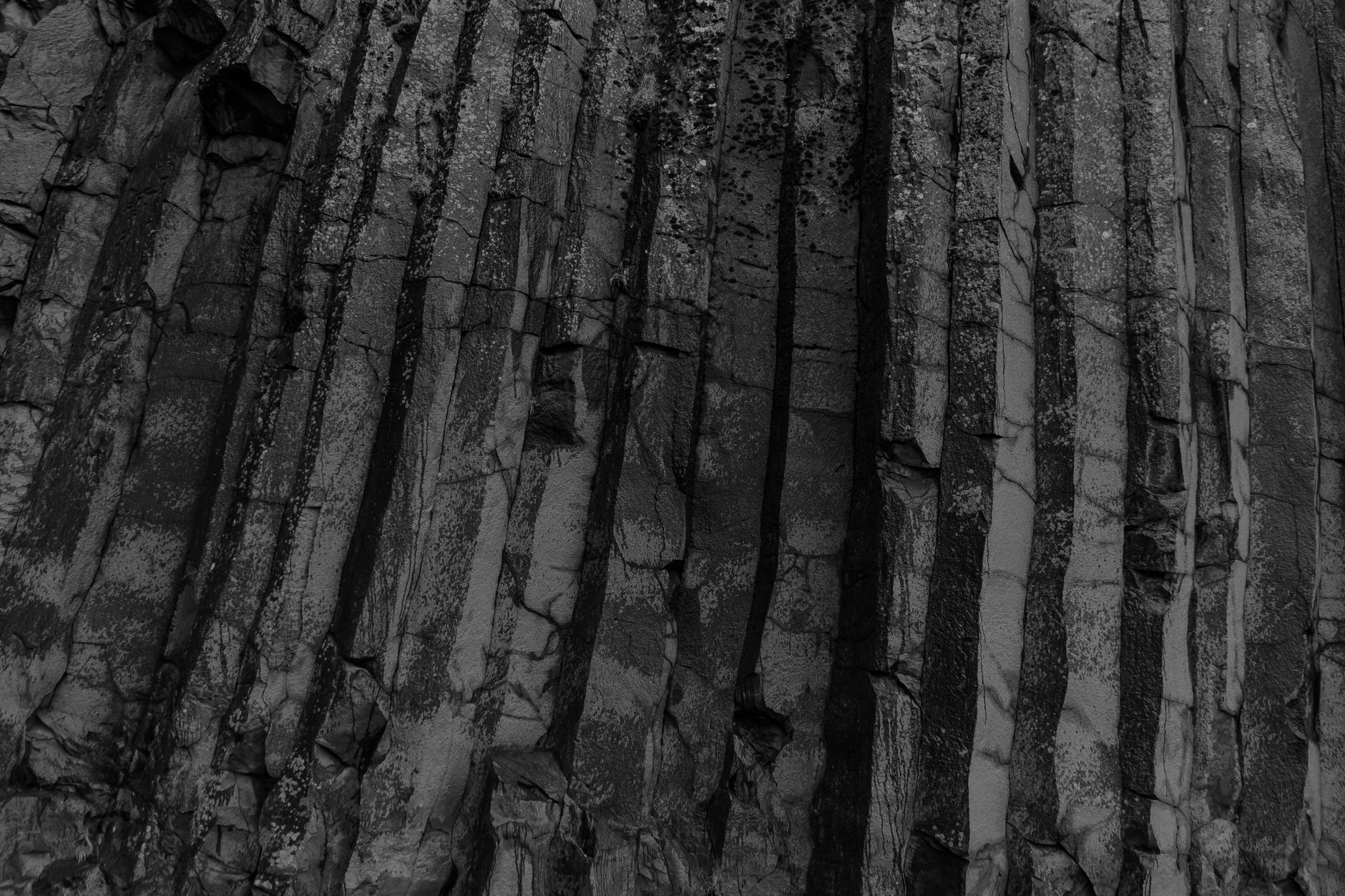
The province’s name captures what erosion later revealed. Thick sequences of hardened lava form step-like terrain, with one resistant flow sitting above another. The scale is continental rather than volcanic in the everyday sense.
Timing matters as much as size. High-precision uranium-lead dates show that voluminous Siberian magmatism occurred before, during and after the extinction. The biological loss itself was much shorter than the full volcanic episode. That leaves scientists with a harder question than “Were the eruptions big?” They must determine which pulse delivered the most damaging environmental shock.
A detailed reconstruction of the province’s emplacement found that more than a million cubic kilometres of surface lava may have erupted before the extinction began, without producing an equivalent global collapse. The crucial transition coincided with magma starting to spread laterally as a huge complex of underground sills.
The United States comparison is arithmetic, not a lost landscape
Reconstructing the original volume is difficult. Erosion has stripped away lava. Later sediments hide parts of the province. Some estimates count exposed flows, while broader ones include buried lava, dikes and the vast underground sill complex.
A 2024 review of the Siberian Traps describes original-volume estimates ranging from roughly one million to 15 million cubic kilometres. The review also notes a commonly cited total of seven to 15 million cubic kilometres for intrusive and extrusive igneous rock combined. That range is why any single number should be treated as a scale estimate, not a measured tank volume.
The lower 48 United States covers roughly eight million square kilometres. Divide seven million cubic kilometres of rock by that area and the imaginary layer comes out close to 900 metres deep. That is the basis of the “nearly a kilometre” comparison in the headline. A frequently used mid-range estimate of three to four million cubic kilometres would still average about 375 to 500 metres. At the review’s absolute upper bound of 15 million cubic kilometres, the result would approach two kilometres.
No blanket of basalt ever covered the United States, of course. The real Siberian rocks were unevenly distributed, and much of the largest total was emplaced underground rather than erupted as surface lava. The calculation is a visual translation. Even after the caveats, “millions of cubic kilometres” is almost too large to picture unaided.
The underground magma may have been deadlier than the lava
A lava flow destroys whatever it reaches, but a flow in Siberia cannot directly kill animals in an ocean on the other side of the planet. For local geology to become a global extinction, something had to travel through the atmosphere and ocean.
The Tunguska Basin beneath the volcanic province contained coal, hydrocarbons, carbonates and evaporite deposits. When magma spread between those sedimentary layers as sills, it baked them over an immense area. Contact heating could release carbon dioxide, methane and other volatile compounds, adding sediment-derived gases to those escaping from the magma.
The 2017 sill study identified the first widespread intrusive pulse as the most plausible trigger because it coincided with both the extinction’s onset and a sharp disturbance in the carbon cycle. The important point is not that surface lava was harmless. It is that the environmental effect of a large igneous province depends on where magma goes and what it heats, not merely on how much basalt eventually solidifies.
Once greenhouse gases accumulated, damage could propagate through connected systems. Rapid warming heated the ocean. Warmer water held less dissolved oxygen, while changes in circulation made it harder to replenish oxygen at depth. Acidification placed additional stress on organisms that built shells and skeletons. Volcanic sulfur, halogens and metals may have contributed acid rain, toxic contamination and ozone damage. On land, wildfire and soil erosion could carry nutrients into coastal waters and worsen oxygen loss.
There is no need to choose one universally lethal switch. A 2018 climate and ocean model reproduced much of the geographic pattern of marine losses through the combined effects of warming and oxygen depletion. A separate high-resolution study of sediments in China found a sequence of wildfire, soil disturbance and oxygen-free, sulfide-rich marine conditions immediately before the main extinction interval. Different organisms in different places could have died for different proximate reasons within the same cascading crisis.
“Ninety percent” is an estimate, not a body count
No one can count every species that lived 252 million years ago. Paleontologists estimate losses from fossils, and the answer changes with sampling, taxonomy and the statistical correction used for gaps in the record.
A 2026 synthesis of marine recovery summarizes current estimates at 81 to 94 percent of marine animal species. The headline’s “as many as 90 percent” is a rounded description of that upper-end devastation, not a claim that scientists observed an exact global tally. It also means species, not 90 percent of every individual organism alive.
That distinction does not make the event small. A loss near the low end of the range would still mean roughly four out of every five marine animal species disappearing. Entire reef-building groups vanished. Food webs were simplified, habitats emptied and the identities of dominant survivors changed.
Losses on land are harder to express with one equally secure percentage because terrestrial rocks preserve a patchier record. Evidence nevertheless points to severe disruption among plants, insects and vertebrates. Researchers still debate whether land ecosystems began collapsing before the main marine pulse in every region or whether the timing differed from place to place.
Survival did not mean the planet quickly recovered
The Permian-Triassic boundary was not a line after which normal life immediately resumed. Magmatism continued. Early Triassic climates stayed extremely hot and unstable, while ocean chemistry remained hostile in many settings. Some simple communities and opportunistic species appeared quickly, but the rebuilding of complex ecosystems took much longer and proceeded unevenly.
This aftermath helps explain why the end-Permian extinction matters beyond its grim ranking. Mass extinction is not merely subtraction from a species list. It changes which ecological relationships remain possible. Predators lose prey, reefs lose builders, soils lose stabilizing vegetation and surviving lineages encounter landscapes with unfamiliar competitors and empty roles.
The Siberian Traps provide the physical beginning of the story, but not a cartoon in which lava simply covers the world. The deeper explanation is more unsettling. Magma entered an unusually volatile-rich basin. Carbon and other gases moved into the atmosphere. Heat, oxygen loss and chemical disruption spread through the ocean. Stresses on land fed back into coastal waters. A sequence of geological events became a planetary biological catastrophe.
The basalt is what remains. The extinction is what happened when the planet responded to it.