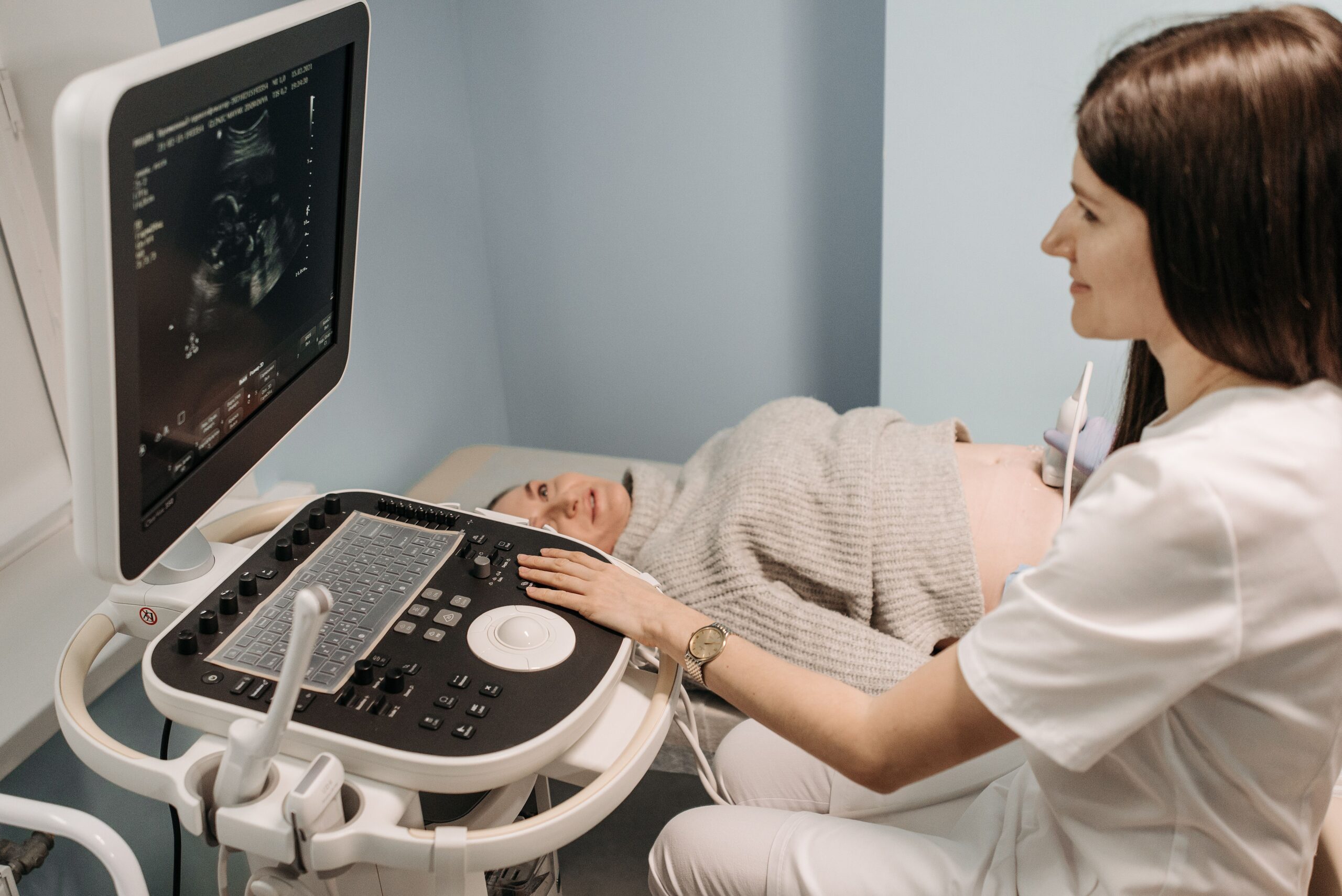
Birth creates an obvious separation: one body becomes two people in the room. At the cellular level, the boundary is less clean.
During pregnancy, cells and genetic material move in both directions across the placenta. Some maternal cells enter the fetus. Some fetal-origin material enters the mother. A small population can remain after delivery, creating a condition known as microchimerism.
In 2012, researchers reported one of the most striking examples. They detected male DNA across multiple brain regions in 37 of 59 deceased women. The oldest woman with a positive brain sample was 94.
Pregnancy with a male fetus was the most likely source, the authors wrote. But it was not proven for most participants, and the experiment detected a Y-chromosome sequence more often than it identified intact living cells. The remarkable result is real. Its most poetic interpretation needs careful limits.
A chimera can exist on a microscopic scale
Microchimerism means that one individual carries a very small number of cells or fragments of genetic material that are genetically distinct from the rest of the body. Pregnancy creates a natural route for this exchange.
The placenta regulates traffic between maternal and fetal circulations, but it is not an absolute wall. Fetal cells can cross into the mother’s blood, while maternal cells can travel in the other direction. After pregnancy, most foreign material is cleared. Some persists.
Earlier research had found fetal microchimerism in maternal blood, bone, bone marrow, skin, liver and other organs years or decades after pregnancy. Animal work had also identified fetal-origin cells in mouse brains. Whether the human brain contained similar traces remained uncertain because human tissue is difficult to obtain and microchimeric material is rare.
The human body is therefore not genetically uniform in the simple sense we learn at school. It can contain tiny cellular populations with another genome, acquired without transplantation or disease.
The study searched 59 autopsied brains
William Chan and colleagues analysed brain tissue from 59 women. Twenty-six had no clinical or pathological evidence of neurological disease, while 33 had Alzheimer’s disease. Ages at death ranged from 32 to 101.
Depending on tissue availability, the team sampled between two and 12 regions per person. The list included the frontal, parietal, temporal and occipital lobes, hippocampus, amygdala, thalamus, cerebellum, pons, medulla and spinal cord.
The researchers used quantitative PCR to search for DYS14, a sequence specific to the Y chromosome. Because women ordinarily have two X chromosomes, detecting this marker provided evidence of male microchimerism. They also used fluorescence imaging to show a male nucleus in a female brain sample with an especially high signal.
Male DNA appeared in 37 women, or 63 per cent of the sample, and in 64 of 183 tissue specimens. Positive results were distributed across brain regions rather than confined to a single anatomical site.
The 94-year-old result shows persistence, not a timeline
The oldest woman in whom the researchers detected male DNA was 94. That finding shows that male microchimerism can be present very late in life. It does not, by itself, prove that the material had survived from a pregnancy many decades earlier.
Pregnancy histories were unavailable for almost all the women. Nine were known to have had at least one son, and two were known not to have sons. The researchers therefore could not match a positive brain result to a particular pregnancy or calculate how long the material had persisted in each person.
A pregnancy with a male fetus remains the most plausible source across the sample. Male material can also follow a miscarriage or abortion, including an unrecognised early pregnancy. Other possible routes include a recognised or vanished male twin, transfer from an older brother through the mother, or a non-irradiated blood transfusion.
This is why “likely from pregnancy” is accurate and “a son’s cells were found in every mother’s brain” is not. The study included women with no known sons, not every woman was positive, and the fetal source could not be assigned individually.
Male DNA is not identical to a census of living fetal cells
The PCR method detected a genetic sequence. In the paper’s terminology, microchimerism could include cells and/or DNA. The imaging evidence supported the presence of a rare male nucleus in at least one specimen, and previous research makes persistent fetal-origin cells biologically plausible. Still, a positive PCR result does not tell us the cell type, whether every detected fragment came from an intact cell or what that material was doing.
The authors concluded that fetal DNA and likely cells can cross the blood-brain barrier and reside in the brain. “Likely” carries important weight.
Mouse research has found fetal-origin cells with features resembling neurons, astrocytes, oligodendrocytes and immune-related cells. Human studies in other tissues suggest microchimeric cells may sometimes integrate into damaged areas. Those observations raise possibilities about repair and immune surveillance, but they do not demonstrate a beneficial role in the female human brain.
The Alzheimer’s result did not settle whether the cells help or harm
The study included women with Alzheimer’s disease partly to explore whether male microchimerism differed with neurological health. Male DNA was detected less often in the Alzheimer’s group after statistical adjustment, and concentrations also tended to be lower in some analyses.
That was an unexpected, exploratory finding. The sample was modest, the groups differed in age, pregnancy histories were largely unknown and one very high-value specimen strongly affected the concentration analysis. When the authors focused on brain regions most affected by Alzheimer’s, prevalence differences were not statistically significant.
The paper does not show that fetal cells protect against Alzheimer’s. It also does not show that they cause autoimmune illness, cancer or any other condition. Microchimerism has been associated with both repair and disease in different tissues, but association can reflect cells responding to damage rather than creating it.
A later scientific commentary on microchimerism in the brain made the same point: discovering the material opens questions about function; it does not answer them.
Pregnancy can leave a cellular afterlife
It is tempting to turn this biology into a sentimental claim that a child lives forever inside a mother. Cells are not memories or personalities, and male DNA in a brain does not mean a mother is literally thinking with her son’s mind.
Yet the underlying fact remains intimate. Pregnancy is not only a temporary sharing of nutrients, hormones and space. It can create lasting biological mixtures whose sources may be decades old.
The study’s strongest conclusion is also its humblest: male microchimerism was frequent, widely distributed and sometimes present very late in life. What those rare cells mean for health is still unresolved.
Birth ends gestation. It does not always end cellular coexistence.