
Adults aged 40 and older completed one timed test of mental flexibility about 12% faster after a month with working HEPA air purifiers in their homes than after a month with sham devices. In absolute terms, average completion time fell from 61.4 seconds during the sham period to 54.0 seconds during the filtration period.
The result comes from a peer-reviewed study led by Nicholas Pellegrino in Scientific Reports. It is an intriguing finding from a randomized crossover trial, but it was a secondary analysis, the benefit did not appear across the full sample, and the age subgroup was examined after the trial was designed. This is one study, not settled consensus.
This is not treatment advice. We are reading a study carefully and asking what it does, and does not, show.
What the trial actually did
The researchers analyzed data from 119 adults aged 30 to 74 who lived within 200 meters of major highways in Somerville, Massachusetts. These residents were part of the Home Air Filtration for Traffic-Related Air Pollution trial, known as HAFTRAP. The trial’s original primary outcome was blood pressure, not cognition.
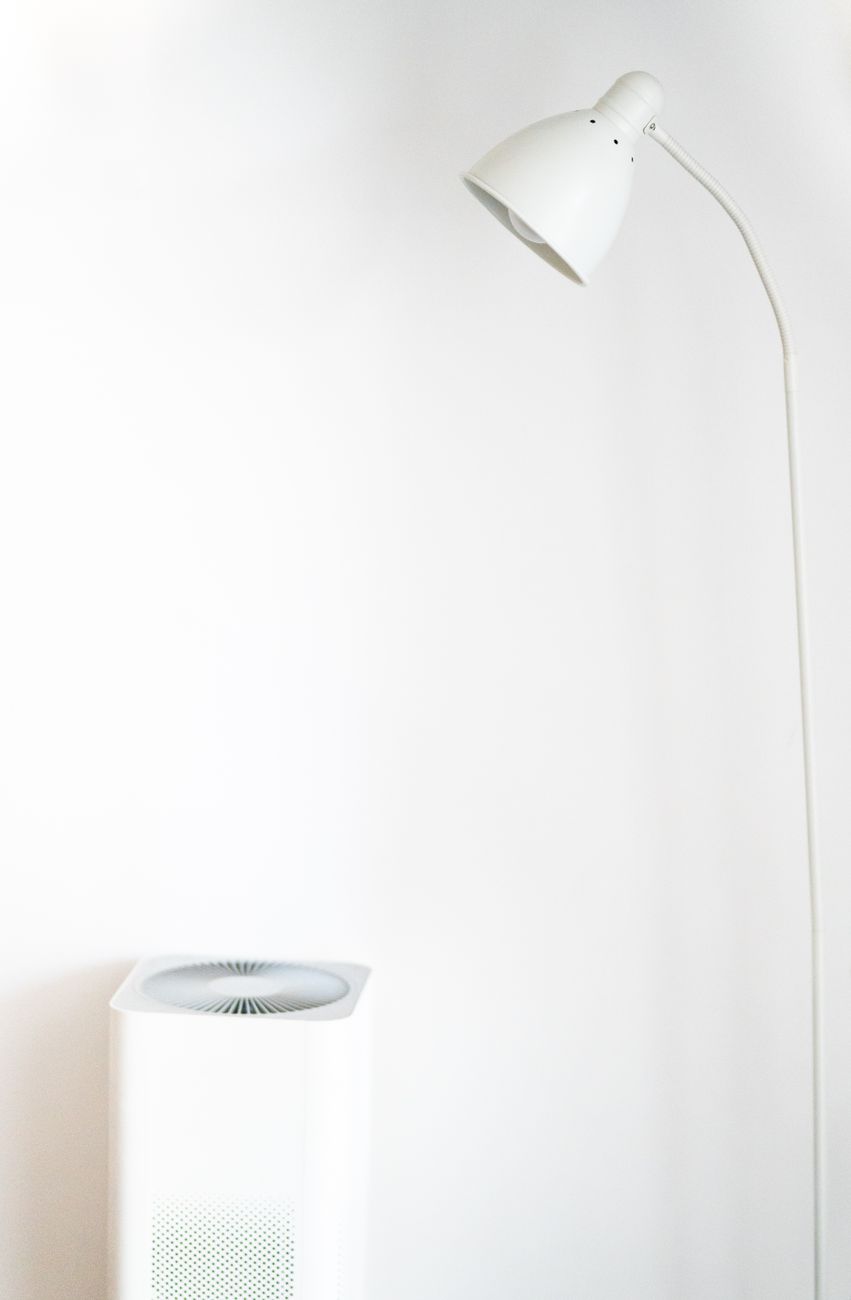
Each home received two air purifiers, one for the living room and one for the bedroom. Participants spent 30 days with working high-efficiency particulate air filtration and 30 days with visually similar sham units that moved air but lacked the filter, separated by a 30-day washout period. The order was randomized, so some homes used the HEPA units first and others used the sham units first.
This crossover design matters because every participant served as their own comparison. Stable differences between people, such as education or the layout of a home, are less likely to explain a result when the same person completes both conditions.
The devices also changed the air, at least in the homes where pollution was directly monitored. In a subset of 19 homes, HEPA filtration reduced average indoor PM2.5, particles no wider than 2.5 micrometers, by 52% compared with the sham period. Ultrafine-particle concentrations fell by 32%.
That is evidence that the intervention worked as an air-cleaning intervention. It is not yet evidence that each participant’s cognitive change tracked their personal reduction in pollution, since particle levels were not measured in every home.
What the 12% figure means
Participants took the Trail Making Test four times, once at the beginning and end of each intervention period. Part A asks a person to connect numbered points in order. It mainly tests visual search and motor speed. Part B requires switching back and forth between numbers and letters, such as 1, A, 2, B. That added switching demand is why Part B is used as a measure of mental flexibility and aspects of executive function.
The 12% result refers only to completion speed on Part B among the 50 participants aged 40 or older. Their average age was 49.4. It was not a 12% rise in a general intelligence score, memory capacity or accuracy, and it does not mean that participants’ brains became 12% faster overall.
No statistically significant benefit appeared on Part A. None appeared among participants younger than 40. Most importantly, neither part of the test showed a significant HEPA advantage when all 119 participants were analyzed together.
Instead, the researchers found that age modified the Part B result, with an interaction p-value of 0.02. Within the 40-and-older subgroup, the ratio of mean completion times was 0.88, also with a p-value of 0.02.
The distinction is easy to lose in a headline. The paper supports a specific subgroup result on one part of one timed task.
The design is useful, but the caveats are real
Randomization, a sham device and within-person comparisons make this more informative than a survey asking people whether they own an air purifier. Participants did not know which unit contained the filter, and the statistical model accounted for intervention order, baseline test time, hours spent at home, outdoor temperature and perceived stress.
Still, cognition was a secondary outcome in a trial designed primarily around cardiovascular risk. The decision to divide participants at age 40 was post hoc, meaning it was made for this analysis rather than specified as the central test before data collection. Subgroup findings discovered after the fact can be genuine, but they also have a higher risk of reflecting chance and need independent replication.
Practice is another complication. Participants improved simply by taking the Trail Making Test repeatedly. Among the 67 people assigned to sham filtration first, average Part B times improved from 70.0 to 62.4 and then 57.8 seconds over their first three tests. Randomizing the order and adjusting for study period should distribute that learning effect, but it does not make the effect disappear.
The trial manager who administered the tests knew whether a home was in the HEPA or sham phase. The test is standardized and participants were blinded, which limits this concern, but an unblinded assessor could still influence pace without intending to.
There was also incomplete testing. The trial enrolled 156 people, while 119 had results from all four visits. Twenty-three test forms were misplaced, 11 participants declined at least one test, and three were missing for other reasons. Those who opted out tended to be older and less educated than the analyzed group.
Why the result is biologically plausible
Traffic-related indoor air pollution is a mixture, not a single substance. Outdoor emissions enter homes, while cooking and other indoor activities can add particles. HEPA filters capture particles carried through the device, but they do not remove every gaseous pollutant or eliminate exposure that occurs away from home.
Previous work gives the new result some context. A 2023 systematic review and meta-analysis linked air-pollution exposure with poorer performance across several cognitive domains, although much of that evidence was observational. Association alone cannot establish that pollution caused the measured differences.
There are also a few controlled exposure and filtration studies. A 2024 randomized double-blind crossover trial in university students reported better results on several cognitive measures after reducing particulate exposure during sleep. Other intervention studies have found changes in executive tasks without consistent changes in simple reaction time or visual memory.
The HAFTRAP paper discusses possible pathways involving inflammation, blood vessels and the brain’s white matter. It did not measure any of those mechanisms. There was no brain imaging, and no biological test showed that HEPA filtration changed neural tissue within a month.
Who this result does not represent
The analyzed participants were healthy enough to meet the trial criteria, had no preexisting cognitive impairment, and were predominantly White with relatively high education and household income. People taking blood-pressure medication, those with a history of major cardiovascular events, current smokers and vapers, and people with certain other pollution exposures were excluded.
The finding therefore cannot be generalized automatically to people with cognitive impairment, older populations, children, smokers, homes far from traffic or communities with very different pollutant mixtures. Age 40 should not be read as a biological cliff. It was the dividing line used in this analysis, not proof that filtration suddenly begins working on a person’s 40th birthday.
The purifiers were custom adapted by Austin Air and purchased at a bulk discount. The paper says the manufacturer had no role in the design, conduct or analysis, and the authors declared no industry relationships. Funding came from the National Institute of Environmental Health Sciences and the University of Connecticut School of Medicine.
What would make the finding convincing
A stronger follow-up would name cognition as a primary outcome before enrollment, recruit a larger and more diverse group of adults over 40, keep test administrators blinded, use alternate test forms to reduce practice effects, and monitor pollution in every home. Longer follow-up could show whether any difference persists rather than fading after the first month.
Researchers would also need to connect individual exposure changes with individual cognitive changes. That would help distinguish an effect of lower particle exposure from an imbalance or period effect that happened to favor the HEPA month.
Someone experiencing new or worsening problems with memory, concentration or daily functioning should discuss them with a clinician rather than treating an air purifier as a diagnosis or therapy.
For now, the trial offers evidence that cleaner indoor air may affect a specific kind of cognitive performance within weeks. Replication with cognition at the center of the study would show whether the seven-second difference is robust.