

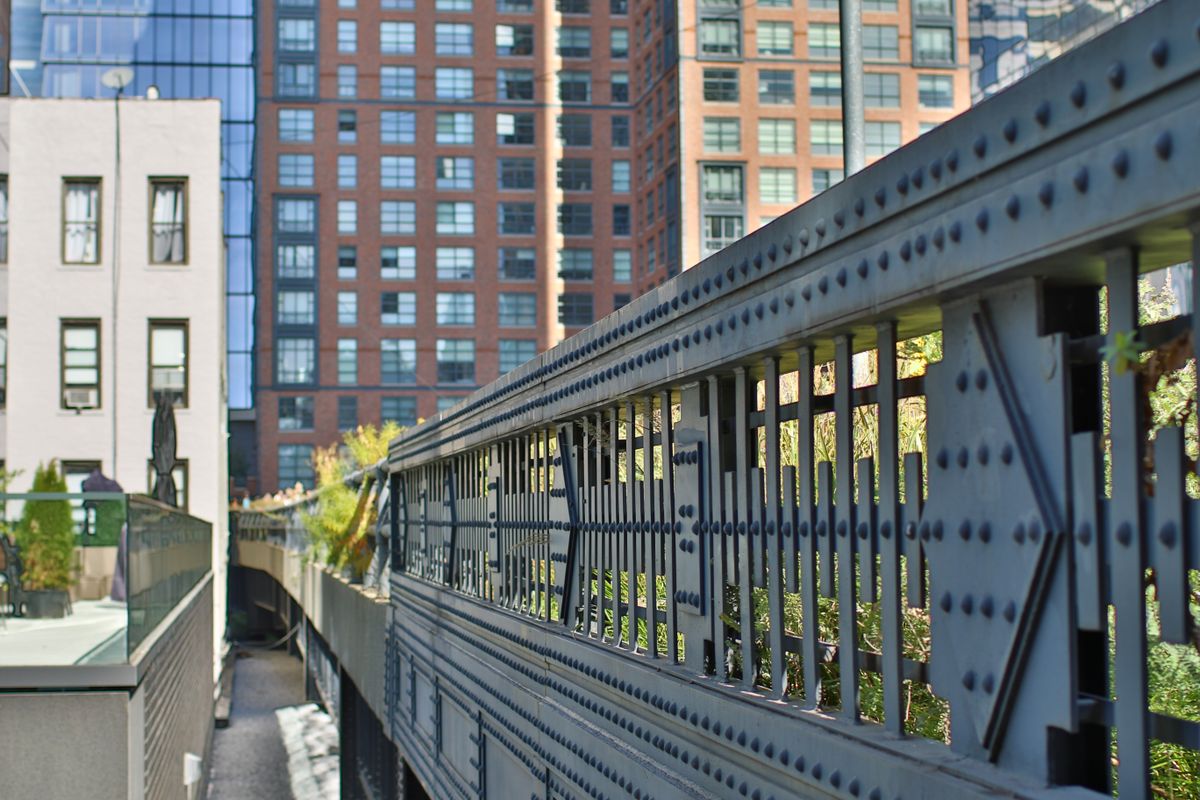
The last freight train on Manhattan’s High Line carried three carloads of frozen turkeys in 1980. The detail survives in the park’s own historical accounts, a reminder that the elevated structure now associated with gardens and strolling once belonged to a working distribution system.
After the trains stopped, vegetation spread across the unused track bed. Seeds arrived, plants took root and a landscape developed above the streets without a landscape architect directing it. When the first park section opened in 2009, 29 years after that final delivery, this unplanned vegetation had helped shape the case for keeping the structure.
The park preserved the railway, but it did not simply open the abandoned tracks to visitors.
A freight route above the street
The High Line’s official fact sheet places the railway’s opening in 1934. It connected factories and warehouses on Manhattan’s West Side, moving food and other goods through a district organized around production, storage and distribution.
Elevation addressed the conflict between trains and street traffic. New York City’s historic-resources assessment describes the steel-and-concrete viaduct as replacing the ground-level tracks along Tenth Avenue. Freight movement could continue above the streets rather than crossing them at the same level as people and vehicles.
That industrial purpose explains the route’s close relationship with surrounding buildings. The railway served them directly. Today’s visitor follows an alignment established for freight access, not a path originally chosen for views or recreation.
Interstate trucking contributed to declining rail traffic from the 1950s onward. Sections of the line were demolished, and the remaining elevated route eventually lost its trains. The frozen-turkey delivery marked the end of service, not an immediate decision to build a park.
Plants occupied the unused track bed
Wind and birds can carry seeds across a city, including onto structures separated from the ground. Once a seed reaches a suitable pocket of growing material, a railway’s former purpose offers no barrier to germination. Survival depends instead on moisture, light, rooting space and competition.
The abandoned High Line offered an uneven collection of those conditions. In a 2021 study in the Journal of the Torrey Botanical Society, Richard Stalter, Jingjing Tong and James Lendemer describe the earlier landscape’s shallow soils, drought stress, exposure and localized shade. They also note that occasional human visitors probably transported seeds.
This was urban vegetation assembled through several routes of arrival.
A city environmental assessment, drawing on Stalter’s earlier botanical work, records 161 vascular plant species, alongside lichens and bryophytes. The vegetation included grasses and flowering herbs as well as shrubs, trees and vines. Both native and nonnative plants were present.
The assessment identified value as cover and foraging habitat for migratory songbirds. Flowering plants could also serve pollinators. An unused industrial structure had acquired ecological functions even while its future remained undecided.
Preservation required people as well as plants
Friends of the High Line was founded in 1999 by neighborhood residents Joshua David and Robert Hammond. The Design Trust for Public Space’s account of its preservation work describes a project examining the structure’s history, physical condition, land use, zoning and community needs.
These were practical questions. An attractive landscape on a disused railway did not establish who would own a public park, whether the structure could support it or how visitors would reach it safely. Preservation needed a workable proposal as well as public interest.
The New York City Economic Development Corporation’s timeline records city backing in 2002 and the start of construction in 2006. The interval between the final train and opening day contained years of organizing, design and public decisions.
Plants helped people imagine another use for the railway. People then had to build and operate it.
The wild appearance sits on substantial engineering
The Landscape Architecture Foundation’s project case study describes structural rehabilitation, steel and concrete repairs, lead-paint abatement, waterproofing and drainage work. A safe public landscape required attention to the structure beneath the plants.
Much of the earlier vegetation could not remain through that work. The park’s planting design drew inspiration from the self-sown landscape while creating a new, maintained garden. James Corner Field Operations, Diller Scofidio + Renfro and planting designer Piet Oudolf collaborated on the project.
Rail tracks were incorporated into planting areas, keeping the former use visible. Their presence does not mean every rail, soil layer or plant remained untouched from the abandoned period. Reuse combined retained infrastructure with repair, replacement and new construction.
Waterproofing and drainage are particularly important on an elevated garden. Water must support vegetation without damaging the structure beneath it. Planting and civil engineering occupy the same narrow space.
A park that opened in stages
The first section opened in 2009. Further sections followed, extending the public route along the surviving railway. The familiar 1.45-mile description refers to the High Line’s main elevated park, not the length visitors could walk on that first opening day.
Its gardens retain the visual reference to plants growing among tracks, but they are selected and cared for. The official fact sheet describes choices based on hardiness, seasonal texture and color, with an emphasis on native species.
That care continues after construction. Gardeners work within the limits of an elevated structure, while maintenance crews look after the infrastructure that supports both visitors and vegetation. The work includes tending plants, maintaining drainage and keeping the elevated route accessible to visitors.