

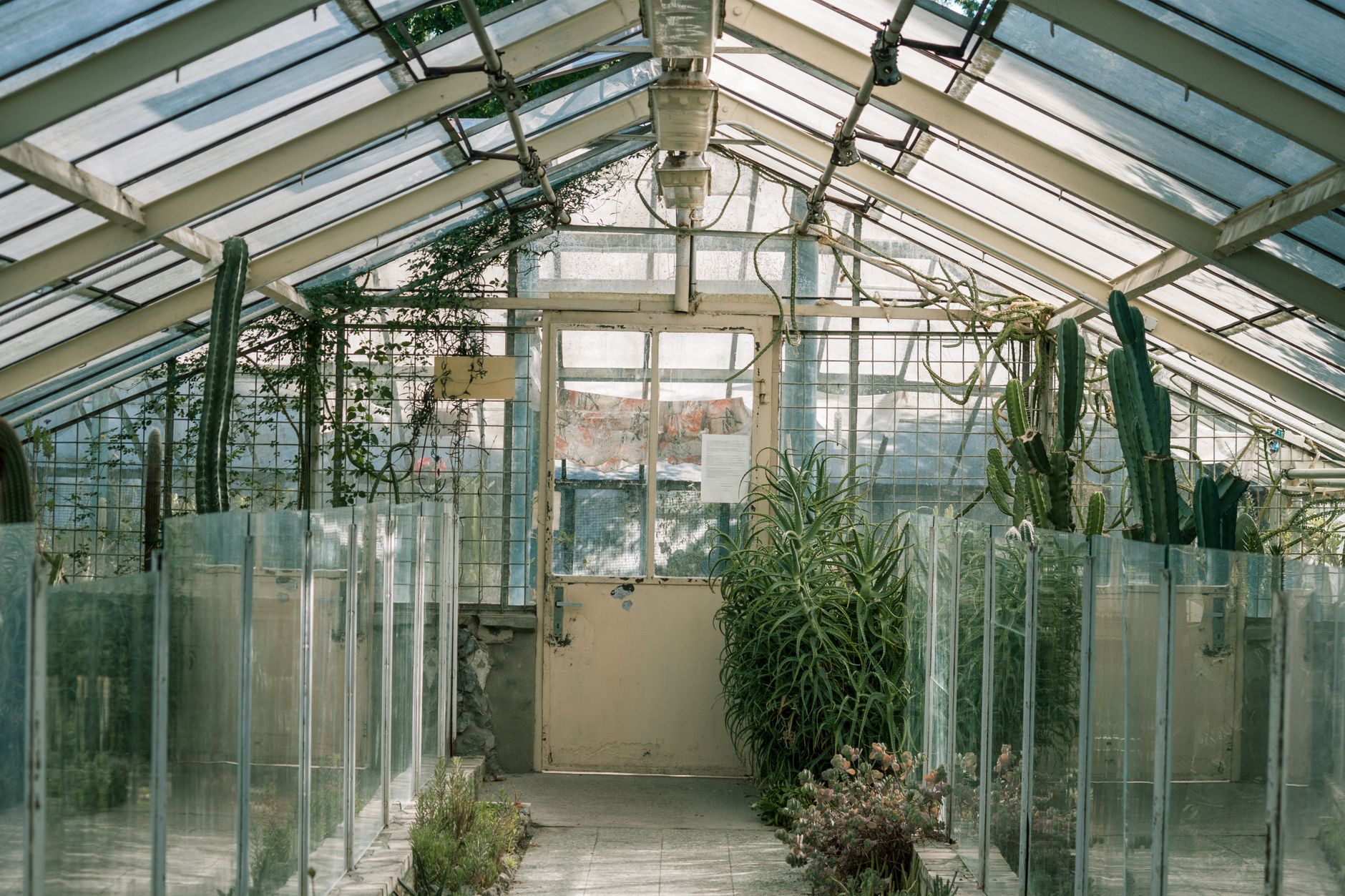
The Biosphere 2 oxygen problem is easy to remember as a failure: eight people sealed under glass, the air thinning around them, and a dream of self-contained living suddenly meeting chemistry it had not fully accounted for.
That is too simple.
In September 1991, four men and four women entered Biosphere 2, a 3.14-acre research facility in Oracle, Arizona, built as a materially closed ecological system. The University of Arizona, which now owns the facility, describes the original glass enclosure as a place where two missions between 1991 and 1994 sealed people inside to measure survivability.
This is historical science reporting, not medical advice. The experiment involved human oxygen exposure, but the point here is what the closed system revealed about ecology, engineering and atmosphere.
The first closure lasted two years, from September 26, 1991, to September 26, 1993. Inside were a rainforest, ocean, mangrove wetlands, savanna grassland, fog desert, agricultural area and living quarters. The aim was not simply to put people in a greenhouse. It was to test whether a closed world could keep air, water, food and waste cycling well enough to support humans.
This is one closure experiment, not a clean template for every closed habitat. But it remains one of the most vivid demonstrations of how difficult it is to build a living system whose invisible chemistry stays balanced.
The glass world was sealed tightly enough to expose the problem
Biosphere 2 was not airtight in the impossible sense. No large building is. But it was sealed tightly enough that slow atmospheric changes became measurable. The facility included a welded stainless-steel liner below the structure and a vast sealed glass envelope above it. Its own official description lists 7.2 million cubic feet under sealed glass and 6,500 windows.
That tightness mattered. If the enclosure had leaked freely, the oxygen loss might have been masked by ordinary outside air. Instead, the experiment became a kind of huge atmospheric balance sheet. Photosynthesis, respiration, soil microbes, human breathing, crop growth, concrete chemistry and daily sunlight all had to add up.
They did not.
In a 1994 paper in Eos, Transactions American Geophysical Union, Jeffrey P. Severinghaus, Wallace S. Broecker and colleagues described what happened in stark terms. Oxygen inside Biosphere 2 fell during the first 16 months from roughly normal atmospheric concentration, about 21 percent, to about 14 percent.
That was not a small laboratory fluctuation. Fourteen percent oxygen is comparable to breathing at high altitude. The paper said the drop was enough to cause health problems for the people inside. Other accounts of the mission describe fatigue, low energy and the eventual decision to add oxygen from outside.
Why the obvious explanation was incomplete
At first glance, disappearing oxygen sounds straightforward. People and animals breathe it in. Microbes consume it. Plants release it during photosynthesis. If oxygen is falling, maybe the plants are not making enough, or something else is using too much.
That was partly true. The Biosphere 2 soils had been loaded with organic matter to support crops and other ecosystems. Soil microbes respired that material, consuming oxygen and releasing carbon dioxide. The 1994 Eos paper identified microbial respiration of organic matter in the soils as a main driver of oxygen loss.
But there was a second puzzle. If oxygen was being consumed and carbon dioxide was being produced, where was all the carbon dioxide?
Carbon dioxide levels inside Biosphere 2 did rise and fall sharply. They shifted over the course of each day as plants photosynthesized in sunlight and organisms respired at night. They also had seasonal patterns. But the missing oxygen was not matched by a simple, permanent buildup of carbon dioxide in the air.
That mismatch pointed to the part of the building that did not look alive at all: concrete.
The concrete became part of the atmosphere
Severinghaus, Broecker and colleagues argued that the carbon dioxide produced by soil respiration was reacting with exposed concrete inside Biosphere 2 to form calcium carbonate. In plain English, some of the carbon was being locked into the building material.
That matters because the oxygen was still being consumed during respiration. The carbon dioxide that would normally reveal that oxygen use was partly being removed from the air by the structure itself. The concrete was not just scenery. It was participating in the carbon cycle.
This is the part of the story that makes Biosphere 2 more interesting than the common “sealed experiment went wrong” version. The issue was not that the designers forgot humans need oxygen. It was that a closed ecological system turns ordinary materials into active chemical actors. Soil, concrete, glass, light, water and crops all become part of the same accounting system.
In an open building, concrete slowly reacting with carbon dioxide is background chemistry. In a sealed world, it becomes life-support chemistry.
The rescue was oxygen, but the lesson was accounting
As oxygen continued to fall, the mission did not simply continue unchanged. Outside oxygen was added in 1993 to keep the crew safe. That decision attracted criticism because Biosphere 2 had been publicly framed as a closed system experiment. But the intervention also made clear what kind of experiment it really was.
A demonstration tries to show that a design already works. An experiment tests what happens when reality is allowed to answer back.
The oxygen addition meant Biosphere 2 did not meet the most romantic version of its original public promise. It did not run as a perfectly self-sufficient miniature Earth. But as a scientific object, it revealed a specific and important failure mode: a closed life-support system can lose breathable oxygen because biological respiration and building-material chemistry interact in unexpected ways.
Joel Cohen and David Tilman made a related point in a 1996 Science article on Biosphere 2 and biodiversity. They described the experiment as a source of lessons about the interrelatedness of plants and animals in ecological systems. The oxygen decline was one of those lessons, because it showed that atmospheric stability depends on more than keeping organisms alive in the same enclosure.
Why Earth makes the problem look easier than it is
Earth also has microbes, soils, concrete-like mineral reactions, plants and animals. The difference is scale.
Our planet’s atmosphere is enormous. Its oceans, rocks, soils and living systems exchange carbon and oxygen across huge reservoirs and long timescales. Local imbalances can be absorbed, diluted or buffered. A 3.14-acre glass enclosure has no such margin. A process that is tiny by planetary standards can become decisive when the air supply is limited.
Biosphere 2 made that scale problem visible. The crew could not treat “the environment” as a background. The air was a shared resource with a measurable budget. The soil was not simply where plants grew. The building was not inert. Human survival depended on the whole system’s chemistry staying inside narrow limits.
That is why the oxygen story still matters for spaceflight and planetary habitation. Any long-duration habitat on the Moon, Mars or a spacecraft would have to manage atmosphere with even less forgiveness. Machines can scrub carbon dioxide and generate oxygen, but biological life-support concepts are attractive because plants can recycle waste, produce food and help sustain air. Biosphere 2 showed both the appeal and the trap: biology does not behave like a simple machine.
The experiment did not end as neatly as the myth
Biosphere 2 became a media spectacle. It drew criticism over management, scientific design, food supply and outside interventions. Those criticisms are part of the history, and some were serious.
But the oxygen decline should not be filed away as a simple embarrassment. It was a measurement. The system stayed closed enough, long enough, for a hidden atmospheric process to become visible. The people inside felt the consequences before the chemistry was fully understood.
Today, Biosphere 2 is no longer trying to operate as a sealed miniature Earth with a resident crew. Under the University of Arizona, it functions as a large Earth-system research facility. Its current work is different, but the original experiment remains useful because it put a hard boundary around a living world and watched what the boundary did.
The oxygen did not vanish without cause. It was pulled through metabolism, soil chemistry and concrete into a form the crew could no longer breathe. That is the lesson hidden inside the famous glass walls: when you close a world, nothing is just background anymore.