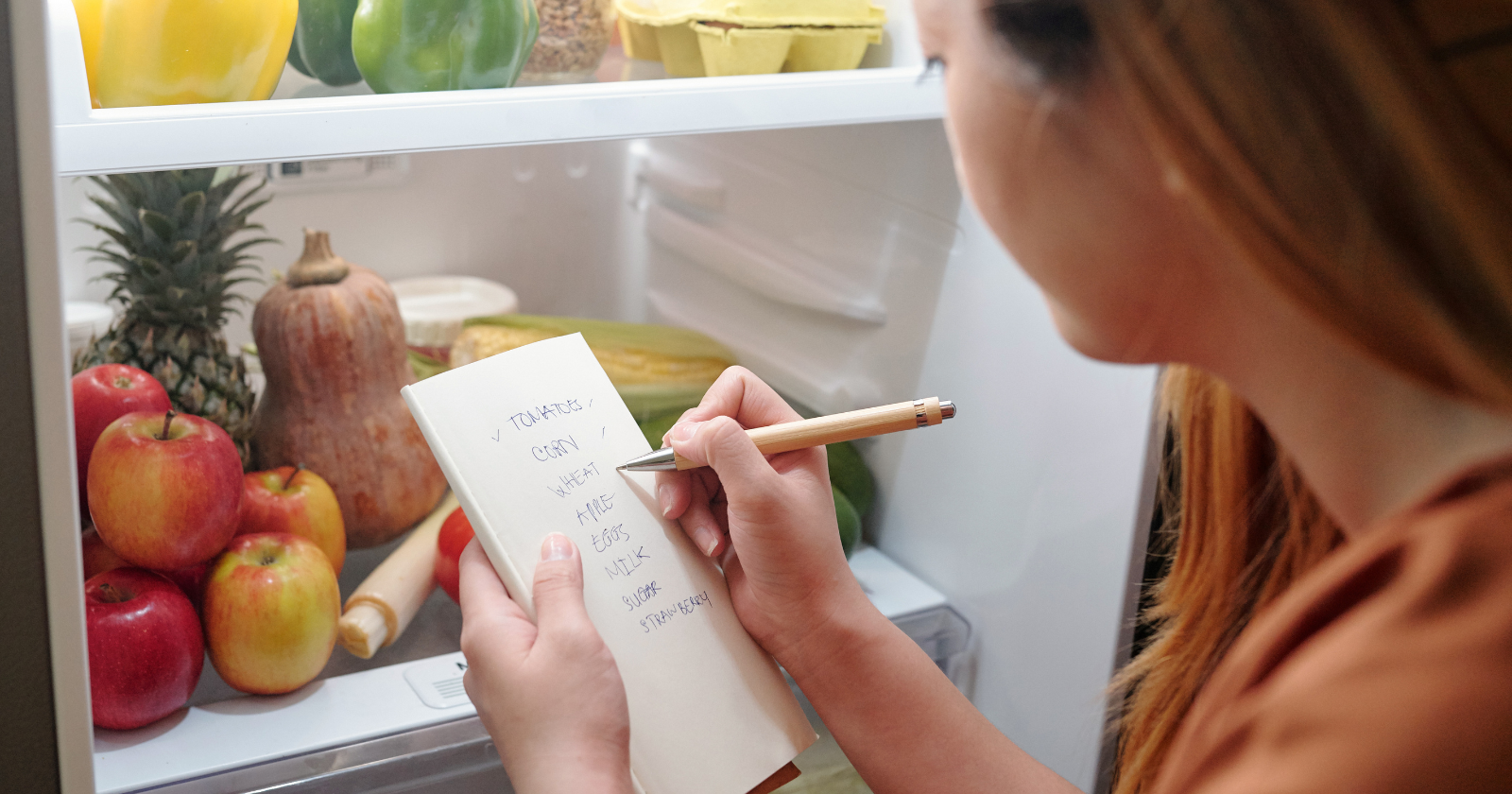
If you’re the kind of person who still scribbles the week’s shopping on the back of an envelope, you’re not just being old-fashioned. Researchers who study memory and consumer behaviour have looked closely at what happens when people write things down by hand instead of typing them, and the findings point to a set of recognisable tendencies among habitual list-writers.
A note on what the science does and doesn’t show. No study has examined paper-list writers and found seven fixed personality traits stamped into their brains. What the research reveals is narrower and arguably more interesting: why people store intentions outside their heads, how shopping lists shape what ends up in the cart, and what changes when a list is written rather than typed.
The seven tendencies below are drawn from that evidence. Think of them as patterns the research supports rather than a diagnostic test. A phone-list user might recognise themselves in a few of these too. But if you reach for pen and paper every week, chances are most of them will sound familiar.
There is real research on paper and digital shopping lists
The closest direct evidence comes from a 2018 paper by marketing researchers Yanliu Huang and Zhen Yang in the Journal of the Association for Consumer Research. Across three studies comparing paper and digital shopping lists, the researchers assigned participants to create one kind of list or the other. Two studies then followed their real grocery trips. The final analyses in those studies included 106 and 126 people.
People assigned to paper wrote more products and listed items that were, on average, less hedonic. They also bought more of what they had planned. The authors reported up to 24 percent more planned purchases among paper-list shoppers and up to 30 percent more unplanned purchases among digital-list shoppers.
That sounds like a clean win for paper, but it is not the last word. The two shopping follow-ups lost many participants before the final analysis. The authors’ explanations, including greater involvement and commitment when writing, are plausible mechanisms rather than facts established for every shopper. The result is a finding from these datasets, not a universal rule about everyone.
A list is memory placed in the world
1. You deliberately offload mental work
Psychologists use the term cognitive offloading for actions that change a task so it demands less internal processing. Tilting a map, setting an alarm and writing down groceries all qualify. Instead of keeping “coffee, onions, batteries” active in memory, you let the page preserve them.
That is not evidence of poor memory. It is often a sensible response to memory’s limits. Lauren Block and Vicki Morwitz demonstrated this in a field study published in the Journal of Consumer Psychology in 1999. Over two months, they compared a panel of shoppers’ lists with their purchases. Shoppers wrote down about 40 percent of the products they eventually bought, and purchased more than 80 percent of the items they had listed. The list was an effective external memory aid, even though it did not contain everything that entered the cart.
2. You make practical judgments about what you might forget
Deciding to write “olive oil” but not “bread” requires an estimate of future memory. Researchers call that estimate metamemory.
In four experiments reported in Cognition, participants chose which word pairs to save on a computer. They tended to offload the more difficult pairs, and their confidence about future recall predicted those choices. The work connects external memory use with metacognitive evaluation.
A habitual paper-list writer may therefore be practicing a quiet form of calibration: this is important, this is forgettable, and the cost of recording it is low. That is an inference from the experiments. The researchers did not study paper-grocery-list personalities.
The medium can change how a plan is treated
3. You prefer intentions that feel concrete
In the 2018 comparison, paper-list participants later made more planned purchases. Huang and Yang proposed that handwriting demanded more involvement, which increased commitment to fulfilling the list.
The purchase results support a difference between the groups. The psychological explanation is less secure. Handwriting might increase commitment, but paper and phone lists also differ in visibility, ease of editing, familiarity and the other things a phone can do. The study cannot make all those differences disappear.
Still, the pattern is consistent with a preference for turning a vague intention into a bounded plan: these are the things I came to buy.
4. You select rather than merely capture
Paper offers no suggestions, saved catalog or autocomplete. Each entry must earn a small act of attention. In Huang and Yang’s experiments, paper lists contained more items but those items were less hedonic on average. The authors interpreted this as more effortful planning centered on functional needs.
It would be an overreach to call paper users less impulsive people. The study measured lists and purchases in a specific setting. A narrower reading is that handwriting may encourage a more selective planning mode during this task.
5. You like cues that remain visible and spatially stable
A scrap of paper does not hide an item below a menu or rearrange after something is checked. Crossed-out words remain in place. Arrows, clusters and aisle headings can turn the list into a rough map.
Laboratory research helps explain why that could be useful. In a series of experiments titled “Lost in the supermarket”, Sage Boettcher and colleagues tested whether people could restrict memory search to the currently relevant part of a remembered set. Participants often failed to narrow the search when the relevant subset changed from trial to trial, although they did better when one subset stayed relevant across a run.
This was not a test of paper lists in real stores. It does show that keeping mental categories neatly partitioned has a cost. A visible page can make the partition explicit.
Sometimes paper wins by doing less
6. You may be protecting a simple task from interruptions
A digital list sits on the same device as messages, calls, headlines, loyalty offers and social feeds. A paper list does one thing.
In a 2015 experiment in the Journal of Experimental Psychology: Human Perception and Performance, Cary Stothart and colleagues recruited 212 undergraduates. After exclusions, the analysis included 166. Calls and text notifications disrupted performance on a sustained-attention task even when participants did not look at or handle the phone. The study was conducted in a laboratory, not a supermarket, and it does not show that paper shoppers pay better attention. It does establish that an alert can impose an attentional cost without a person opening it.
For someone who dislikes that possibility, paper can function as a small boundary rather than a nostalgic statement.
7. You keep tools that fit the job
Paper is immediately visible, accepts any scribble, needs no battery and can live beside the refrigerator. Phones are harder to lose, easy to share across a household, searchable and capable of sorting items automatically. Which one is better depends on the household and the task.
Persisting with paper may indicate practical tool loyalty: once a low-friction system works, novelty alone is not a reason to replace it. But even this is context-dependent. Someone may write the list on paper, photograph it before leaving and use the image in the store. Human strategies are often hybrids, not identity labels.
Paper is not scientifically superior
A broader view of the evidence keeps the conclusion modest. Lois Burnett and Lauren Richmond published two meta-analyses of cognitive offloading in Memory & Cognition in 2026. Offloading generally benefited performance on memory-based tasks and reduced differences between individuals. Crucially, the modality of the external aid was not a significant moderator. Across that literature, putting information somewhere accessible mattered more consistently than whether the storage medium was paper or digital.
Offloading can also weaken what remains in internal memory. In two preregistered experiments, Megan Kelly and Evan Risko told some participants that a study list would be available during a later test. Expecting access changed study time and strategy use. When no one ultimately received the list, people who had expected it recalled less. The finding suggests a memory cost when an external store is assumed to be available. That trade-off applies to paper as well as screens.
So what does a handwritten grocery list really say? At most, it points to seven tendencies in one ordinary activity: deliberate offloading, awareness of memory limits, concrete planning, selective attention, a liking for stable cues, protection from interruptions and loyalty to a tool that fits.
Those are reasonable interpretations of the evidence. They are not a personality test, and they don’t need to be. The honest conclusion is smaller, and more human: people build environments that help them remember, and they keep the methods that make everyday life easier.