

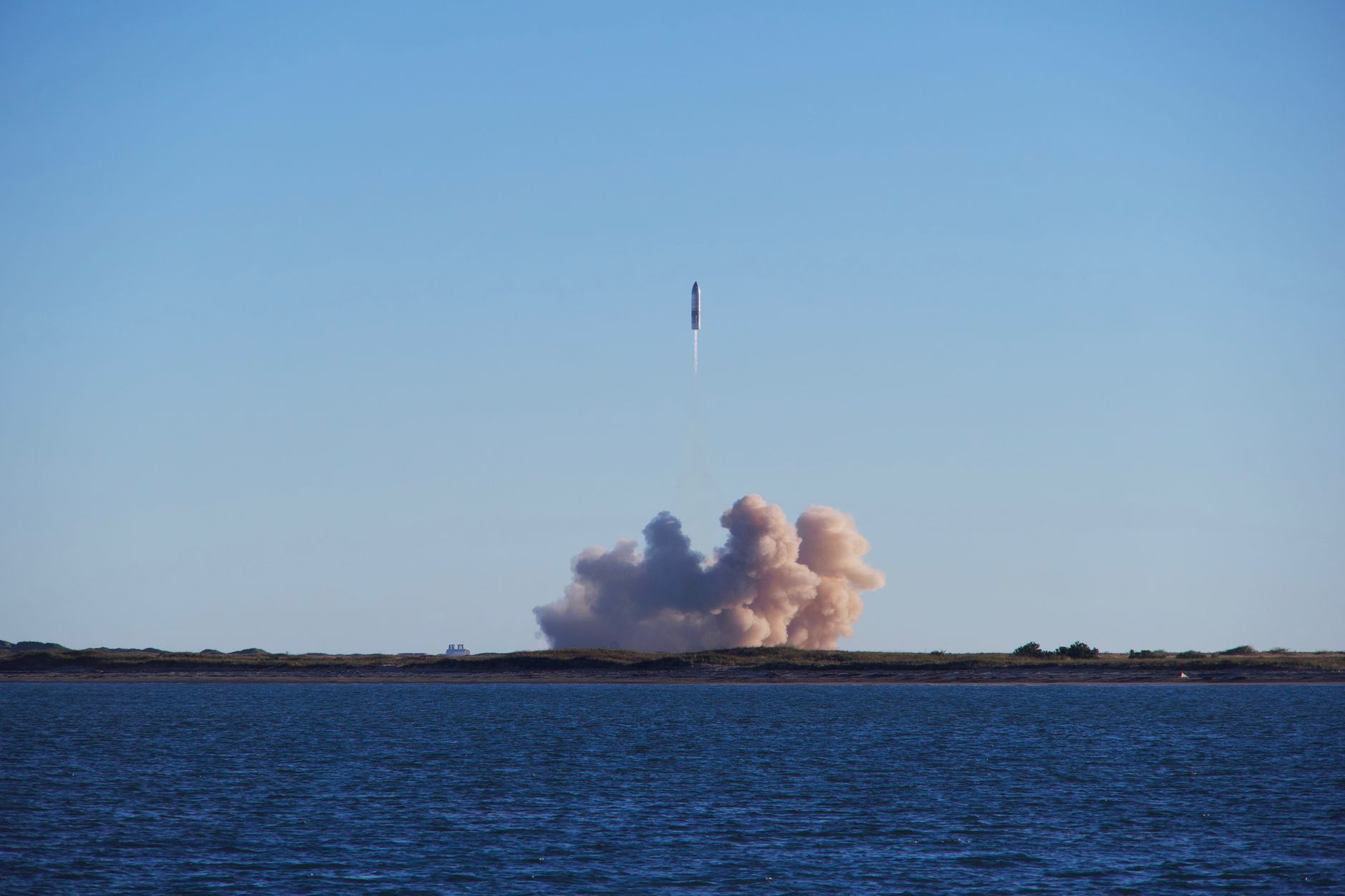
SpaceX’s newest Mars date belongs to a sequence that now spans ten years. In 2016 the company proposed landing a modified Dragon capsule on Mars in 2018. In 2017, Elon Musk moved the first cargo landings to 2022. In 2024, he said uncrewed Starships would leave during the 2026 transfer window. SpaceX’s current website now offers cargo flights to the Martian surface starting no earlier than 2028.
That record is not a story of doing nothing. SpaceX made reusable orbital boosters routine, built the largest launch vehicle ever flown and pushed Starship through repeated integrated tests. It is a story about the difference between a development target and a dependable schedule. The machines have advanced dramatically; the announced Mars landing has remained a few years away.
2016: Red Dragon aimed for Mars in 2018
On 27 April 2016, SpaceX announced that it intended to send uncrewed “Red Dragon” spacecraft to Mars as early as 2018. The plan used a modified Dragon 2 capsule launched by Falcon Heavy. NASA would supply technical support through an unfunded Space Act Agreement and, in return, gain data relevant to landing heavy vehicles with rocket engines.
The mission was a real engineering study, not only a rendering. NASA’s record for the cooperative landing-technology project says the SpaceX-led Mars flight demonstration was suspended. Red Dragon disappeared when SpaceX abandoned propulsive landings for Crew Dragon and redirected its Mars effort toward a much larger reusable transport.
That distinction matters. The 2018 date was not merely moved while the same spacecraft waited on a launch pad. The architecture was replaced. SpaceX learned from Dragon and Falcon development, but no Red Dragon flew to Mars and no direct successor attempted the promised landing.
2017: two cargo ships were targeted for 2022
By September 2017, Musk was presenting the BFR, the ancestor of Starship, as the new route to Mars. SpaceX’s own transcript of the presentation says the first two cargo missions would target the 2022 rendezvous. Two cargo ships and two crew ships were then meant to follow in 2024.
The first landing would search for the best water source. The next missions would establish power, mining and propellant-production equipment so later ships could refuel for the trip home. Musk explicitly said 2022 was “not a typo,” while also calling it aspirational.
Neither date survived contact with the development programme. Starship’s first integrated test flight did not occur until April 2023, one year after the proposed cargo landing and only a year before the proposed crew arrival. The vehicle itself changed repeatedly in dimensions, engines, materials, control surfaces and staging method.
2024: the next uncrewed target became 2026
After Starship began integrated flight testing, the Mars calendar tightened again. On 7 September 2024, Musk wrote that the first Starships would launch for Mars in two years, when the next Earth-Mars transfer window opened. They would fly without crews to test “the reliability of landing intact on Mars.” Crewed flights could follow in four years if the landings succeeded.
This version contained an important dependency: people would not go until uncrewed ships proved they could survive entry and landing. But the date still assumed SpaceX could complete major Earth-orbit milestones, prepare a Mars variant and launch during a narrow planetary window in roughly two years.
The 2026 opportunity passed without a SpaceX vehicle departing for Mars. By then Starship had flown multiple increasingly capable tests, but it had not demonstrated the chain of operations required for a Mars attempt, including ship-to-ship propellant transfer in orbit.
2026: the official floor is now 2028
The language currently published on SpaceX’s Mars page is more commercial and more cautious. It says Starship cargo flights to the Martian surface for research, development and exploratory missions start “no earlier than 2028,” with an advertised rate of $100 million per metric ton.
“No earlier than” does not guarantee a 2028 landing. It sets the first possible date in the company’s present offer. SpaceX could still move the mission again if the vehicle, payload, approvals or launch campaign are not ready.
Celestial mechanics makes each miss unusually visible. Good Earth-to-Mars transfer opportunities recur about every 26 months, so a schedule that slips beyond one window often advances to the next in a two-year step. The sequence from 2022 to 2024 to 2026 to 2028 partly reflects that orbital clock, but the clock does not cause the engineering delays.
The 2028 wording also differs from Musk’s earlier declarations. It appears on a page offering cargo capacity and inviting prospective customers to contact SpaceX about payloads, pricing and timing. That makes it an active commercial statement, although the qualifier preserves room for the first flight to occur later.
The progress is real, and so are the missing demonstrations
It would be wrong to treat the slipping dates as evidence that SpaceX has stood still. Falcon 9 booster landing and reuse moved from experiment to routine service. Starship progressed from short prototype hops to flights through space, controlled atmospheric entries, test payload deployment and attempts to recover both stages.
SpaceX’s thirteenth integrated flight test in July 2026 continued that iterative programme. Each flight can retire risks, reveal new failure modes and validate redesigned hardware. None, however, has sent a Starship beyond Earth orbit or landed one on another world.
A Mars cargo mission also requires more than a powerful launch. Starship must operate reliably in orbit, receive a very large load of cryogenic propellant, restart engines after long coast periods, navigate for months and survive entry into an atmosphere that is too thin for conventional parachutes to land such a massive vehicle. NASA’s March 2026 audit of its lunar-lander contracts documented delays in related Starship capabilities, including propellant transfer and an uncrewed landing demonstration.
Landing is only the first threshold. Useful cargo must survive, communicate and operate on the surface. ScienceBlog’s coverage of NASA’s MOXIE oxygen-production experiment on Mars illustrates how even one piece of the eventual surface infrastructure requires dedicated testing.
Planetary protection, deep-space communications and mission operations add further work that ordinary test flights near Earth do not exercise. An uncrewed demonstration can accept more risk than a human mission, but it still needs enough control and telemetry to produce useful results rather than simply reaching the planet.
Deadlines can motivate without predicting
SpaceX develops hardware through rapid iteration: set an aggressive objective, build, fly, examine the failure and change the next vehicle. Bold internal deadlines can compress decisions and keep an organisation focused. Musk’s public dates often resemble that management method extended into public communication.
The problem is that an aspirational date and a forecast answer different questions. An aspiration asks how quickly a mission might happen if development proceeds exceptionally well. A forecast asks when it is likely to happen after accounting for testing, regulation, manufacturing, launch infrastructure and setbacks. SpaceX’s Mars dates have repeatedly behaved like the first while being heard as the second.
None of this establishes that SpaceX will fail to reach Mars. It establishes that the calendar has been a poor measure of how close the company is. The reliable evidence is the hardware it has demonstrated, not the year attached to the next presentation or sales page.
In 2016 the earliest landing was 2018. In 2017 it was 2022. In 2024 it was 2026. The current floor is 2028. The technology has advanced, the destination has not changed, and no SpaceX spacecraft has yet landed on Mars.