

On most maps, Basque looks like a regional language tucked into a small corner of western Europe. It belongs to the western end of the Pyrenees and the Bay of Biscay, crossing the modern border between Spain and France. In linguistic terms, though, it is something far stranger: a living language with no accepted living relatives.
Most languages around it belong to the Indo-European family. Spanish, French, English, German, Greek, Hindi and Persian all share distant ancestry. Basque, or Euskara, does not fit into that family. Glottolog lists Basque under its own classification record, with the language identified by the glottocode basq1248 and ISO 639-3 code eus. WALS likewise places Basque in its own Basque family and genus, spoken in Spain and France.
That is what linguists mean when they call Basque a language isolate. It does not mean the language appeared from nowhere. It means that, using the evidence available, scholars have not been able to connect modern Basque genealogically to any other living language. It is not a cousin of Spanish, not a branch of Celtic, not a hidden survivor of Latin and not a remnant that can be comfortably placed inside Europe’s familiar language tree.
A language at the edge of the mountains
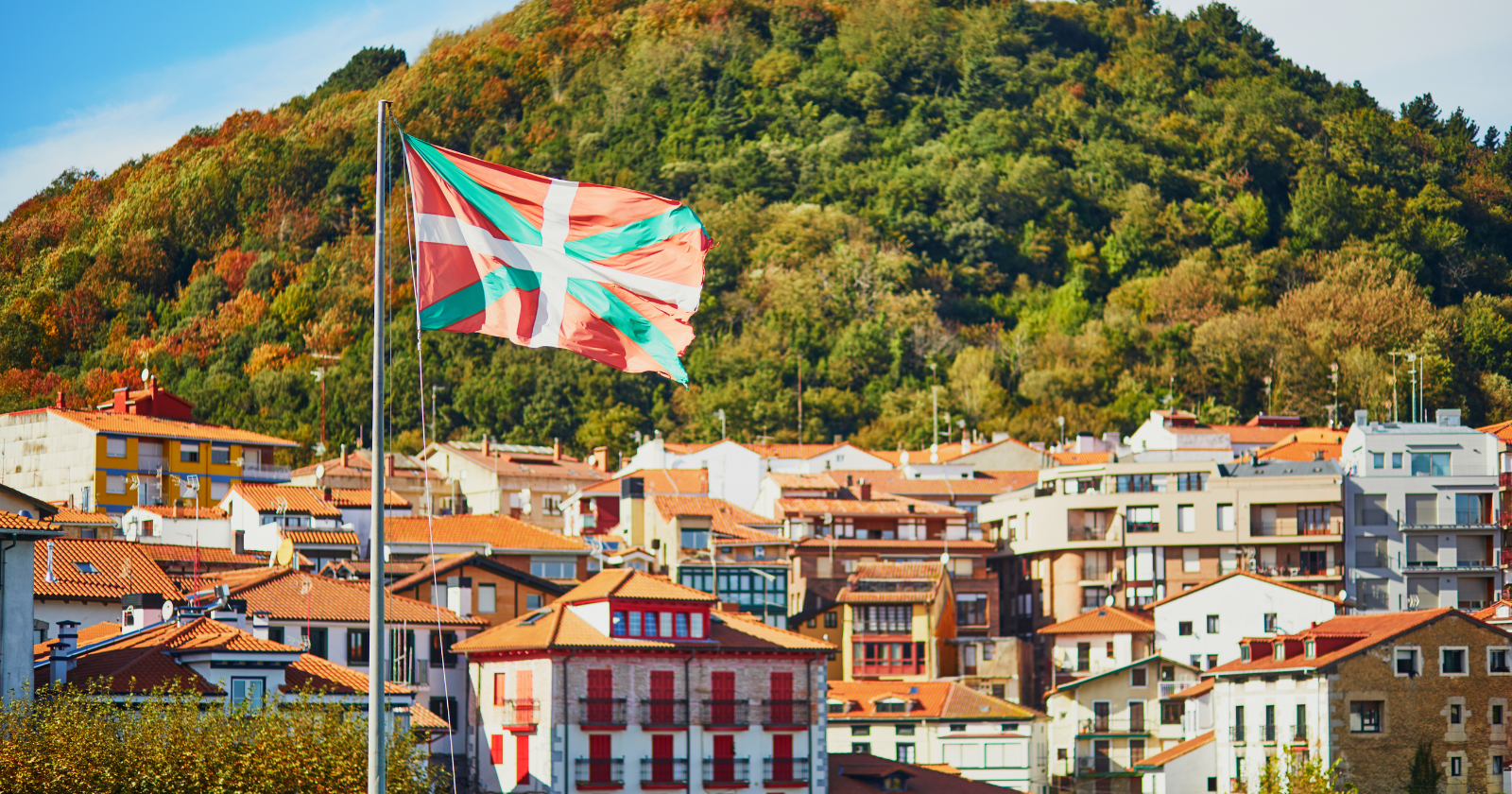
The geography matters because Basque has survived in a region that is both exposed and sheltered. The Etxepare Basque Institute describes Euskara as the language spoken on both sides of the western end of the Pyrenees. On the Spanish side, that includes Alava, Bizkaia, Gipuzkoa and Navarre. On the French side, it includes Labourd, Lower Navarre and Soule. Together, those territories are often referred to as Euskal Herria.
The mountains did not seal the language away from history. Basque speakers lived near Roman roads, medieval kingdoms, Atlantic trade routes, Spanish and French state power, industrial towns, migration and modern schooling. The language survived not by avoiding contact, but by enduring it.
That contact left marks. Basque borrowed words, adapted to new institutions and coexisted with powerful neighbors. Yet borrowing vocabulary is different from belonging to a language family. English has borrowed heavily from French and Latin, but it remains a Germanic language. Basque has absorbed influence from surrounding languages, but its deeper structure and historical record still resist placement among them.
The island metaphor is useful, but imperfect
Calling Basque a linguistic island captures the shock of its isolation, but it can also make the language sound frozen. It is not. Basque has dialects, registers, literature, media, classrooms, political history and daily speech. It is a living language, not a fossil preserved behind glass.
The Etxepare Institute’s overview says the wider Basque-speaking region has a population of around three million people, with some 900,000 Basque speakers. That number gives the language a scale that is easy to miss if one only hears the word “isolate.” Basque is unusual, but it is not merely a scholarly curiosity.
Its survival also depends on social life, not just grammar. Languages live when people use them at home, in jokes, in arguments, in songs, in classrooms, in text messages and in the ordinary maintenance of relationships. A language with no living relatives can still have a large living community around it.
Older than the states around it
Basque’s precise origins remain debated, and sweeping origin stories tend to outrun the evidence. What is clear is that the language predates the modern political map surrounding it. The Spanish and French states are recent compared with the long human history of speech in the western Pyrenees. Latin came, Romance languages developed, borders hardened and softened, and Basque remained.
That continuity is part of why Basque attracts so much fascination. In Europe, where language families are often used to narrate migration, conquest and ancestry, Basque interrupts the tidy story. It is a reminder that some human histories do not fit neatly into the categories later scholars use to explain them.
The point is not that Basque is unchanged from prehistory. No living language is unchanged. Sound systems shift, words appear and disappear, dialects diverge, writing conventions develop and speakers make new choices. The remarkable part is that Basque has kept a distinct identity through those changes while surrounded by unrelated, politically dominant languages.
Survival has had to be remade
Language survival is often imagined as passive endurance, as if a language simply waits out history. Basque shows the opposite. Its continued life has involved families, schools, writers, broadcasters, local institutions, scholars and speakers who decided the language should remain useful in modern life.
That usefulness now extends into technology. A 2024 paper introducing Latxa, an open language model and evaluation suite for Basque, describes work on tools for a low-resource language that needs digital infrastructure to remain visible in the age of large language models. The existence of such work says something important: a linguistic isolate can be ancient in origin and still thoroughly contemporary in its problems.
This is one of the quieter challenges facing smaller languages. It is not enough to survive in memory or identity. A language increasingly needs keyboards, search results, speech tools, translation systems, educational materials, software support and enough written data to be included in the technologies that shape everyday communication.
What Basque teaches us
Basque is often described by what it lacks: no living relatives, no secure family tree, no easy place in the Indo-European story. But that negative description can obscure the richer lesson. Basque is not defined only by isolation. It is defined by continuity, adaptation and the persistence of a community that kept speaking.
Its existence pushes against a simple view of history as a sequence of winners replacing what came before. Empires, kingdoms and states can redraw borders, impose schools, reshape economies and elevate official languages. They do not always erase the older voices beneath them.
Basque has survived because language is not carried only by armies or governments. It is carried by households, villages, towns, teachers, readers, singers and children who learn what the surrounding world did not necessarily require them to learn.
That makes Basque more than a curiosity of classification. It is a living counterexample to the assumption that small languages must eventually dissolve into larger ones. In the western Pyrenees, one language has stood apart for centuries, not untouched by history, but still unmistakably itself.