

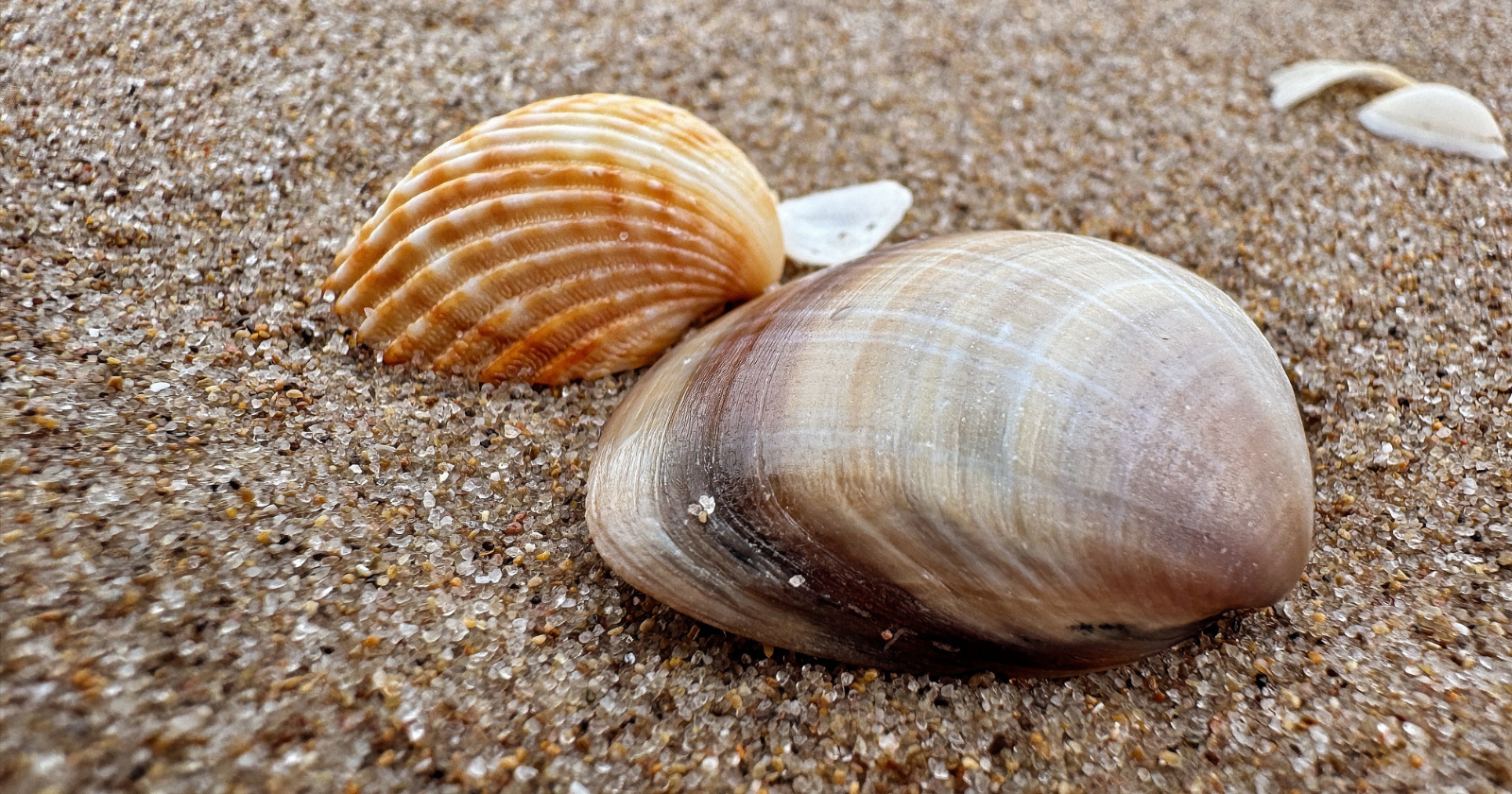
The animal that became famous as Ming did not look like a record holder.
It was an ocean quahog, Arctica islandica, a hard-shelled clam pulled from the seabed off Iceland during a 2006 research cruise. It was not huge, dramatic, or visibly ancient. To the scientists collecting shell samples, it was one specimen among many in a study of North Atlantic climate history.
Only later did the scale of the mistake become clear. The clam was not merely old. It was eventually judged to have been 507 years old, making it the oldest known individual non-colonial animal whose age had been reliably measured.
By the time researchers knew that, the animal was already dead.
The rings told the story
The age estimate came from the shell. Like trees, ocean quahogs lay down growth bands that can be counted and compared across specimens. The field that studies such records is called sclerochronology, and for long-lived clams it can turn a shell into a dated archive of the sea.
In 2007, researchers announced that one Icelandic ocean quahog was about 405 years old. A BBC report on the original finding described scientists counting annual growth rings in the shell, a method close in spirit to counting tree rings.
That alone would have made the clam extraordinary. A 405-year-old animal would have begun life around the time Shakespeare was writing and Galileo was looking upward.
But the first count turned out to be low.
The age was revised upward
Later work on Arctica islandica shells from the North Icelandic Shelf showed that these animals could be used to build long climate records. In a 2013 study in Palaeogeography, Palaeoclimatology, Palaeoecology, Paul Butler and colleagues reported a 1,357-year marine climate archive based on annual growth increments in the species.
That same body of work led researchers back to the old record-holding shell. A more careful count, using the outer shell margin and cross-matching growth patterns with other shells, pushed the age of the famous clam to 507 years.
That means the animal probably began life around 1499. It was alive before the first circumnavigation of the globe, before the telescope, before modern biology, before the Industrial Revolution, and before anyone had a vocabulary for the kind of climate records its shell would one day preserve.
The nickname Ming came from the Chinese dynasty ruling when the clam was born.
Did scientists kill the oldest animal?
The short answer is yes, though the story is more awkward than malicious.
The clam was collected as part of a research programme, preserved with other specimens, and later opened and sectioned so the growth bands could be counted. The researchers did not know they were handling a 507-year-old animal when they collected it. Its exceptional age could only be recognised after the destructive analysis that made counting possible.
That is the uncomfortable paradox of Ming. The evidence of its age was locked inside the structure that helped keep it alive. To read the record clearly, scientists had to examine the shell in a way the animal could not survive.
This is why the story still circulates with a small shock attached to it. The oldest individual animal ever measured was not observed gently in place and left alone. It became known to science because it was removed from the seabed and studied after death.
Why ocean quahogs live so long
Ocean quahogs are not built for speed. They live buried in cold North Atlantic sediments, filter feeding and growing slowly. In cold waters, growth can be seasonal and faint, producing the annual bands that make them useful to climate scientists.
The species’ slow pace is part of what makes it so interesting. A long-lived animal does not simply avoid predators for a few lucky years. It must maintain tissues, repair damage, reproduce, and survive environmental change over spans that exceed many human institutions.
Researchers are interested in these clams partly because their shells preserve environmental information, and partly because their longevity raises a biological question: how does an animal live for centuries without the visible decline expected in shorter-lived species?
The answer is not one simple trick. Temperature, metabolism, growth rate, habitat, reproductive strategy and cellular maintenance may all matter. The point is not that Ming was immortal. It was not. The point is that its ordinary life history stretched across half a millennium.
A climate archive in a shell
Ming’s age is the headline, but the scientific value of ocean quahogs is broader than one record-breaking individual.
Because the clams add annual growth increments, their shells can be matched against each other to form chronologies, much as tree rings can be used to build records on land. Those shell records can hold clues about past ocean conditions, including changes in temperature and productivity.
That is why researchers were collecting the animals in the first place. They were not hunting for the oldest creature on Earth. They were trying to reconstruct the history of the North Atlantic from the hard tissues of animals that had quietly recorded it.
In that sense, Ming was both an animal and an archive. Its shell held a private biological history and a public environmental one.
The strange sadness of the record
There is a temptation to turn Ming into a parable about human carelessness. That is not entirely unfair, but it is too simple.
Science often learns from specimens after they are dead. Museums, shells, bones, cores and tissues all carry information that living observation cannot easily provide. The discomfort here comes from the mismatch between the animal’s hidden age and the routine nature of the sampling.
If the researchers had known what they had, Ming might have been treated differently. But without the analysis, they could not have known.
That loop is what makes the story linger. The clam survived for 507 years in cold water and darkness, through empires, extinctions, wars, voyages and revolutions, only to be recognised as ancient after the act that ended its life.
The shell remains as evidence. The animal does not.