
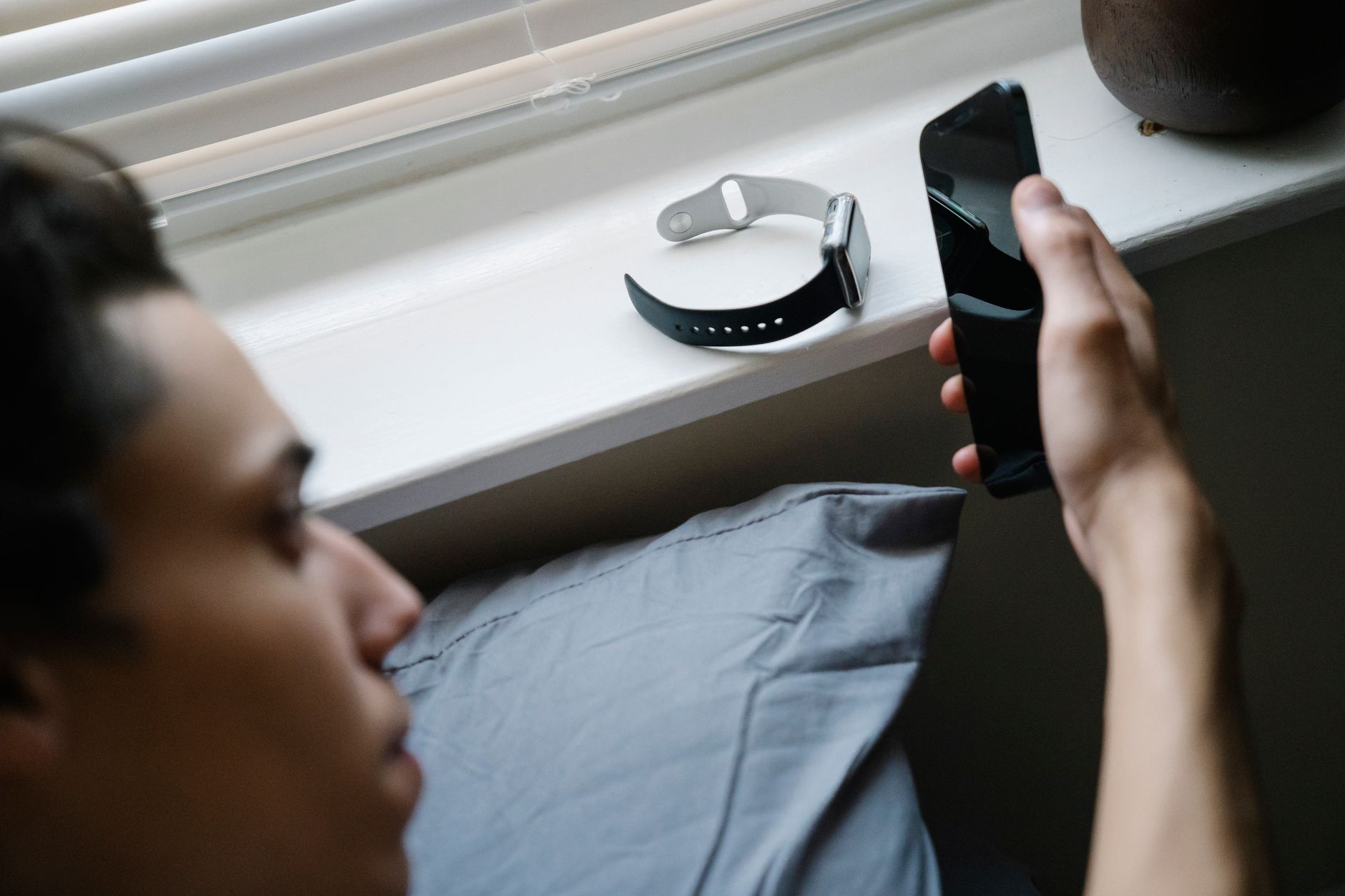
Your smartwatch already notices patterns that are easy to miss: a slightly different resting heart rate, a run of broken nights, or a gradual change in daily movement. Researchers are now asking whether those ordinary signals, combined with environmental data from a phone, could also reveal subtle changes in cognition and mood between occasional clinic visits.
This is one study, not settled consensus. It did not show that a consumer device can diagnose Alzheimer’s disease, depression, or any other condition before a person notices symptoms. It followed cognitively healthy adults and tested whether machine-learning models could estimate their scores on questionnaires and cognitive tasks. The results are promising in places, but far more preliminary than the idea of a watch that can warn you about neurological disease.
Ten months of life, reduced to patterns
For the study, published in npj Digital Medicine, researchers at the University of Geneva recruited adults aged 45 to 77 from Switzerland and neighboring areas of France. Although 88 volunteers entered the project, the published analysis used data from 82.
Participants wore a Withings Steel HR smartwatch and used a dedicated smartphone app for ten months. The watch passively recorded heart rate, sleep, physical activity, and related measures. The phone app supplied environmental information such as weather and air pollution, while also delivering the study’s active assessments.
Every three months, participants completed validated questionnaires covering stress, anxiety, depression, memory complaints, and other emotional or cognitive experiences. They also performed tasks measuring attention, reaction time, inhibition, verbal fluency, finger tapping, processing speed, and cognitive flexibility. In all, the researchers tried to predict 21 outcomes from 38 usable passive measures.
The phrase “your phone knows” needs care here. The researchers were not reading private messages, browsing history, or the content of participants’ taps. Nor were the devices recording brain activity. They were looking for statistical relationships between everyday physiology, behavior, environmental exposure, and later test or questionnaire scores.
The result was mixed, not magical
Some of the models produced low prediction errors. Self-reported outcomes were generally easier to estimate than performance on cognitive tasks. Heart-rate patterns, sleep, weather, and atmospheric pollution frequently appeared among the most informative groups of predictors.
There is an important reality check in the paper. The researchers compared their models with a very simple baseline that predicted the population average for everyone. The machine-learning models performed significantly better than that baseline for only three outcomes: attention, cognitive flexibility, and one verbal-fluency measure. For 17 other outcomes, the improvement was not statistically significant. For hostility, the simple average actually performed better.
This does not make the study a failure. Beating a sensible baseline is difficult, especially with 82 participants and only four waves of active testing. But it means the headline cannot honestly be that a smartwatch accurately tracks every dimension of brain health. A better description is that passive data carried a detectable signal for a small subset of the measured abilities.
Why a personal baseline could matter
A conventional cognitive assessment is a snapshot. It may happen once a year, after a concern has already developed, and in a setting unlike ordinary life. A wearable can observe the rhythms of sleep, movement, and heart rate every day. That creates the possibility of learning what is normal for one person and flagging a sustained departure from that baseline.
This is where “before you notice it yourself” becomes plausible, although it was not directly demonstrated here. A small shift repeated across weeks may be statistically visible before it becomes disruptive enough to feel unusual. In principle, a future system might prompt a proper assessment when several signals move together rather than waiting for a single dramatic symptom.
Earlier research has explored more specific versions of this idea. A large remote study involving more than 23,000 adults used iPhones and Apple Watches to examine cognitive health and mild cognitive impairment. Its initial Nature Medicine report supported the feasibility of remote cognitive assessment, though its proof-of-concept classification relied on interactive cognitive-test data rather than passive watch readings alone.
ScienceBlog has also covered a study in which wrist-recorded activity patterns differed between cognitively healthy older adults with and without detectable brain amyloid. That was a narrower biological comparison, not a diagnosis, but it illustrates why researchers are interested in patterns that emerge long before a routine appointment can capture them.
The diagnostic leap has not been made
The Geneva participants were cognitively healthy, and the authors explicitly say their models were not intended or evaluated as diagnostic tools. The group was relatively small, predominantly drawn from a Western and highly educated population, and likely more digitally comfortable than the public as a whole. About a quarter completed assessments in a language that was not their first, which may have affected some scores.
The models were tested through internal cross-validation, not in a fully independent population. Daily summaries also flattened the minute-by-minute patterns that might contain useful information. On the other hand, a more detailed stream could increase false alarms and make privacy safeguards even more important.
A 2026 systematic review of 30 studies reached a similarly cautious conclusion. Passive digital tools showed promise for low-burden Alzheimer’s screening, but studies varied widely in their standards and often relied on internal validation. The review called for more diverse cohorts, consistent reporting, external testing, and privacy-preserving methods before routine use.
A signal is not a verdict
There is a genuinely interesting idea underneath the futuristic language. A watch does not need to understand a thought to detect that a person’s sleep, movement, heart rhythm, and performance have begun to drift from their usual pattern. Combining those weak signals may eventually give clinicians a timelier reason to look more closely.
But consumer wearables are not currently a substitute for clinical assessment, and an unusual dashboard reading is not evidence of brain disease. Device algorithms, missing data, illness, travel, medication, stress, and ordinary changes in routine can all alter the same measurements. Anyone concerned about new or worsening cognitive symptoms should seek qualified medical advice rather than interpret a watch score as a diagnosis.
For now, the study shows something modest but useful: everyday digital traces can reflect parts of cognitive and emotional life, and three cognitive measures contained signals that outperformed a simple average. Whether those signals can reliably reveal meaningful decline before a person notices it is the next question, not the answer already in hand.