In the sunken
Eagle’s nest
silted scripts
tell tales
of ancient skies,
mapped
against the
quickened pulse
and gentle sigh
of life.
Through time’s
unbending lens
stories unfold
in layers of earth –
a chronicle of climate
etched
into an empire’s
heart.
Cold spells,
lined up with
unseen storms
of pestilence,
disease,
death.
As if the Earth itself
sought to dim
the eternal flame.
Every stratum
a vestige
to the enormity
of life,
and the folly
of our designs.
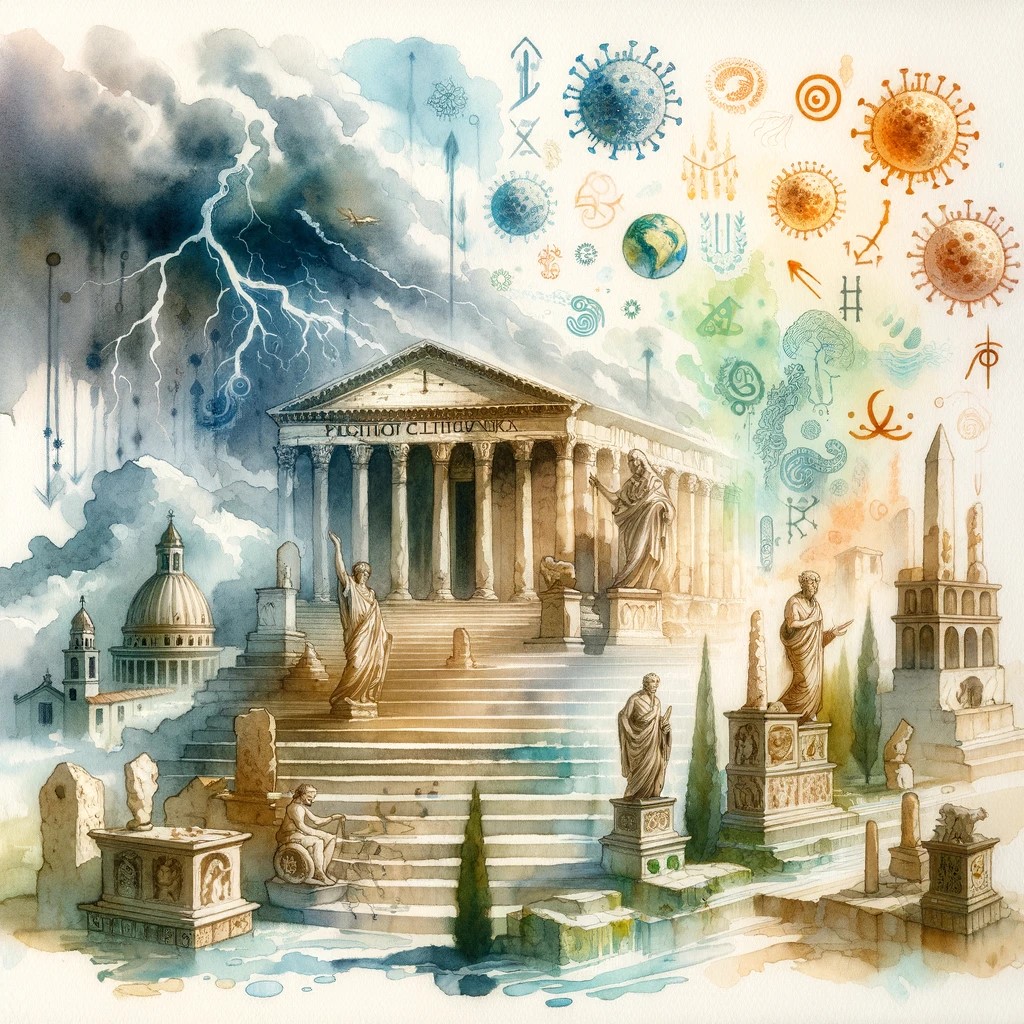
This poem is inspired by recent research, which has found that climate change likely triggered pandemics in antiquity.
Understanding how ancient societies dealt with natural climate changes can shed light on how people might respond to current environmental challenges and the connections between the environment and diseases. When we look into the past, particularly through detailed climate records that track changes over short periods of time, we gain insights into how environmental stresses influenced societies. Such records can tell us not only about the weather patterns but also about how these patterns may have affected health and the spread of diseases, especially when we can see these changes on a local scale.
This study presents a detailed climate history from 200 BCE to 600 CE, using marine sediments from Southern Italy to trace the Roman Empire’s zenith and decline. It provides the first detailed climate records (with a resolution of about every three years) for the empire’s heartland, revealing marked climate instability and cooling from 100 CE, intensifying after 130 CE. The research identifies specific cold spells – around 160 to 180 CE, 245 to 275 CE, and after 530 CE – that aligned with pandemic outbreaks. These findings indicate that climate shifts significantly influenced societal and biological factors, affecting ancient societies’ health and stability. The link between climate stress and disease highlights the importance of including health in current climate change risk assessments, highlighting the long-term interaction between human societies and their environment.