Hidden deep
in time,
a tapestry
of galaxies
lie blinking
in the gloam,
veiled in youth
beyond
the fading sight
of narrow bands
and prying eyes.
A distant,
fiery blaze
of giants
robed in red,
their burnished cloaks
a muted light
within the creases
of the cosmos.
Spectral isles cast
in dark’s embrace,
they drift
and play
like phantoms
in the night.
Their stories etched
in starlight’s trace,
ghostly glimpses
revealing more
than we could
ever dream
to see.
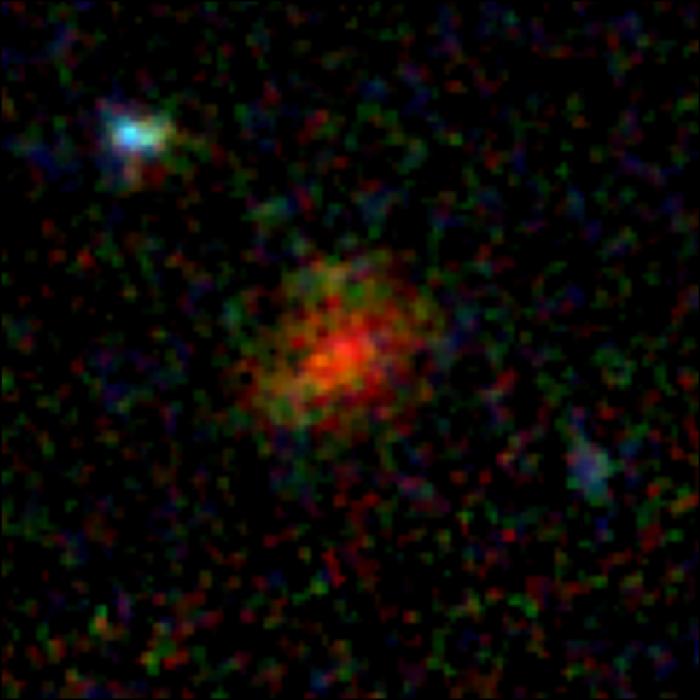
This poem is inspired by recent research, which has revealed distant galaxies, reshaping our understanding of the universe’s evolution.
In the vast expanse of space, far beyond what we can see with traditional telescopes, lies a mysterious group of galaxies that have remained hidden from us. These galaxies are incredibly distant, existing when the universe was much younger than it is today. Their great distance makes them hard to detect with normal optical telescopes, which use visible light. Instead, these galaxies shine brightly in far-infrared light, a type of light invisible to the naked eye and detectable only with special instruments. This intriguing phenomenon suggests that there are many more of these distant, star-forming galaxies than we previously thought, hinting at a rich and unexplored chapter in the universe’s history of galaxy formation and evolution.
Recent advancements in space telescopes have opened a new window into this hidden world. The James Webb Space Telescope (JWST), with its advanced capabilities, has been able to capture the light from these elusive galaxies. One such galaxy, known as AzTECC71, was discovered through its far-infrared glow, and confirmed by JWST. Previously undetected in the range of light visible to humans, AzTECC71 stands out as one of the reddest and most distant galaxies in the COSMOS-Web survey, an extensive study of the universe. The JWST’s observations reveal that AzTECC71 is both massive and incredibly bright in infrared light, like other galaxies of its kind that are hidden in the far reaches of space. This discovery suggests that the universe may be filled with many more such galaxies than we had imagined, potentially changing our understanding of how galaxies form and evolve over billions of years.
https://soundcloud.com/user-164143187/twilight-galaxies?si=908466ef3b7f4365b865399347ebc6da&utm_source=clipboard&utm_medium=text&utm_campaign=social_sharing