

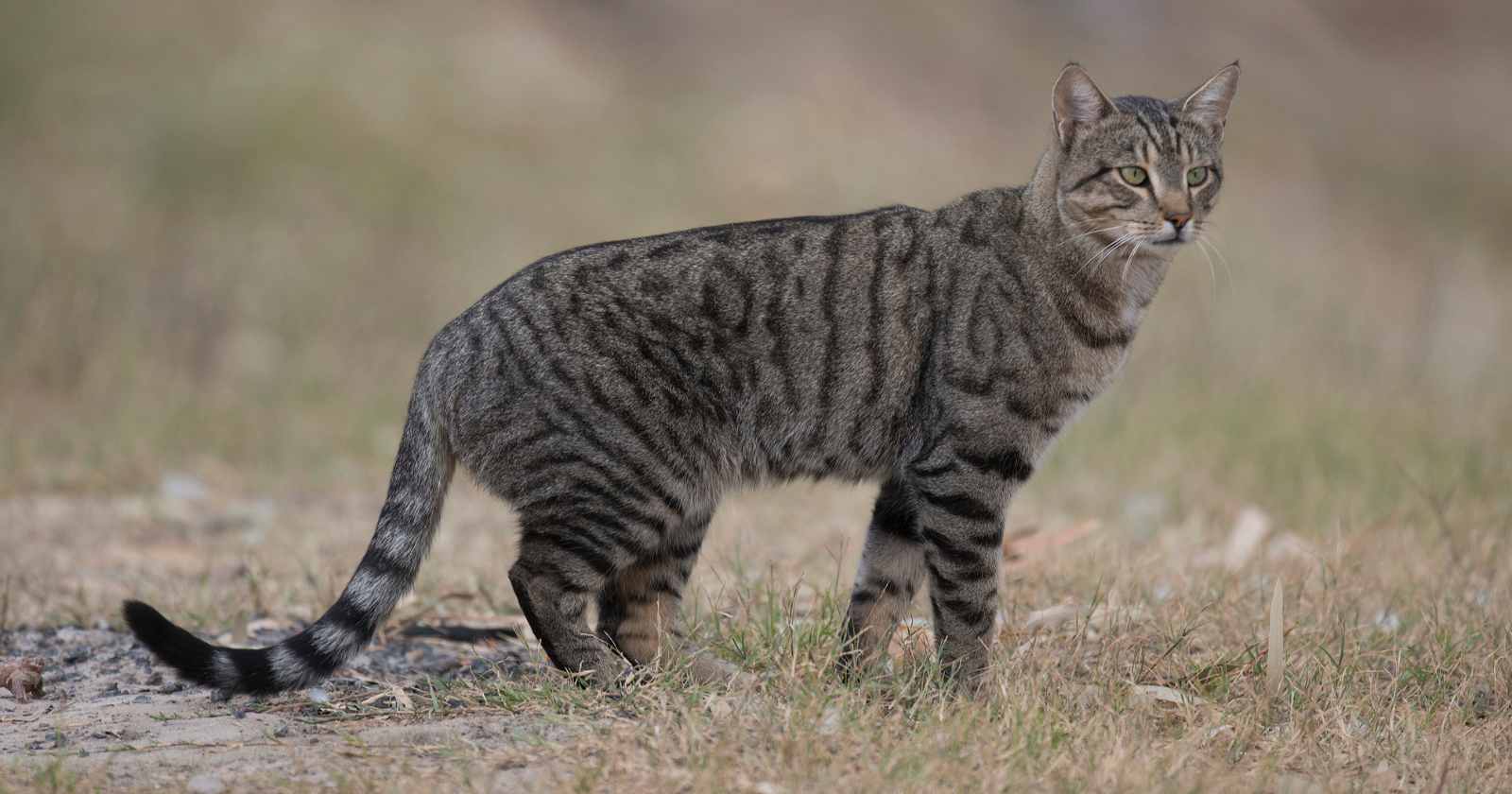
In the late 1940s, a weather station on a windswept island in the sub-Antarctic Indian Ocean had a mouse problem, and someone reached for the oldest fix there is.
Five domestic cats were landed on Marion Island in 1949 to deal with house mice that 19th-century sealers had accidentally brought ashore decades earlier. It reads like a reasonable decision. Cats catch mice. The station would be tidier for it.
What happened instead is perhaps one of the clearest cautionary tales in island conservation. The cats did not stay near the station, and they did not, for the most part, stick to mice. They turned on the island’s seabirds. Undoing the damage took most of two decades and 14,725 hours of hunting.
The five cats and the mice they were meant to hunt
Marion is the larger of the two Prince Edward Islands, about 290 square kilometres of rock, bog and moss, sitting roughly 2,300 kilometres southeast of South Africa.
The mice arrived by accident during the sealing era. The cats were a deliberate answer to them.
The trouble is that five cats on an island with no predators and plenty of food do not stay five cats. By the 1970s the feral population had climbed to an estimated 2,000. Nothing on the island hunted them. Nothing competed with them. And the mice were only ever part of the menu.
What the cats actually ate
Marion is a seabird island. Millions of petrels and prions breed there, and many of them nest underground, in burrows dug into the soft ground near the coast. To a cat, a burrow with a ground-nesting bird in it is easier work than a mouse.
The shift showed up early. The ornithologist R.W. Rand, who surveyed the island in the early 1950s, recorded that the cats had “gone feral and were preying on the smaller petrels or mice that are widespread over the coastal plain”, as quoted in Brian Huntley’s 2023 account of the island. A field note from the first years, not a hard count, but it points exactly where the damage went.
By the 1970s someone had put a number on it. Cats on Marion were killing an estimated 450,000 seabirds a year. One species, the common diving petrel, was gone from the island by 1965, wiped out entirely.
The scale of the loss, and an island with no defences
Why did it compound so fast? Part of the answer is that the birds had never needed to guard against a ground-hunting mammal.
Dena Spatz and Nick Holmes, writing for the UNESCO Courier, put the pattern plainly: “Island species often evolved in the absence of predation, competition, or herbivory.” Nest in the open, nest underground, sit tight when something approaches. On a mainland, those habits would have been bred out over time by predators. On Marion, for thousands of years, there was nothing to breed them out.
So the cats found a food supply with no defence against a stalking predator, on an island where their own numbers had no ceiling. Five animals became a machine for killing half a million birds a year, and it happened within a single human lifetime.
This is not a one-off. Invasive predators have been blamed for a large share of recent animal extinctions, and a sizeable fraction of the world’s seabird species are now considered threatened. Marion is one sharp example of a pattern that has played out on islands the world over.
The eradication that took most of two decades
Getting the cats off again was slow, grim work done in stages. The first major attempt was disease. A cat virus, feline panleucopaenia, was introduced in 1977 and worked for a while. Numbers fell from about 3,400 in 1977 to about 615 in 1982, but the disease alone did not finish the job.
What finished the job was people, on foot, at night, for years. An intensive hunting campaign began in 1986, with trapping and poisoning added later. In its first four years, as J.P. Bloomer and M.N. Bester reported, “Eight hundred and seventy-two cats were shot dead and 80 trapped during 14 725 hours of hunting.” That figure covers the opening four years alone. The last cat was trapped in July 1991, with searches continuing until 1993 to check that none remained.
Even then the team held off declaring success, confirming the cats were truly gone only after over nine years without a single sighting. Marion remains the largest island ever cleared of feral cats, at around 29,000 hectares.
What Marion taught conservation
The happy ending would be that the birds all came back. Some have. Anton Wolfaardt, of the Mouse-Free Marion Project, welcomed the return of the diving petrel, the species lost in 1965, calling it “wonderful that the previous eradication of feral cats has led to the recolonisation of the island by Common Diving Petrels.” Clearing the cats does seem to have opened the door for the species to return.
The harder lesson is what the birds did not do. The number of burrows on Marion has risen only about 56% since 1979. The likely reason is the problem the cats were brought in to fix in the first place. The mice are still there, and they now attack petrel eggs and chicks themselves, which is why a fresh campaign is underway to remove them too.
Perhaps the real lesson Marion offers is less about cats than about how little slack an island has. A mainland absorbs a new predator badly but slowly, with prey that already carry some defence. An island absorbs nothing. The prey has no answer, the predator has no natural check, and a decision that looked sensible on the day, five cats for a mouse problem, turns into hundreds of thousands of dead birds a year before anyone has finished worrying about the mice. Undoing it took 14,725 hours of hunting and the better part of two decades. Causing it took an afternoon of good intentions.