Skip to content
ScienceBlog.com
  • Featured Blogs
    • EU Horizon Blog
    • ESA Tracker
    • Experimental Frontiers
    • Josh Mitteldorf’s Aging Matters
    • Dr. Lu Zhang’s Gondwanaland
    • NeuroEdge
    • NIAAA
    • SciChi
    • The Poetry of Science
    • Wild Science
  • Topics
    • Brain & Behavior
    • Earth, Energy & Environment
    • Health
    • Life & Non-humans
    • Physics & Mathematics
    • Social Sciences
    • Space
    • Technology
  • Our Substack
  • Follow Us!
    • Bluesky
    • Threads
    • FaceBook
    • Google News
    • Twitter/X
  • Contribute/Contact

MIT

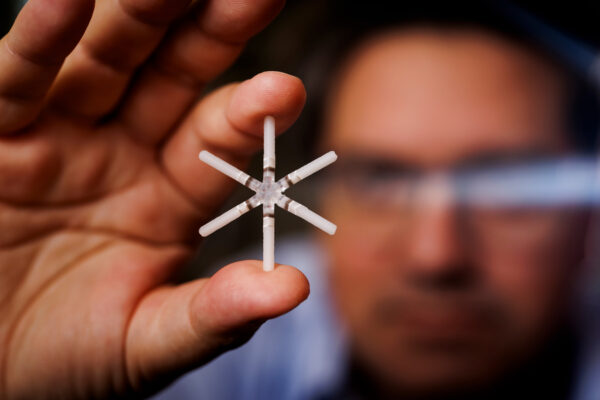
The ingestible capsule is about the size of a multivitamin, and once swallowed, it expands into a star shape that helps it remain in the stomach until all of the drug is released. Credits:Credit: Adam Glanzman

Weekly Pill for Schizophrenia Shows Promise in Trials

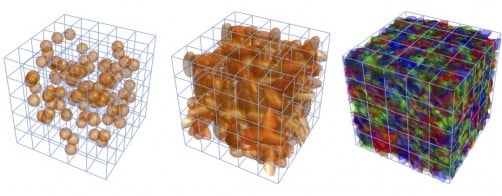
Researchers at the Massachusetts Institute of Technology used Frontier to map the isospin density of a neutron star under various conditions. The illustration shows isospin-dense matter at three increasing densities from left to right. Since neutron stars contain an abundance of neutrons, they exhibit nonzero isospin density—a key factor in understanding the star’s internal matter properties.

Supercomputer Cracks Open Neutron Star Mysteries

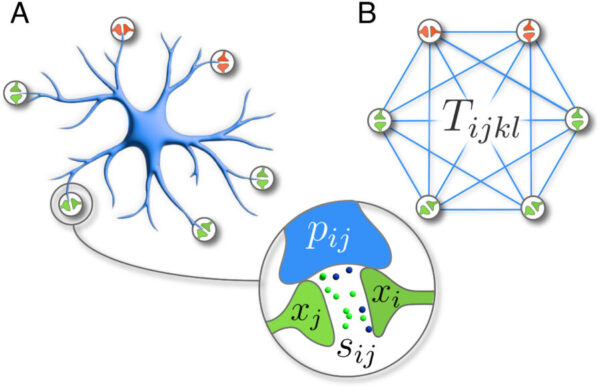
(A) A simplified representation of an astrocyte, highlighting its processes and their connections to synapses. (B) A mathematical model of the minicircuit governed by a single astrocyte.

Star-Shaped Brain Cells May Hold Key to Memory Storage

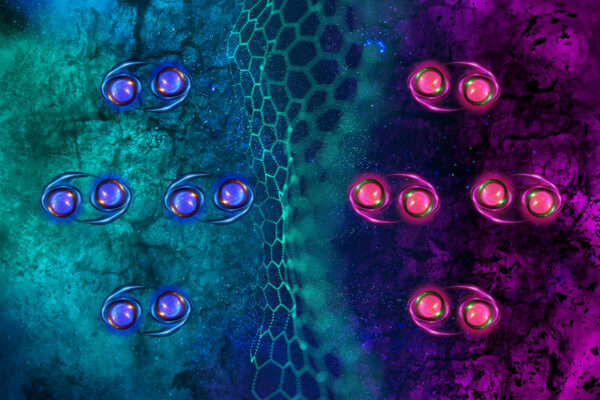
An illustration shows pairs of superconducting electrons in rhombohedral graphene (the central lattice structure), spinning either clockwise or counterclockwise—indicated by blue and red colors. These electron pairs display both magnetic and superconducting properties, a combination previously thought to be incompatible in a single material. This electronic state represents a new type of magnetic superconductor.

MIT Discovers Magnetic Superconductor in Pencil Lead

Using a computational strategy that allows them to combine information from many large datasets, MIT researchers have identified several new potential drug targets for Alzheimer’s disease.

Beyond Amyloid: MIT Uncovers Alternative Alzheimer’s Pathways Using AI and Fruit Flies

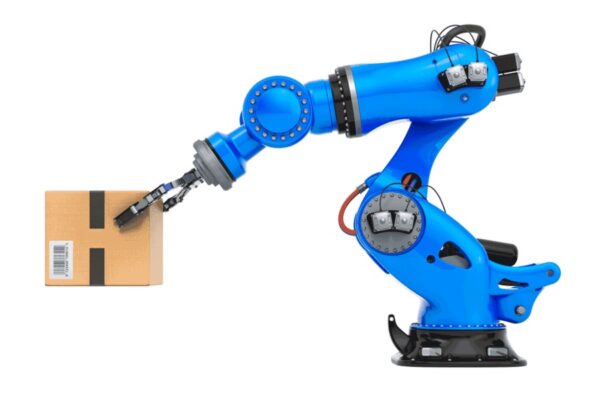
Robot arm

Robots Now Learn What Objects Feel Like Just By Picking Them Up

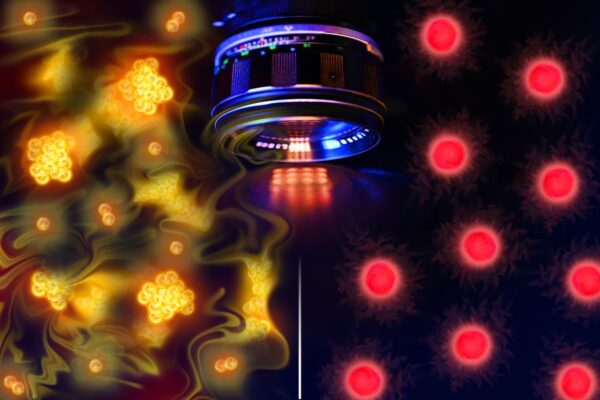
Using microscopy with single-atom resolution, researchers observed ultracold quantum gases made of two different types of atoms. The bosons (shown on the left) tend to cluster together — a behavior known as bunching — while the fermions (on the right) tend to avoid each other, showing anti-bunching.

Physicists Capture First-Ever Images of Atoms Interacting in Free Space

teenage boy

Teen Years Open Brief Window For Skin Microbiome Reset

Researchers have demonstrated exceptionally strong nonlinear coupling between light and matter in a quantum circuit. This enhanced coupling allows for faster qubit operations and readouts—key processes in quantum computing, where qubits serve as the basic units of information. Credit: Christine Daniloff, MIT

Quantum Circuit Supercharges Computing Speed

A crumbling planet is orbiting a giant star, leaving behind an enormous trail of debris. “The tail is absolutely massive—stretching as far as 9 million kilometers,” says Marc Hon, a postdoctoral researcher at MIT’s Kavli Institute for Astrophysics and Space Research.

Planet Crumbles to Dust 140 Light-Years Away

MIT engineers engineered bacteria to produce hyperspectral signals that can be detected as far as 90 meters away. Their work could lead to the development of bacterial sensors for agricultural to monitor crop health, for example. Credits:Image: Jose-Luis Olivares, MIT; iStock

Engineered bacteria emit signals that can be spotted from a distance

MIT scientists find the protein IL-17 that fights infection also acts on two distinct brain regions — the amygdala and the somatosensory cortex — inducing anxiety or sociability. Credits:Image: MIT News; iStock

Molecules that fight infection also act on the brain, inducing anxiety or sociability

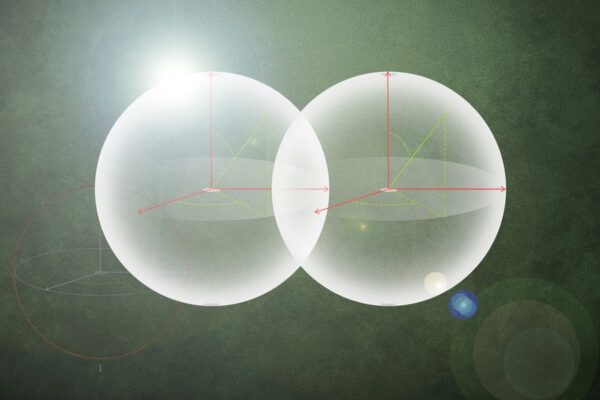
Researchers developed a new interconnect that can support scalable, all-to-all communication between a series of superconducting quantum processors, enabling an information-carrying photon to travel between processors in a user-defined direction. The concept is illustrated here.

Device enables direct communication among multiple quantum processors

a man seen in profile, speaking, with an illustration of the sound waves coming directly out of his mouth

The Dawn of Words: Did Language Emerge 135,000 Years Ago?

Older posts
Newer posts
← Previous Page1 Page2 Page3 … Page66 Next →
Substack subscription form sign up

Comments

  • Karoly Mirnics on Common Prescription Drugs May Disrupt Cholesterol Pathways in the Womb and Raise Autism Risk
  • Aizen on Laziness helped lead to extinction of Homo erectus
  • Norwood johnson on Electrons in New Crystals Behave as If They Live in Four Dimensions
  • ScienceBlog.com on Hidden Geometry Could Finally Fix Quantum Computers
  • Theo Prinse on America Is Going Back to the Moon. This Time, It Plans to Stay
© 2026 ScienceBlog.com | Follow our RSS / XML feed